

Traveling around Croatia is straightforward, with several good transport options, but if you want the most flexibility, renting a car is hard to beat.
After more than two decades of traveling in Croatia and living in Dalmatia, I’ve found that driving gives you the easiest access to smaller towns, national parks, island ferry ports, and inland regions that public transport doesn’t always connect well.
That said, Croatia doesn’t require a car for every trip. Buses are cheap and reliable between major cities, ferries and catamarans make island travel easy, and flying can save time on longer distances. The best way to get around Croatia depends on your route, budget, and the time of year you’re visiting.
Below, I’ll walk you through all the realistic ways to travel around Croatia so you can choose what works best for your trip.
| Transport Type | Best For | Seasonal Notes | Key Limitations |
|---|---|---|---|
| Car Rental | Flexibility, rural areas | Year-round | Parking, summer traffic |
| Bus | Budget city travel | More frequent in summer | Luggage fees, crowds |
| Ferry | Islands & coast | Reduced in winter | Car capacity limits |
| Train | Limited routes | Year-round | Slow, limited coverage |
| Flights | Long distances | Pricey in summer | Limited domestic network |
Skip Ahead To My Advice Here!
Is It Easy To Travel Around Croatia?
Yes.
Aaah, Croatia! It is a country of Dalmatians, neckties, waterfalls, and islands, traditional food, and ten UNESCO World Heritage Sites (with additional sites listed as intangible heritage)
Although relatively small, this ancient nation is exceptionally varied. You can enjoy spectacular national parks, sample local seafood and wine, visit centuries-old towns, go island-hopping in the Adriatic, and so much more.
Croatia is a modern country—getting around Croatia is possible in many ways.
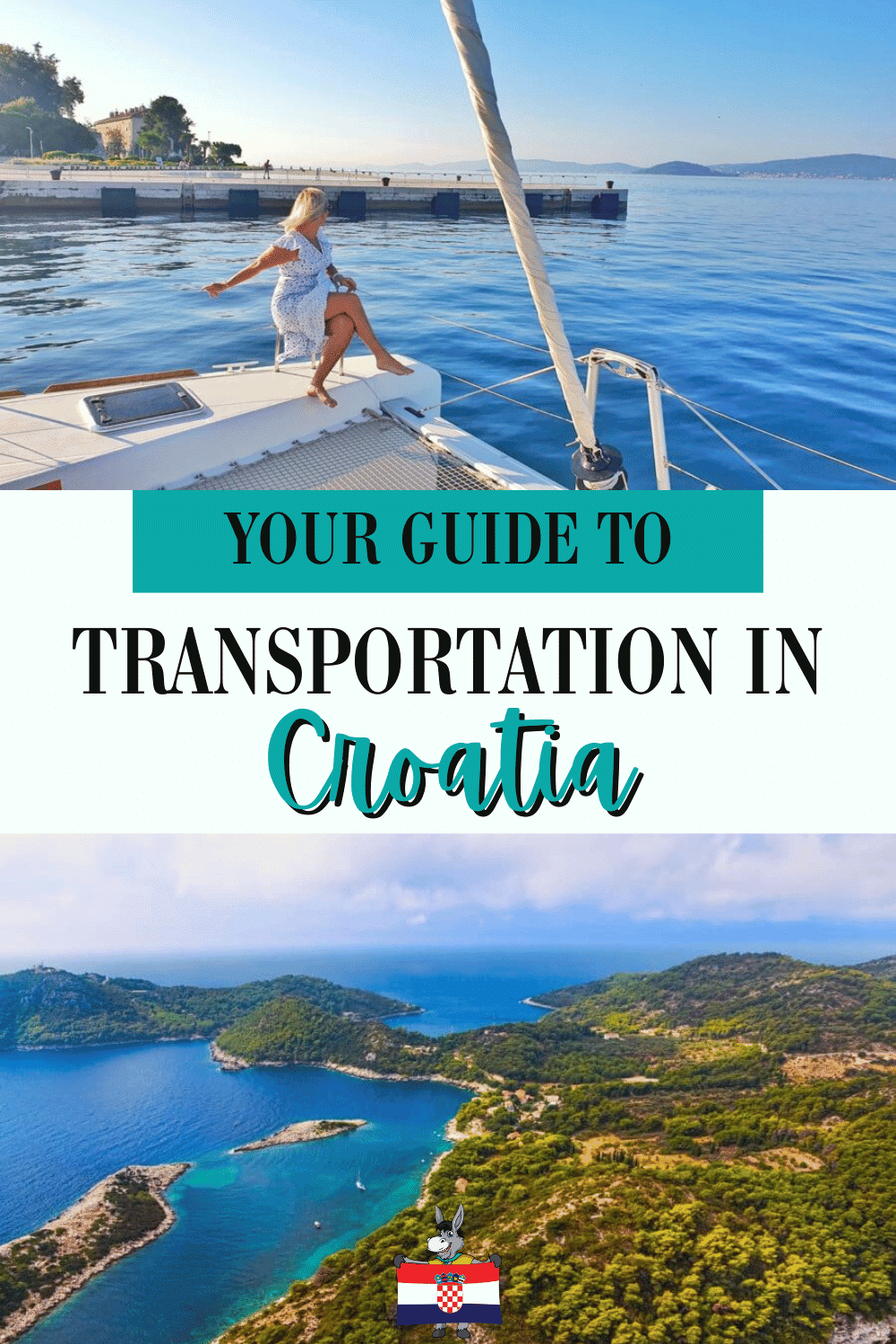 Some are independent and require planning, while others allow you to sit back, relax, and enjoy the gorgeous scenery. In this article, I explain all the ways you can travel around Croatia that I have learned over the last two decades of exploring it.
Quick Guide To Getting Around Croatia
But before I go through my tips, there are a few things to remember. My travel choices are more luxury-based, though I explain below cheaper, less luxurious options.
- Croatia Airlines is a local carrier offering daily flights from Zagreb to destinations such as Dubrovnik, Rijeka, and Zadar.
- Train travel is not popular in Croatia. The major routes, Zagreb to Rijeka and Split, though slower, offer a special summer overnight train.
- The primary hub for intercity buses is Zagreb, which has plush seating, air conditioning, and free Wi. Fi
- Minivans or private cars are best for overland transport, offering comfort and convenience.
- Ferries are an efficient and safe way to connect to several Croatian islands, though schedules can be tricky to navigate due to multiple local operators.
- Transportation within Croatian cities varies – on-foot exploration is common in walled towns like Split and Dubrovnik, while taxis and local buses are prevalent in cthe townslike Zagreb.
- Uber services are available along the Dalmatian coast and in tourist hotspots like Zagreb, Rijeka, and Istria.
- Using public transport in Croatia in summer is much easier, as more services are available.
- Road congestion in winter is generally low outside Zagreb, except during adverse weather, roadworks, or holiday travel periods.
9 Best Ways To Travel Around Croatia
1. Road Trip Through Croatia – Easy To Travel Between Smaller Places

Few vacation activities are more delightful than cruising along the Dalmatian coast, windows down, and the warm wind blowing through your hair, stopping wherever you please, and visiting gorgeous historic towns. Oh yeah!
If you’re after freedom, a self-driving road trip is the best way to explore Croatia. You determine your own route and your own destinations, and it’s entirely up to you when you leave and when you arrive.
On the other hand, when driving through Croatia yourself, you won’t be able to take in the scenery as much as you would with other Croatia transport options. You’ll have to keep your eyes on the road all the timeroadpeciathe timeimeng the sumduring the summer mwhenwhentian roads are horrendous.
Sometimes, having someone take care of the driving in Croatia is more convenient. That said, Croatian road trips can be excellent with proper planning.
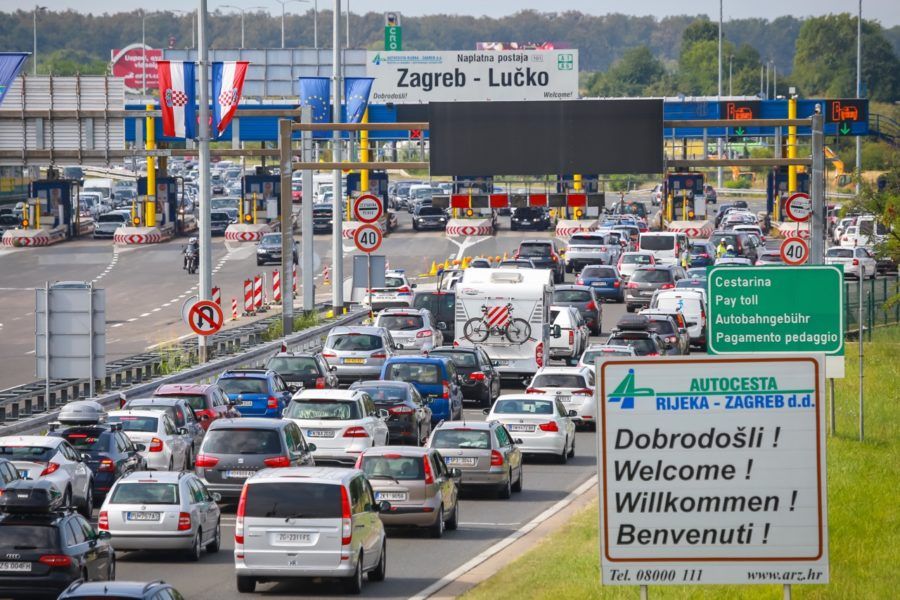
For example, a drive from Zadar to Dubrovnik is nothing short of glorious. You’ll pass quaint coastal villages and major cities such as Šibenik and Split on the way. Alternatively, exploring Istria by car is absolutely amazing as well (and a must as they lack bus/train services).
For an authentically Croatian road trip, opt for a drive through rural Slavonia from Zagreb, stopping in fascinating towns such as Osijek.
Tip: If you’re wondering which side of the road Croatia drives on, it’s on the right!
EU and most international visitors can drive in Croatia with a valid national driving licence; an International Driving Permit may be required for non-EU licences, depending on the issuing country.
2. Cruises In Croatia – Lux Travel Option
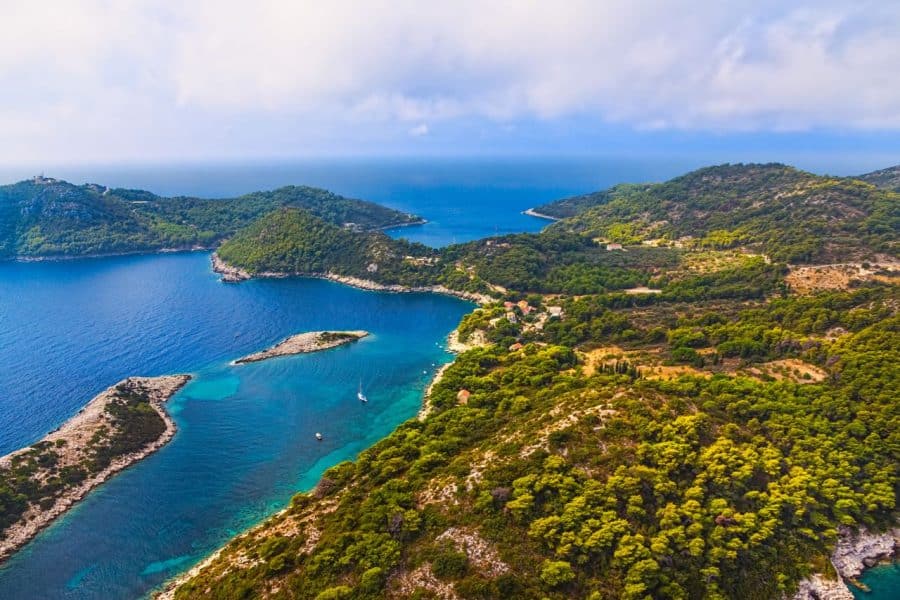
One of the most popular ways to explore Croatia is by boat (and my total favorite!). Croatia is a dream destination for island vacations, home to more than 1,200 mesmerizing islands, each different and unique.
Distances between islands are often really short, allowing you to visit several places quickly. On a cruise in Croatia, you’ll wake up in a different place almost daily!
One of the most comfortable and luxurious ways to travel to Croatia is with a gulet expert – this way, you’ll sail around. Don’t miss the glorious Croatian islands during your trip to Croatia, leaving behind the mainland crowds and stress.
The captain and crew will pamper you the entire way, ensuring a fantastic atmosphere and offering meals and drinks. In addition, almost everything, from the route and activities to drinks and food options, can be personalized.
Some gulets are like top-rated hotels; some come with a jacuzzi, lounge chairs, and staff to keep you fed and well-boozed during your sailing experience. If you want luxury and convenience, this is probably the best way to travel around Croatia.
3. Bus Travel In Croatia – The Bus Network Is Extensive Between Larger Cities
Budget travelers in Croatia without a car who’d like to travel between the larger cities won’t find a better option than taking the bus. The bus network in Croatia is reasonably good, with frequent connections between cities. You can zoom through Croatia on a bus from Zagreb to Split, Zadar to Plitvice Lakes National Park, and Rijeka to Dubrovnik. It’s exceptionally convenient and cheap.
The downside, however, is that bus travel in Croatia is super popular. As thousands of tourists and backpackers head to the Adriatic during the peak season, buses fill up.
Therefore, I always tell families that buses in Croatia are a very inconvenient option for those traveling with kids and multiple suitcases. If a few of you are in a group, it can be just as cheap (or just a little extra) to rent your own hire car or get a private transfer.
You cannot reach Croatian islands by bus alone; travel requires a ferry or catamaran connection, which could be a significant disadvantage if you plan to island-hop Croatia. However, travel between popular towns is an excellent choice for mainland Croatia.
Traveling to Croatia by bus can pose logistical challenges. There are a dozen bus companies in Croatia, and to date, none can take you all over the country. To find the best bus company for your specific needs, you’ll need to look up each operator individually.
Check out Cazmatrans, Libertas, Autotrans, Croatia Bus, and Promet Split to get you started.
Tip: Most bus companies charge a small luggage fee for bags stored under the bus, usually paid in cash to the driver. That always irritates me, so factor it into your costs when determining bus prices in Croatia.
4. Private Transfers In Croatiam Easier Than Getting A Hire Car

When it comes to pure convenience, nothing beats private transfers. You can take private transfers all over Croatia, from airport arrival halls to your hotel and between cities.
Even though people think private transfers are pretty expensive, you may be surprised at how affordable they are.
Private transfers are the way to go for quick and easy airport-to-hotel (or vice versa) transportation. Here are some other options:
- Split To Zagreb
- Zadar To Krka National
- Split To Dubrovnik
- Zagreb To Budapest
- Zagreb To Dubrovnik
- Zagreb To Ljubljana
- Zagreb To Venice
- Zadar To Pula
- Medjugorje To Split
- Zadar To Split
- Zadar To Plitvice Lakes
- Zagreb To Split
- Zagreb To Rovinj
- Split Airport Transfers
- Zadar Airport Transfers
- Zadar To Split
- Split To Krka
5. Taxi Travel In Croatia
If you choose to travel by taxi, you’ll automatically notice that fares in Croatia are pretty high. However, in Rijeka and Zagreb, you’ll find lower fares.
When traveling, ensure the driver turns on their meter. Asking for a rough cost beforehand is also perfectly acceptable.
While it’s not the best idea to rely on taxis, a taxi is a good choice if you find yourself stuck or need to travel only short distances quickly.
6. Ferries In Croatia To Get To Surround Islands
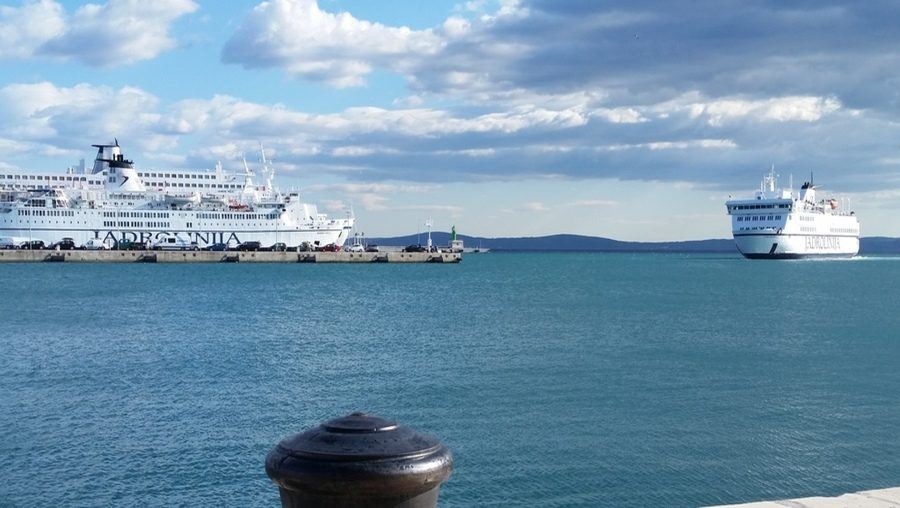
Because of the many coastal cities and numerous visit-worthy islands, the Croatian ferry network is extensive, with many services throughout the summer. This makes it easy to pick and choose routes by creating your own Croatia ferry itinerary (if that’s what you’re going for).
The largestferry company in Croatia is Jadrolinija; you can also look at other smaller operators, such as G&V Line, Kapetan Luka, and Mia Tours.
There are so many Croatian ferry companies and options that it would be impossible for us to list them all here. Instead, we provide a comprehensive overview of how to get to and from the major destinations by ferry—places such as Pula, Zadar, Split, and Dubrovnik, as well as a couple of popular islands.
In case you do not read the complete ferry guide we listed above, please note two critical things:
- Most ferries operate on a first-come, first-served basis for vehicle boarding, while foot passengers with valid tickets are generally guaranteed boarding, subject to capacity. If you don’t make it to the first ferry, you’ll have to wait for the following one.
- If you wish to take your hire car on car ferries in Croatia, you must line up VERY early. On some routes in the summer, we arrive 1.5-2 hours before and get the car in line.
Advance online booking is strongly recommended in summer, especially for car ferries and catamarans, but availability and boarding priority still depend on vessel capacity and arrival time.
7. Train Travel In Croatia
Just forget this idea. Trains in Croatia are totally useless. Sorry, but we are FAR behind other European cities when it comes to train travel in Croatia. That said, we have some options to take the train through Croatia, and I can say that traveling by train from Zagreb to Ljubljana (Slovenia) is better than by bus. I know some people who enjoyed traveling by train from Zagreb to Split – how I will never know.
Route options and up-to-date Croatia train timetables and prices can be found at http://www.hzpp.hr/.
You can check timetables and prices online, and some domestic and international routes can be booked online, but many Croatian train tickets still need to be purchased at the station.
8. Flying In Croatia – Flight Options
If you’re after a city break in Croatia, flying would be a reliable option. You can fly into Zagreb from various major European cities, including Paris, Munich, Amsterdam, Zurich, and London.
You’ll need to weigh up the time and costs to see which routes are better for flying. For example, Zagreb to Dubrovnik is a great option, as you do not have to worry about crossing the BiH border, which can be very time-consuming.
Note that if you’re flying into Zagreb (and perhaps taking a domestic flight in Croatia), you will still need transportation to reach your accommodation. In that case, private transfers and local buses are the best options.
Croatia’s internal flights are expensive in summer,
Croatia Airlines is the leading domestic carrier, operating most internal routes, so book well in advance to secure the best deals. We have several main airports (Zagreb, Pula, Rijeka, Zadar, Split, and Dubrovnik) where you can plan your travels throughout the year. Then, in peak season, you can also look at a few other, more seasonal airports.
9. Hitchhiking In Croatia
Hitchhiking is risky anywhere, even in safe countries like Croatia. It’s not the best idea to hitchhike – it’s highly unpredictable, and you have no idea when you may end up where you need to go.
Brands We Use And Trust
Factors To Consider When Traveling Around Croatia
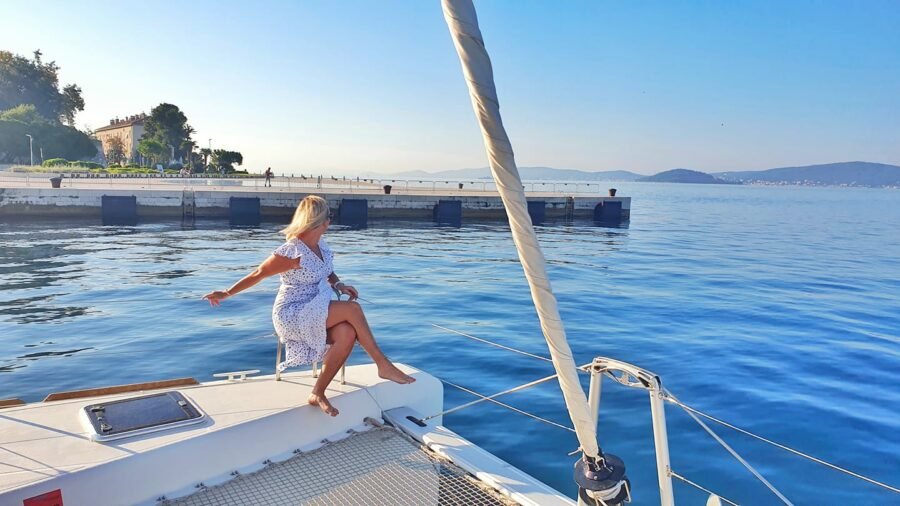
It’s pretty easy to travel around Croatia. The roads are excellent, and public transport is cost-effective and easy to use. Aside from regular roads, you’ll also find a network of motorways that help you travel all around the country, making it faster and more cost-effective.
Despite that, you do need to factor these elements in when choosing a transport option.
Time Of Year
Croatia has a high and low season, and during the summer months, you’ll typically find more bus and ferry services than during the low season, between November and April.
In some cases, you cannot get a dect service, such as catamaran journeys between Dubrovnik or Split and the islands of Hvar and Korcula; these onlrate duronly ing the summer. For that reason, double-check that the route you’re looking at actually works at the time of year you’re visiting.
Many catamarans and island-to-island routes operate only from late May to early October, while winter schedules focus on essential mainland connections.
Summer Traffic
Dubrovnik and Split are known for terrible traffic in the summer months, which worsens on weekends and during school holidays.
Remember, not only tourists but locals want to enjoy the beach! If you travel by car or bus, you must factor this into your plans.
Ticket Availability
This is usually only a problem during the summer, but booking your bus or ferry ticket online is always best.
Deciding to ‘chance’ could mean waiting for the next service, which could completely derail your day’s plans.
Weather
The summer months are pretty predictable, but the shoulder and winter months can be somewhat unpredictable in terms of weather. It can rain a lot, and it can also be very windy at times. Some areas are known for their wind, especially on high-speed motorways.
This can sometimes close sections of the motorway, adding miles to your journey. Particular trouble spots include the A1 motorway Sv. Roko tunnel from Zadar to Gospic, the A6 Kikovica to Ostrovica area, and the E65 between Senj and Karlobag, particularly along the coastal road.
Cost To Get Around Croatia
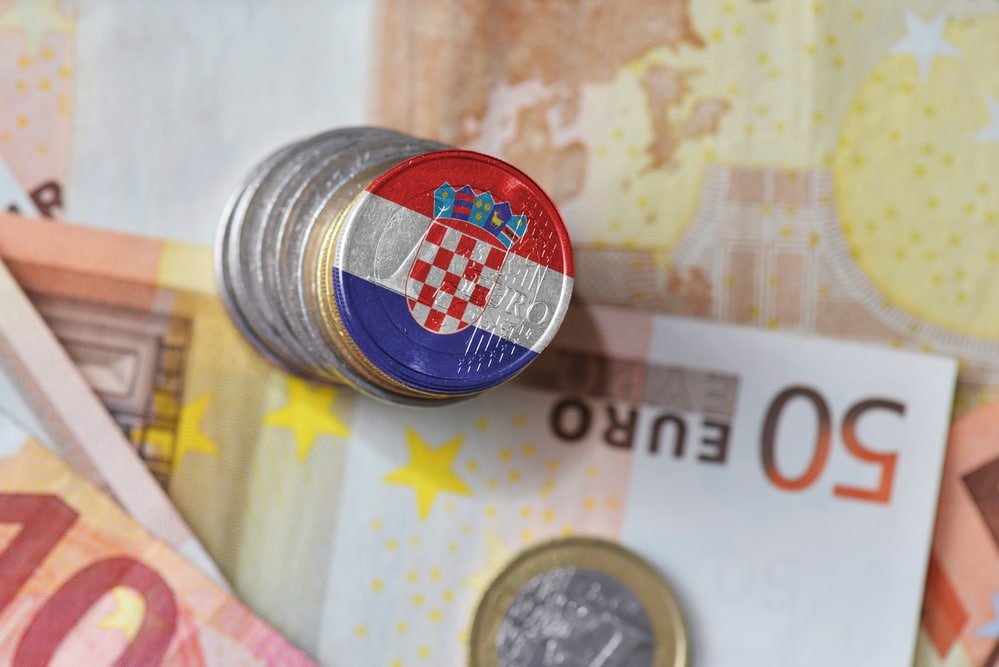
There are several options for getting around Croatia, but which choice you make will depend on your time and budget.
In this section, we’ll give you rough travel costs, but remember that the current climate means prices can fluctuate quickly, so always double-check to ensure up-to-date prices.
Buses
To give you an idea of prices between major cities, a one-way ticket between Zagreb and Dubrovnik will cost around 30-65 euros, between Zagreb and Split about 23-45 euros, and Split to Dubrovnik about 15-30 euros.
Rental Car Hire
The price of car hire depends on the provider, the package, and the type of car you choose. However, an economical choice usually costs around 40-100 euros daily. (Please note that these prices rise yearly and may be inaccurate when reading.)
Fuel prices typically fluctuate, but petrol and diesel are generally around 1.45–1.70 euros per liter, depending on government price caps and global markets.
Road Tolls
You will need to pay tolls on all toll roads throughout Croatia. Motorways are a faster route, but they have tolls attached to them:
Toll costs fluctuate, but expect approximately 18–20 euros from Zagreb to Zadar, 26–28 euros from Zagreb to Split, and 33–35 euros from Zagreb to Ploče.
Ferries
Foot passengers will find that ferries are a very cost-effective option; for instance,
Split to Brač typically costs around 7–9 euros per foot passenger and approximately 30–55 euros per car, depending on the season and ferry operator.
You can see that car ferries are more expensive, which you need to consider. (Please note that these prices rise yearly and may be inaccurate when reading.)
Flying
You can usually find last-minute flights at reasonable prices, but again, the cost of flying is much higher at the moment. Therefore, booking as early as you can is now a better choice.
A one-way flight from Zagreb to Dubrovnik typically ranges from 90 to 180 euros, depending on season, demand, and booking time. You can reduce this by flying very early or very late at night.
Being flexible with your journey will save you money.
Is it better to rent a car or use public transport in Croatia?
Renting a car is the best option if you want flexibility, plan to visit smaller towns, national parks, or travel outside peak routes. Public transport works well in major cities and popular island connections, but is less convenient in rural areas.
Can you travel around Croatia without a car?
Yes. You can travel around Croatia by bus fferry ccatamaran domestic fflight and local public transport. This works best if you stick to larger cities, popular islands, and coastal routes, especially in summer.
How can I travel by air within Croatia?
Croatia Airlines operates most domestic flights, connecting Zagreb with cities such as Dubrovnik, Split, Zadar, Pula, and Rijeka. Flights save time on long distances but are usually more expensive in summer.
What are the train travel options in Croatia?
Train travel in Croatia is limited and slow compared to buses and driving. The main routes run from Zagreb to Split and Rijeka, with some seasonal overnight services, but trains are rarely the fastest or most practical option.
How do intercity buses in Croatia work?
Intercity buses are extensive, affordable, and connect most major towns and cities. Zagreb is the central hub, and buses typically have air conditioning and WiFi. In summer, routes are frequent but can sell out quickly.
Are ferries in Croatia reliable?
Yes. Ferries and catamarans are the primary way to reach the islands and are generally reliable, especially in summer. Winter schedules are reduced, and some island-to-island routes only operate seasonally.
How far in advance should you book ferries in Croatia?
In peak season, it’s best to book ferry and catamaran tickets online in advance, especially if you’re traveling with a car. Foot passengers usually have more flexibility, but popular routes can still sell out.
What about private transfers and private road travel?
Private transfers and minivans are a convenient option for airport transfers and longer routes, especially for families or groups. They cost more than public transport but remove the need to drive or navigate schedules.
Is Uber cheaper than taxis in Croatia?
Uber is widely available in major cities and tourist areas and is often cheaper and more transparent than traditional taxis, though prices increase during peak demand.
What transport options are standard within Croatian cities?
Walking is part of everyday life in compact, historic cities like Split and Dubrovnik. Zagreb has trams, buses, taxis, and ride-share services, while other cities rely primarily on buses and taxis.
Do you need an International Driving Permit to drive in Croatia?
EU visitors can drive with their national licence. Non-EU visitors may need an International Driving Permit depending on their country of licence, so it’s best to check before traveling.
Move This Adventure To Your Inbox & Get An Instant Freebie

No spam. Unsubscribe at any time.
Croatia Travel Guides & Travel Tips
- What To See And Do In Croatia
- Best Things To Do With Kids In Croatia
- Car Rental Tips And Deals
- Taking The Split To Zagreb Train
- Is Croatia Safe To Travel? Helpful Safety Tips
- How To Travel Between Greece & Croatia
- How To Spend 2 Days In Split
- One Day In Split – 3 Itinerary Ideas
- Guide To Driving In Croatia
- When Is The Best Time To Visit Croatia
Thanks for this guide I will be visiting Croatia in 2019.
Hi, do you have any advice on the best way to get from Croatia to Montenegro (Kotor)? We are visiting both Zadar and Split while in Croatia. Travelling with the family but trying to keep costs down where possible! Thanks
Try http://www.octopustransferscroatia.com
Well if you are onto travel to Croatia, then you will surely enjoy boat trip and sea trip of the country. You will have glimpse of beautiful culture and people and beautiful heritage sites on the way, while you can also explore beautiful calm sea with wonderful island to watch out.
Amazing guidance about travel
How far in advance do we need to book a driver for a transfer?
You need to book it as soon as you know your dates if they are fixed. That said you can book a month or a week before. Happy travels.