

Planning a Greece trip right now and want a single, reliable list of every UNESCO World Heritage Site you can actually build into an itinerary? I’ve put all of Greece’s inscribed UNESCO sites in one place (with what each site is, where it is, and why it’s worth your time), from headline classics like the Acropolis in Athens to monasteries like Meteora and Mount Athos, plus newer additions like Zagori and the Minoan Palatial Centres on Crete.
I’ve also flagged places that require extra logistics (like permits, limited access, or day-trip-only visits) so you can plan your route, tickets, and timing without nasty surprises.
UNESCO sites are some of Earth’s most beautiful and culturally significant places. If you’re looking for must-see destinations that include major early-Christian and Byzantine landmarks, look no further than Greece! no further than Greece!
Greece is home to 20 UNESCO World Heritage Sites, including ancient ruins, monasteries, historic towns, and cultural landscapes.
Here are a few of the UNESCO sites in Greece that you must add to your travel bucket list!
Skip Ahead To My Advice Here!
1. Temple Of Apollo Epicurius At Bassae
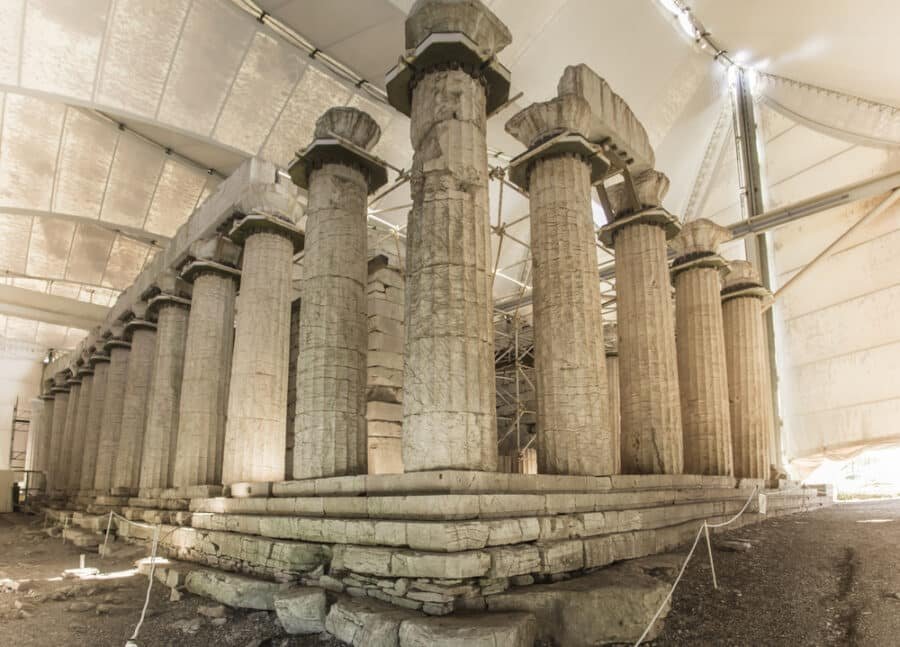
The Temple of Apollo Epicurius at Bassae is one of the most important UNESCO World Heritage Sites in Greece. This temple is notable for its unique architecture, combining elements of the Doric and Ionic orders.
The temple was built in the 5th century B.C. and is considered one of the best-preserved examples of Ancient Greek architecture.
The UNESCO site at Bassae focuses on the Temple of Apollo Epicurius and its sanctuary setting; it does not include an ancient theatre. The Temple of Apollo Epicurius at Bassae is an essential site for anyone interested in the history and culture of Greece.
2. Archaeological Site of Olympia
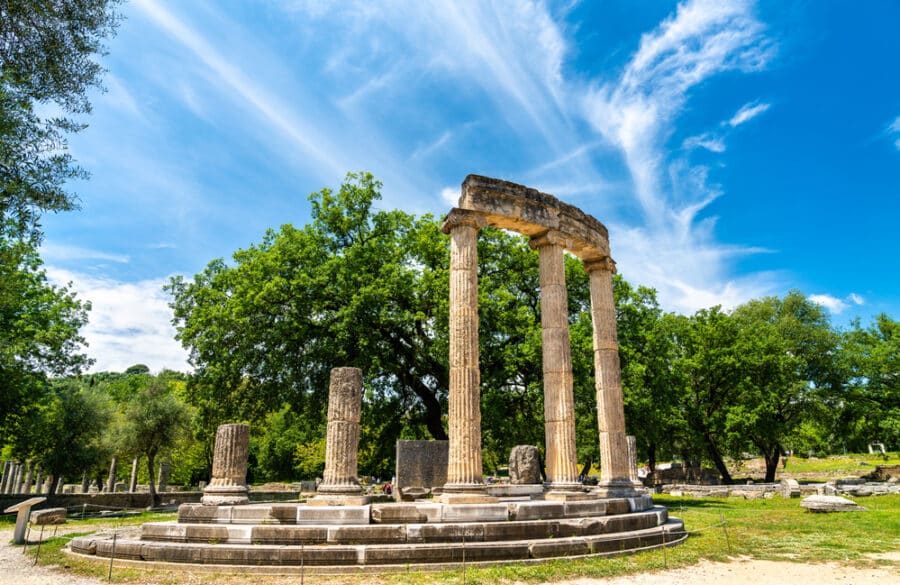
The Archaeological Site of Olympia is another must-see UNESCO World Heritage Site in Greece. This site is home to the remains of several important buildings, including the Temple of Zeus, the Philippion, and the Palaestra. These ruins offer insight into the religious and cultural life of the Ancient Greeks.
The Archaeological Site of Olympia also includes a museum, which houses an extensive collection of artifacts from the site. This historical site is a must-visit for anyone interested in Greek history and culture.
3. Acropolis Of Athens
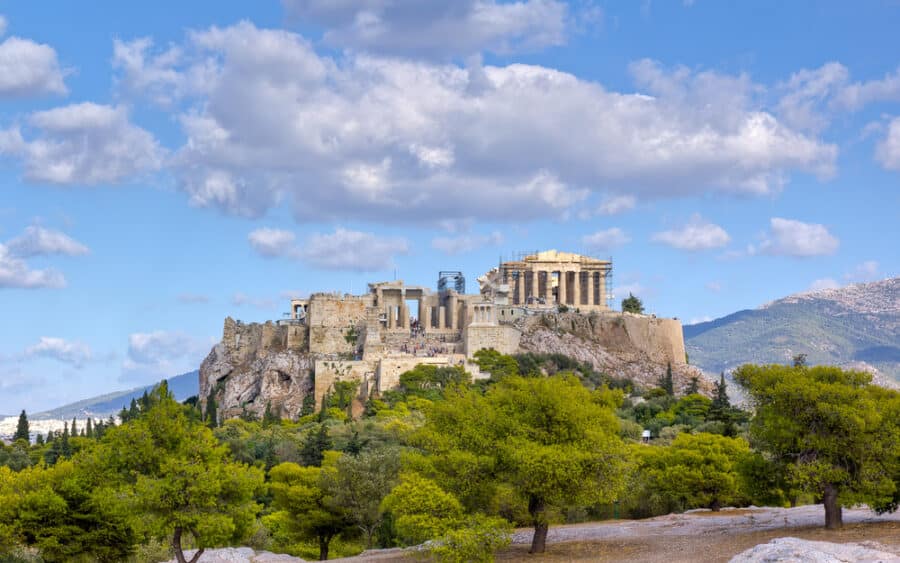
The Acropolis in Athens is an iconic symbol of Greece, and it’s easy to see why: it has been the site of significant political and religious events since ancient times.
The Acropolis of Athens is home to several important monuments, including the Parthenon and the Erechtheion. These ruins are some of the best-preserved examples of Ancient Greek architecture. The Acropolis is an essential site for anyone interested in the history and culture of Greece.
4. Archaeological Site Of Delphi
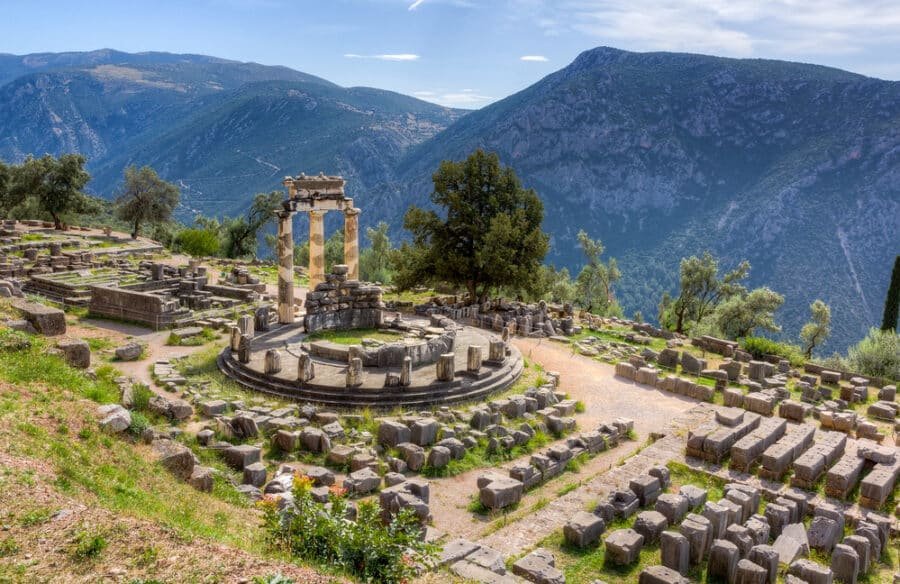
The Delphi Archaeological Site is another must-see UNESCO site in Greece. This site, recognized under the World Heritage Convention, has many ruins, including the Temple of Apollo, the Stadium, and the Theatre of Delphi.
These ruins give visitors a glimpse into the religious and cultural life of Ancient Greece. The Archaeological Site of Delphi also includes an impressive museum that houses artifacts from the site. The Archaeological Site of Delphi is an essential destination for anyone interested in Greek history and culture.
5. Medieval City Of Rhodes
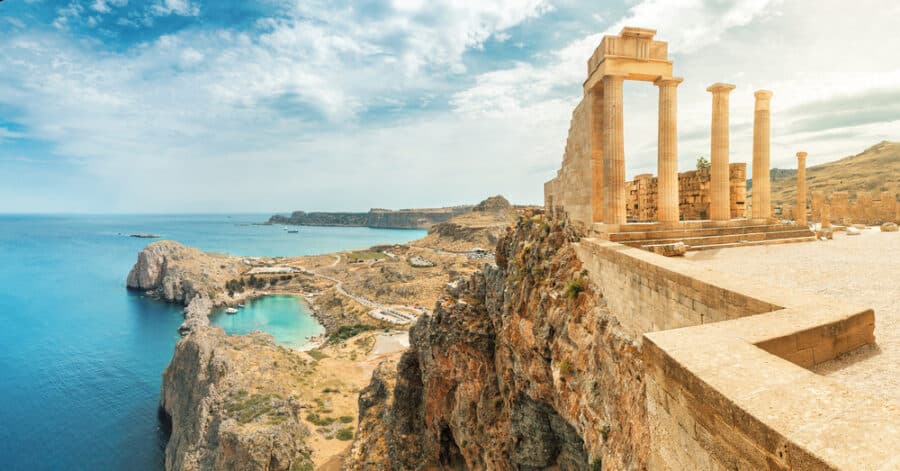
The medieval city of Rhodes, a UNESCO site, is located on the island of Rhodes in Greece. The city of Rhodes was founded in 408 B.C. and became an important trading centre in the Mediterranean.
The Order of St John of Jerusalem occupied Rhodes from 1309 to 1523 and transformed the city into a fortified stronghold; it later came under Ottoman (Turkish) and then Italian rule.
The city has historical landmarks, including the Palace of the Grand Master of the Knights Hospitaller, the Street of the Knights, and the Cathedral of Saint John. In addition to its architectural importance, the city also boasts a Mediterranean climate, making it a year-round destination.
6. Meteora
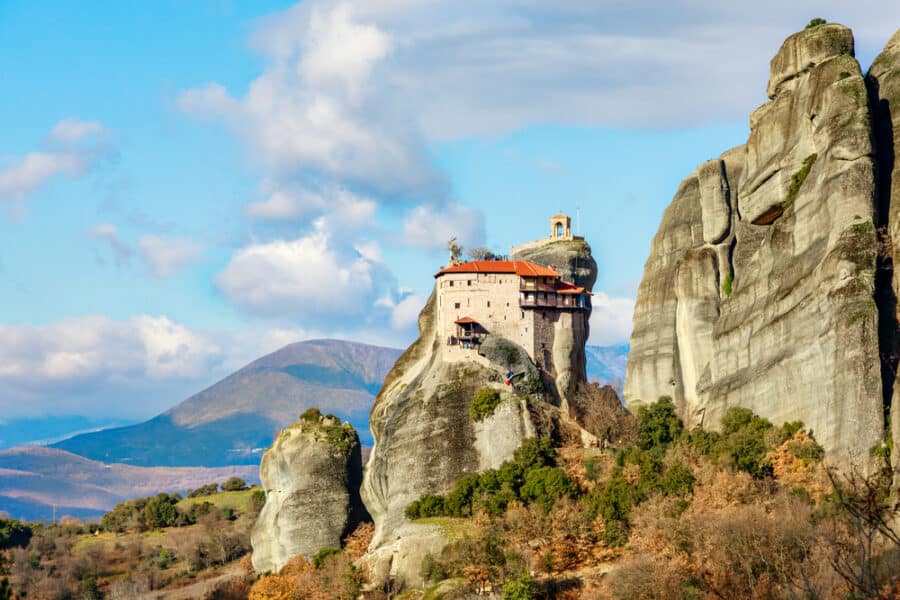
Meteora is a stunning site located in central Greece. This area is home to several monasteries perched atop massive sandstone cliffs.
The monasteries were built in the 14th century and continue to be active today. Meteora is renowned for its remarkable architecture and views of the beautiful landscape. It’s an essential UNESCO site in Greece for anyone interested in Greece’s cultural and religious history.
7. Paleochristian And Byzantine Monuments Of Thessaloniki
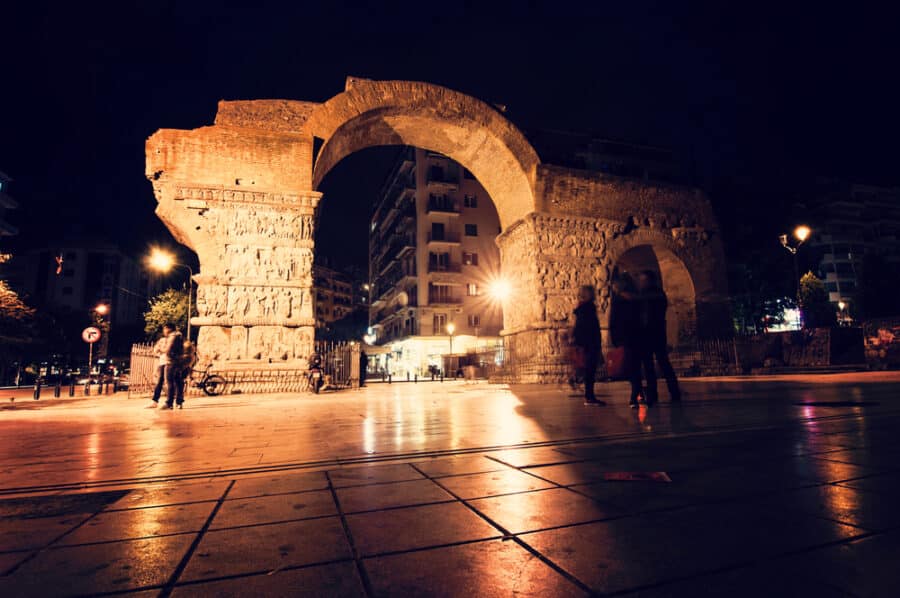
The Paleochristian and Byzantine Monuments of Thessaloniki are a UNESCO World Heritage Site in the city of Thessaloniki, Macedonia. This World Heritage Site includes 15 monuments in Thessaloniki (including churches, the Rotunda, and the city walls), many dating to the early Christian and Byzantine periods.
Highlights include the Church of St. Demetrios, the Rotunda, and the Byzantine city walls. These well-preserved buildings provide a fascinating glimpse into early Christian history and architecture.
8. Sanctuary Of Asklepios At Epidaurus
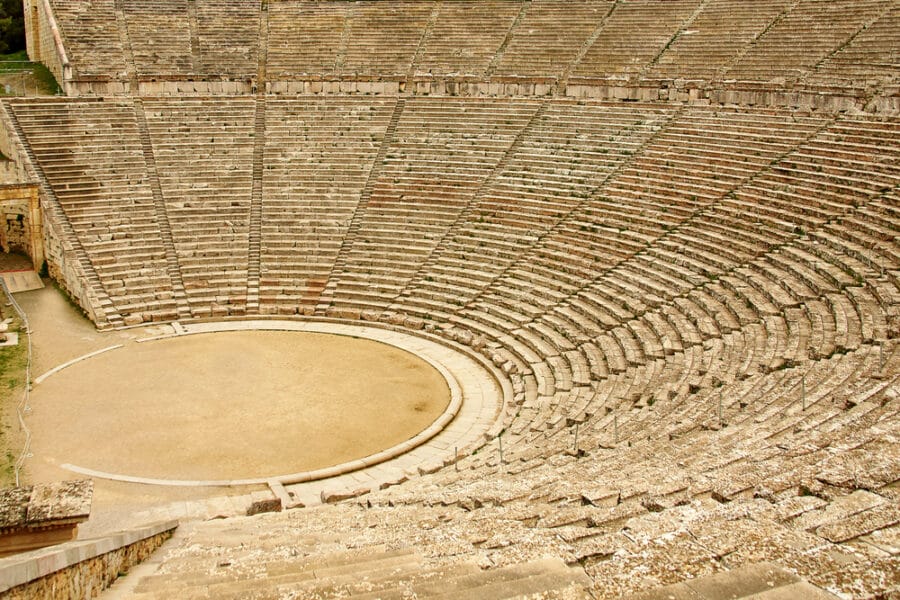
The Sanctuary of Asklepios at Epidaurus is an important archaeological site in the Peloponnese, Greece.
This sanctuary was built to honor Asklepios, the Greek god of healing. It includes several well-preserved ruins, including a theater and temple dedicated to Asklepios. The Sanctuary of Asklepios at Epidaurus is an essential site for anyone interested in Greek mythology and the history of the ancient Greeks.
Brands We Use And Trust
9. Old Town Of Corfu

The Old Town of Corfu is another must-see UNESCO Site in Greece. The Old Town of Corfu is located on the island of Corfu (Kerkyra), on a peninsula on the island’s eastern coast.
Its Venetian-style architecture and narrow streets are a throwback to its days as a prosperous trading center. Today, the Old Town is a popular tourist destination, with winding streets lined with cafes, restaurants, and shops. Be sure to visit during the daytime to appreciate its beauty fully.
10. Archaeological Site Of Mystras
The Archaeological Site of Mystras is a UNESCO World Heritage Site located in the Peloponnese region of Greece. It was once a powerful city, filled with magnificent churches and grand palaces.
Many of these buildings are in ruins today, but they still give visitors an impressive glimpse into medieval history. The site also boasts a remarkable museum, which houses a collection of artifacts. The Archaeological Site of Mystras is an essential destination for anyone interested in Greek history and culture.
11. Delos

Another UNESCO site in Greece, inscribed since 1990, the island of Delos, is one of Greece’s most important archaeological sites. The island was once the center of the Cyclades and home to a central sanctuary of Apollo, the god of music and healing.
Today, visitors can explore the ruins of an ancient temple, houses, public buildings, and an impressive theatre and stadium. Delos is also home to an extensive museum with a wealth of information about the island’s history and culture. A visit to Delos is necessary for anyone interested in Greek history and archaeology.
12. Monasteries Of Daphni, Hosios Loukas, And Nea Moni Of Chios
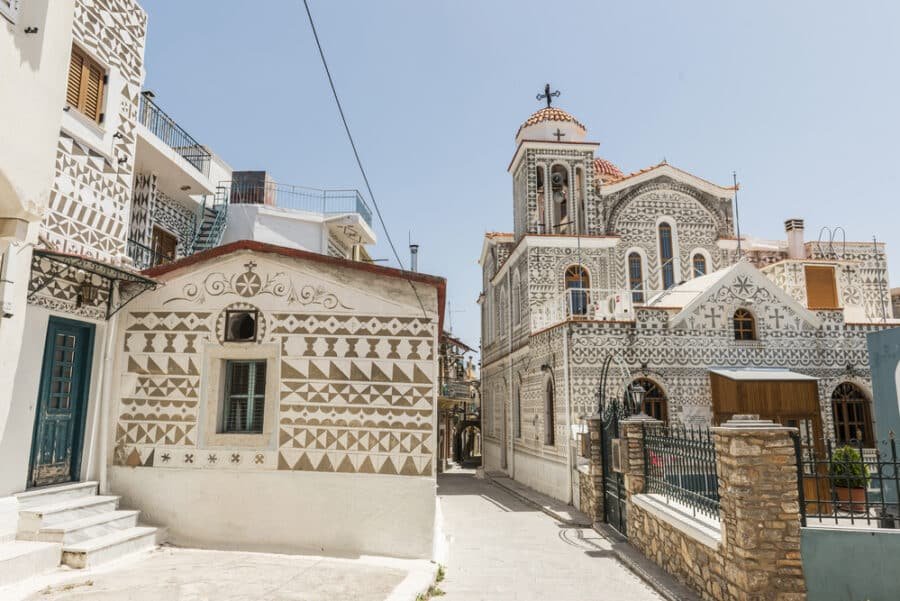
The Monasteries of Daphni, Hosios Loukas, and Nea Moni of Chios are a group of three monasteries located in central Greece. They represent the highest expression of Byzantine religious architecture and art, with impressive frescoes and mosaics. The monasteries are also renowned for their well-preserved interiors, which feature detailed carvings and intricate decorative designs.
These monasteries are an essential destination for anyone interested in the history and culture of Greece.
13. Pythagoreion And Heraion Of Samos
The Pythagoreion and Heraion of Samos are two archaeological sites in the eastern Aegean Sea. They are a reminder of the island’s ancient past, with ruins that date back to the 8th century B.C. Highlights include the remains of fortifications, temples, palaces, and public buildings. The site is also home to a museum, where visitors can learn more about the island’s rich history and culture.
A visit to the Pythagoreion and Heraion of Samos is essential to any Greek history tour.
14. Archaeological Sites Of Mycenae And Tiryns
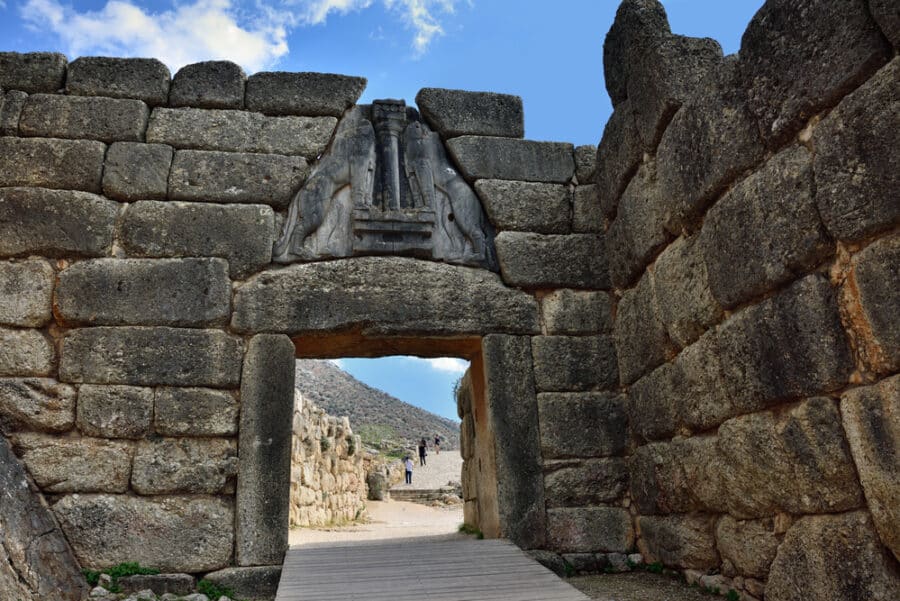
The Archaeological Sites of Mycenae and Tiryns are two of Greece’s most important UNESCO World Heritage Sites. Mycenae was the political center of the Mycenaean Civilization, while Tiryns was its military stronghold. These sites are a must-see for anyone interested in ancient Greek history and culture.
The Archaeological Site of Mycenae is located in the Argolid region of Greece. The site includes the remains of the Mycenaean palace and the Lion Gate, a massive stone gate decorated with two lion sculptures. The Mycenaean civilization was one of the most influential civilizations in the Bronze Age, and its influence can still be seen in Greek culture today.
The Archaeological Site of Tiryns is located in the Argolis in the Peloponnese, Greece. The site includes the remains of the Tiryns palace and the Cyclopean Walls, a massive defensive wall built by humans and thought impossible to construct without the help of giants. The Tiryns civilization was among the most aggressive of the Bronze Age, and its influence can still be seen in Greek culture today.
15. Historic Centre (Chorá) With The Monastery Of Saint John
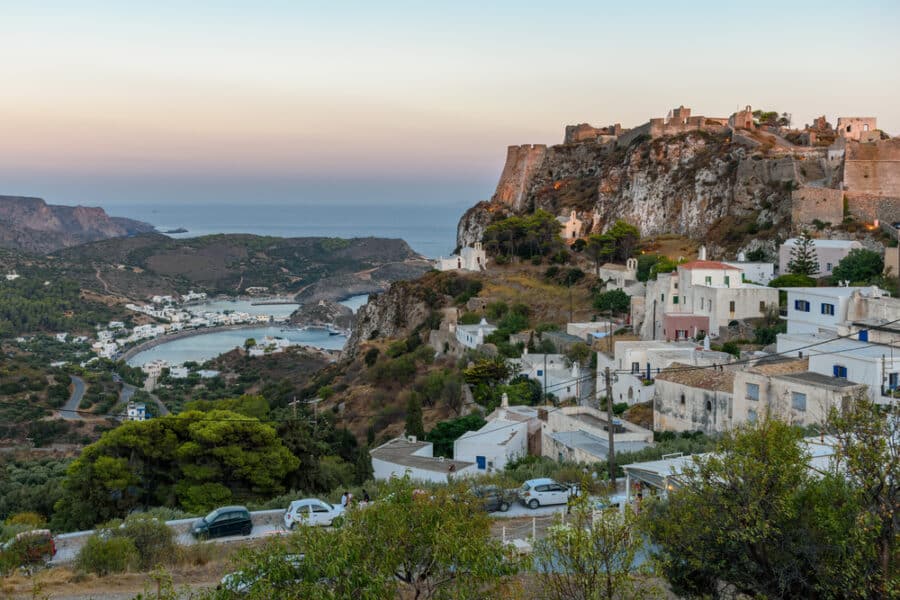
The Historic Centre (Chorá) with the Monastery of Saint John the Theologian and the Cave of the Apocalypse on the island of Patmos is indeed a UNESCO World Heritage site, recognized for its profound historical, cultural, and religious significance.
This site encapsulates a unique blend of natural heritage, architectural marvels, and spiritual depth, making it a cornerstone of Christian heritage worldwide.
Here are more details about its components and significance:
Monastery of Saint John the Theologian
- Foundation: the monastery was founded in 1088 by Saint Christodoulos in honor of Saint John the Theologian. This was after the Byzantine Emperor Alexios I Komnenos granted the whole island of Patmos to the Saint as a refuge in 1081.
- Architecture: the monastery is an exemplary specimen of Byzantine architecture, with its formidable fortifications mirroring the need for defense against pirate raids and invasions throughout the centuries. Its walls enclose chapels, courtyards, monks’ cells, and a richly endowed library.y
- Library: the library within the monastery is renowned for its vast collection of manuscripts, codices, and religious texts, including important Byzantine texts and documents dating back several centuries. It holds over 3,000 volumes of manuscripts and printed books, making it one of the most valuable collections in the Christian world.
Cave of the Apocalypse
- Significance: This sacred cave is believed to be where Saint John received his Revelation, also known as the Apocalypse, around the end of the 1st century A.D. The cave’s interior features inscriptions, icons, and a small chapel, encapsulating its spiritual atmosphere
- Visitation: the site is a major pilgrimage destination, drawing visitors who wish to see the place where the Apocalypse was written. Inside, one can see the rock’s crack, said to be where Saint John heard the voice of God.
Historic Centre (Chorá)
- Chorá: the settlement surrounding the Monastery of Saint John is characterized by its narrow lanes, white-washed houses, and small squares that have retained their medieval character. It provides a living example of a traditional Greek island town, complete with historical and architectural interest.
- Cultural Impact: Beyond its religious significance, the site has played a crucial role in disseminating Greek Orthodox monasticism and spirituality. The monastic ideals and scholarly pursuits conducted here have had a lasting impact on the Eastern Orthodox Church and Christianity as a whole.
UNESCO Recognition
- World Heritage Listing: the ensemble of the Monastery of Saint John the Theologian, the Cave of the Apocalypse, and the medieval settlement of Chorá was inscribed on UNESCO’s World Heritage List in 1999. This recognition was based on the site’s outstanding universal value as a testament to human spiritual and cultural achievements
16. Mount Athos
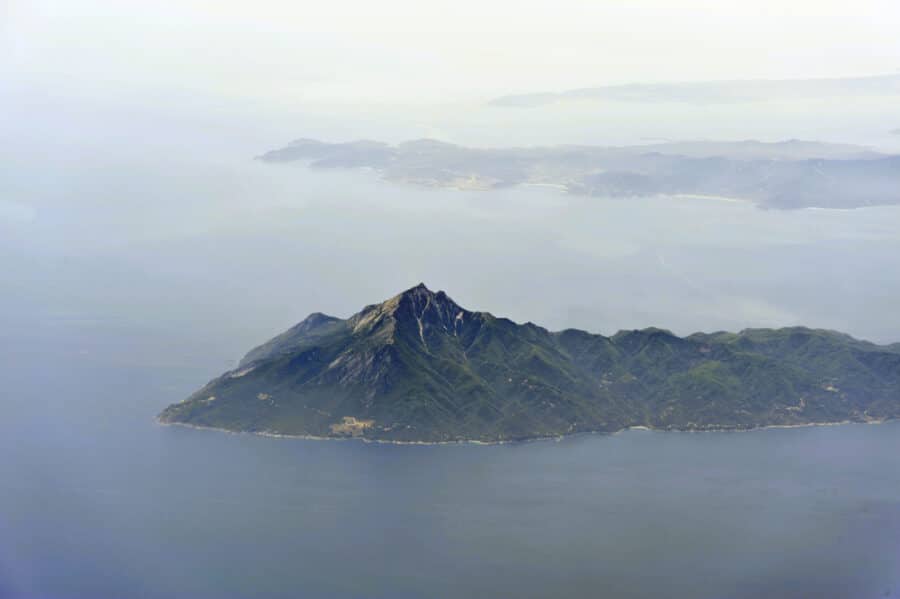
Mount Athos is an autonomous region located in northeastern Greece. It was declared a World Heritage Site by UNESCO for its natural beauty and rich cultural heritage.
The region is home to 20 monasteries, the oldest of which dates back to the 10th century. Each monastery has a unique history and culture; some are built in the traditional Byzantine style. Mount Athos is a popular destination for pilgrims worldwide and those seeking an escape from the hustle and bustle of everyday life.
Visiting Mount Athos is an unforgettable experience for anyone interested in Greek history and culture.
17. Archaeological Site of Philippi
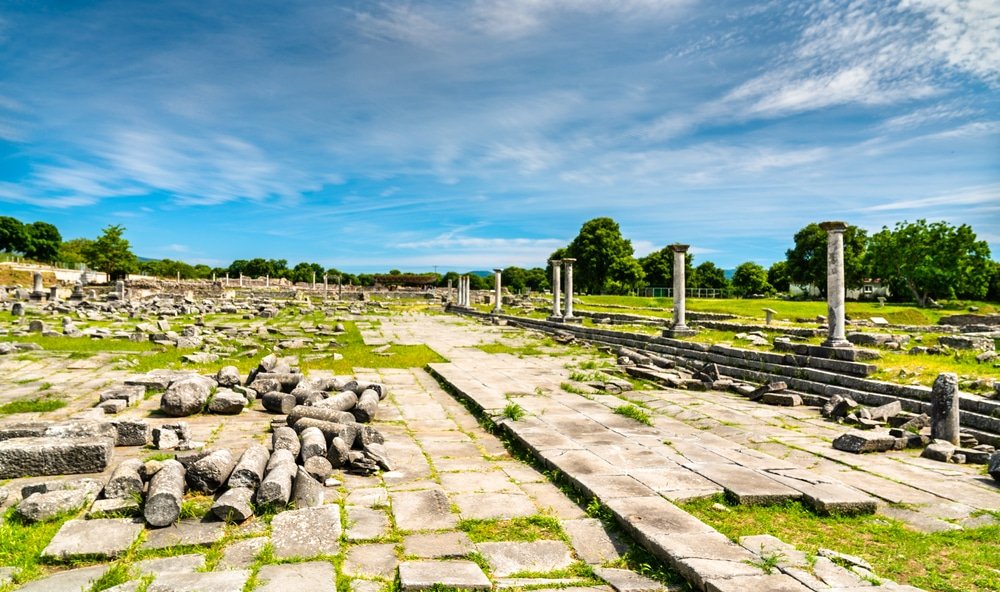
If you are looking for an archaeological site full of Greek history, the Archaeological Site of Philippi is the perfect destination. This UNESCO list site is located in Eastern Macedonia.
The site includes the ancient city of Philippi, founded by Philip II of Macedon in 356 BC. The town was an essential strategic center during the Hellenistic and Roman periods, and its ruins reflect this rich history.
The Archaeological Site of Philippi is especially notable for its well-preserved defensive walls and theatre.
Visitors come to explore the defensive walls, theatre, Roman-era remains, and early Christian basilicas.
18. Archaeological Site Of Aigai
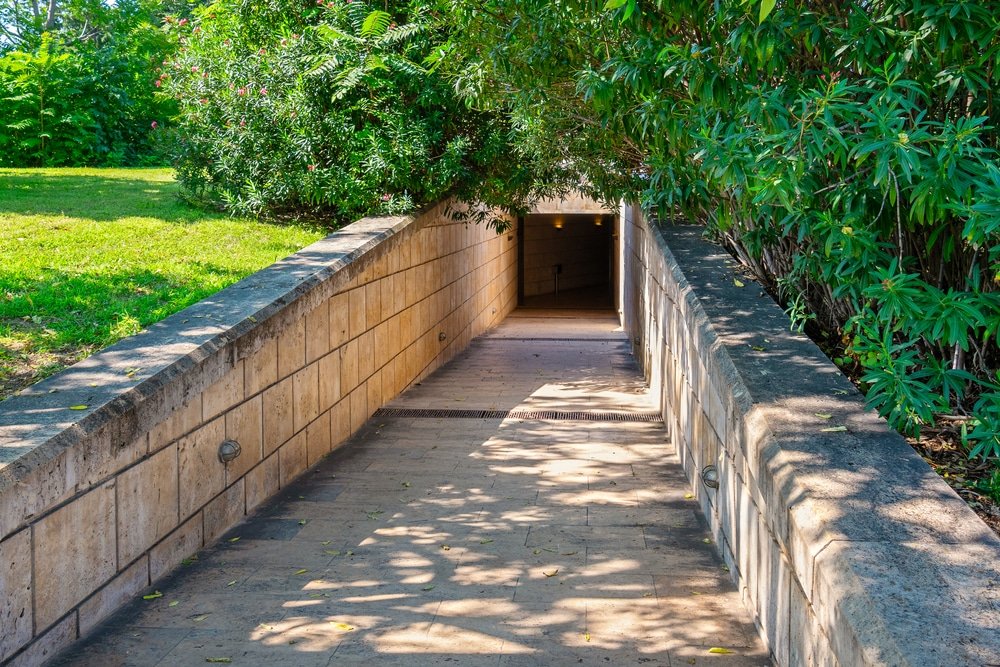
The Archaeological Site of Aigai (modern Vergina) in northern Greece is a treasure trove of ancient Macedonian history and culture, offering profound insights into the civilization that played a pivotal role in shaping the Hellenic world and expanding its influence under Alexander the Great.
The significance of the ancient city of Aigai, the first capital of the Kingdom of Macedon, and its UNESCO World Heritage status is anchored in its rich archaeological finds and historical importance.
Here’s an expanded look at its key features:
Historical Background
- Establishment and Significance: Aigai was founded in the 7th century BCE and became the cradle of the Macedonian kingdom. By the 4th century BCE, it had become the most important cultural and political center of the Macedonian kingdom, reflecting the wealth and power of the Argead dynasty, to which Philip II and Alexander the Great belonged.
- Cultural and Political Hub: As the ancient capital, Aigai hosted significant events, including royal weddings, funerals, and major political decisions that shaped the history of Greece and the wider ancient world.
Archaeological Discoveries
- Royal Tombs: The discovery of the Royal Tombs, including that of King Philip II, who was assassinated in 336 BCE, marked a significant archaeological milestone. These tombs revealed a wealth of artifacts, including weaponry, ceremonial items, and the famous gold larnax (chest) containing the remains of the king, distinguished by the Macedonian star emblem.
- Tomb of the Prince (possibly Alexander IV): another tomb, often called the “Prince’s Tomb,” is believed to belong to Alexander IV, the son of Alexander the Great. Like Philip’s tomb, it contained rich grave goods that underscore the wealth and artistry of the Macedonian elite.
- Artifacts and Artworks: the site has yielded numerous vital artworks and artifacts, including exquisite frescoes, gold crowns, silver urns, and intricate jewelry, which illustrate the sophistication of Macedonian craftsmanship and artistic expression
UNESCO Recognition
- World Heritage Listing: inscribed on the UNESCO World Heritage list in 1996, the site is recognized for its outstanding historical, cultural, and archaeological value, offering unparalleled insights into the lives of the Macedonian royalty and the society they led.
- Preservation and Study: The designation has helped in the conservation and study of the site, allowing for continued archaeological exploration and a deeper understanding of ancient Macedonian culture and its impact on subsequent historical periods
Visitor Experience
- Museum of the Royal Tombs: the modern museum built over the Royal Tombs allows visitors to experience the archaeological site with minimal intrusion into the landscape. It provides a unique opportunity to view the tombs and artifacts in situ, offering an immersive glimpse into ancient Macedonian life and ritual.s
Significance
The Archaeological Site of Aigai is not just an essential stop for those interested in Greek history or archaeology; it is a profound link to the past, showcasing the grandeur, political intrigue, and cultural achievements of ancient Macedonia. The discoveries made at Vergina have dramatically enriched our understanding of Macedonian kingship, burial practices, and artistic accomplishments, bridging millennia through tangible links to a time when Macedonia stood at the forefront of the ancient world.
19. Zagori Cultural Landscape (Added In 2023)
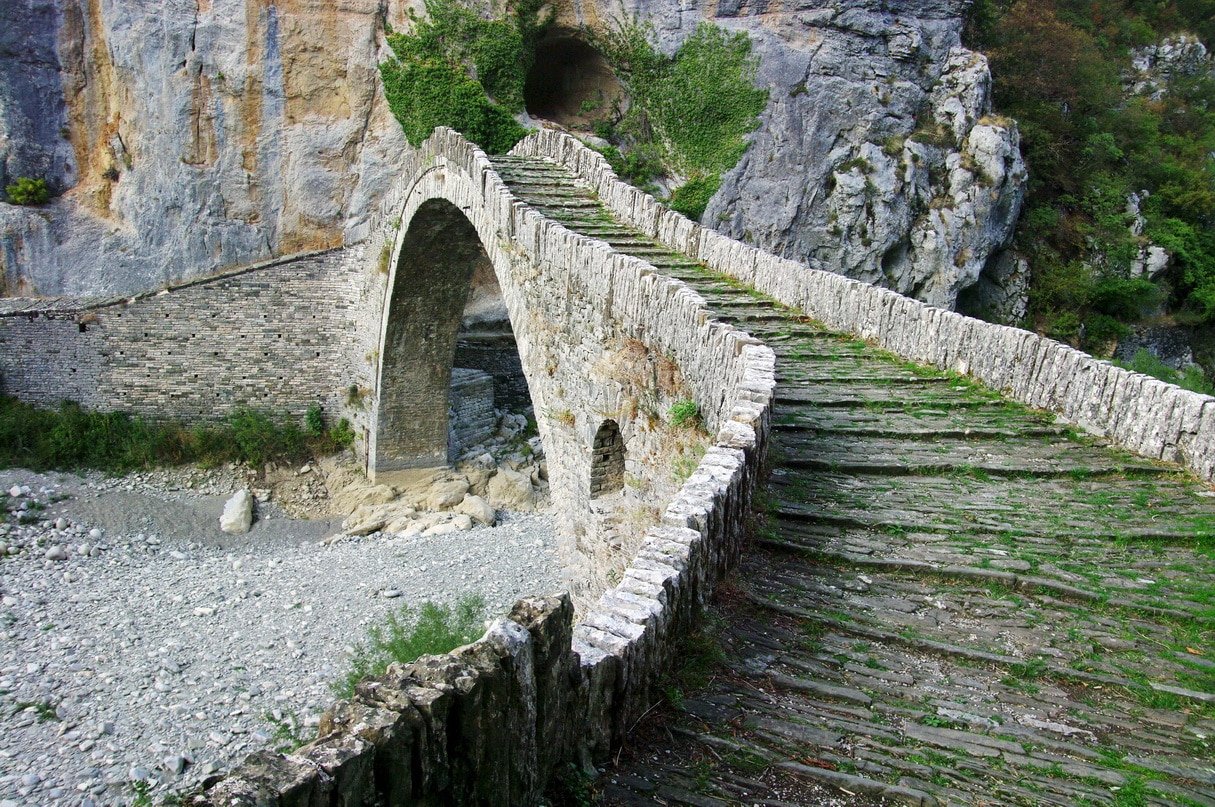
The Zagori Cultural Landscape, nestled in the heart of Epirus, Greece, stands as a testament to the harmonious relationship between human beings and nature. Inscribed as a UNESCO World Heritage Site in 2023, this breathtaking region is celebrated not only for its pristine natural beauty but also for its rich cultural heritage that spans centuries. Zagori is a unique area that boasts a distinctive architectural style, with its stone-built villages, arched bridges, and monasteries blending seamlessly into the rugged mountainous terrain of the Pindus range.
This cultural landscape is defined by its deep, verdant gorges, crystal-clear rivers, and dense forests, offering an unparalleled experience of Greece’s wilderness. The region’s traditional stone masonry is evident in its well-preserved dwellings, public buildings, and paths, which have been maintained through the ages, showcasing the area’s resilience and the locals’ deep respect for their environment.
Zagori’s addition to the UNESCO list highlights its global significance as an area where human interaction with their environment has created a landscape of exceptional beauty and cultural importance. The recognition serves not only to preserve the region’s natural and architectural wonders but also to promote sustainable tourism practices that respect and protect its heritage.
Visitors to Zagori are invited to explore its network of hiking trails, which crisscross the area and lead to secluded monasteries, picturesque villages, and breathtaking viewpoints. The region’s rich biodiversity, including its flora and fauna, further enhances its appeal as a destination for nature lovers and cultural enthusiasts alike. With its inscription in 2023, the Zagori Cultural Landscape proudly takes its place among the world’s protected areas, ensuring its preservation for future generations while inviting the world to discover its timeless beauty and cultural depth.
List Of World Heritage Sites In Greece On The Tentative List
Ancient Lavrion
Lavrion was one of the most important ancient centers of silver mining and has a history that stretches back to the prehistoric period.
Mount Athos (Extended Property)
Inscribed initially as a mixed cultural and natural site, Greece has proposed an extension to include additional areas or attributes.
Access note: Mount Athos has special entry rules. Visitors must obtain a Mount Athos entry permit (diamonitirion) in advance; daily entries are capped, and women are not permitted to enter.
Extensions Of The “Delos” property
Delos, a sacred island in ancient Greek mythology, is proposed to have its designated area extended.
The Ancient Olive Groves Of The Mediterranean
This proposal aims to recognize the cultural and historical significance of ancient olive groves across the Mediterranean region, including those in Greece.
The Philippi Area
The archaeological site of Philippi, which includes the ruins of a Roman city that was important in early Christian history, is proposed for further recognition or extension.
The Archaeological Site Of Nikopolis
Caesar Augustus founded Nikopolis in commemoration of his victory over Antony and Cleopatra at Actium. It’s an important cultural site reflecting Roman and Greek influences.
Late Medieval Bastioned Fortifications In Greece
This proposal would recognize the extensive network of late medieval fortifications built by various powers in Greece, showcasing advancements in military architecture.
The Spinalonga Fortress
Located on the island of Spinalonga, this fortress has a rich history, from its Venetian occupation to its use as a leper colony in the 20th century.
The Monasteries Of Daphni, Hosios Loukas, And Nea Moni Of Chios (extension)
These Byzantine monasteries, already recognized for their significant mosaics and architecture, may have proposed extensions to their identified areas.
The Dodecanese
A proposal might include the historical and archaeological significance of this group of islands, spanning ancient Greece to medieval times.
The Minoan Palatial Centres (Knossos, Phaistos, Malia, Zakros, Kydonia)
Proposals for these sites would emphasize the significance of the Minoan civilization and its architectural, artistic, and technological achievements.
Move This Adventure To Your Inbox & Get An Instant Freebie

No spam. Unsubscribe at any time.
World Heritage Site FAQs
How many UNESCO World Heritage Sites are there in Greece?
There are 20 UNESCO World Heritage Sites in Greece. The latest was added in 2025.
Why is Aigai important?
Aigai was the former capital of the ancient Kingdom of Macedon.
Which site served as the spiritual center of ancient Greece?
Delphi served as the spiritual center of the ancient Greek world.
Where were the ancient Olympic Games held?
The ancient Olympic Games were held in Olympia.
What is significant about Mystras and Rhodes?
Mystras reflects the final years of the Byzantine Empire, while Rhodes preserves structures from both the rule of the Order of St. John and the Ottoman period.
What’s special about the monasteries of Daphni, Hosios Loukas, and Nea Moni of Chios?
These monasteries are especially significant for their mosaics and architecture from the “second golden age” of Byzantine art.
What is the importance of the Old Town of Corfu and Mount Athos?
The Old Town of Corfu is noted for its strategic location and exceptional state of preservation. Mount Athos has been a major spiritual center since the mid-11th century.
What heritage sites showcase Greek architecture?
The Pythagoreion and Heraion of Samos, along with the Temple of Apollo Epicurius at Bassae, are outstanding examples of ancient Greek architecture.
Which is the latest site to be incorporated into the UNESCO World Heritage Site list?
The Minoan Palatial Centres on Crete are the most recent addition, inscribed in 2025.
Are the Acropolis and the Parthenon a UNESCO World Heritage Site?
Yes. The UNESCO listing “Acropolis, Athens” includes the Parthenon and the other major monuments on the Acropolis.
Do I need to prebook tickets for major UNESCO sites in Greece?
Advance booking is strongly recommended for high-demand sites such as the Acropolis, especially in peak season and on weekends. Requirements vary for island sites and museums.
Can you visit Delos independently, and is it a day trip?
Yes. Delos is usually visited as a day trip by boat, most commonly from Mykonos. As an uninhabited island, access depends on seasonal boat schedules.
Which UNESCO sites in Greece are best for early Christian and Byzantine history?
Key sites include the Paleochristian and Byzantine Monuments of Thessaloniki, Meteora, Mount Athos (with restricted access), and the Historic Centre of Patmos with the Monastery of Saint John and the Cave of the Apocalypse.
Can women visit Mount Athos?
No. Women are not permitted to enter Mount Athos, and all visitors must obtain a special entry permit (diamonitirion) in advance.
What’s the easiest UNESCO site to visit from Athens without a car?
The Acropolis is located in central Athens. Delphi is a popular day trip by public bus or on an organized tour, and Epidaurus is often visited on guided Peloponnese tours.
Are UNESCO World Heritage Sites in Greece open year-round?
Most major sites and museums operate year-round with seasonal hours, but access to island sites like Delos can be seasonal. Always check the current opening times close to your travel date.
Which UNESCO sites are on Crete?
The UNESCO World Heritage inscription on Crete is the Minoan Palatial Centres, a serial site comprising several palace centres across the island.
Is the Old Town of Corfu on the Greek mainland?
No. The Old Town of Corfu is on the island of Corfu (Kerkyra), situated on a peninsula along the island’s eastern coast.
What’s the best way to structure a UNESCO-focused Greece itinerary?
Most travelers group sites by region: Athens and nearby day trips; Peloponnese clusters; Northern Greece (including Thessaloniki, Vergina, Meteora, and Philippi); and island groups such as the Cyclades, Dodecanese, Ionian Islands, and Crete.
Final Word On Unesco Sites In Greece
So, as you can see, Greece is home to some of the world’s most impressive and vital UNESCO World Heritage Sites. From ancient ruins to breathtaking monasteries, these sites are essential destinations for anyone interested in Greek history and culture. Whether you’re a history buff or simply looking for a unique experience, there’s something for everyone in Greece. So pack your bags and get ready to explore one of the world’s most fascinating countries!
- Unique Things To Do In Greece With Kids
- How To Tip In Greece
- Car Rental And Driving Tips For Greece
- Where To Stay In Crete
- What To Expect & Do In September In Greece
- Things To Do In Greece During The Winter
- Packing Tips For Greece
- Things To Do And Eat During Easter In Greece
- How To Travel Greece On A Budget
- How To Get From Santorini To Crete
- Things To Do In Corfu For Families
- Best Cave Hotels In Greece
- Where To Stay On Corfu
- Greek Island Groups – Everything You Need To Know
- Mainland Beaches In Greece Not To Miss