
Ready to step back in time to ancient Greece? This guide is your ticket to exploring the incredible Ancient Greek cities where legends of gods, goddesses, and mythical heroes were born. We’re covering top spots like Athens and the Peloponnese, plus hidden gems in northern Greece and the enchanting Greek Islands.
Think awe-inspiring Greek temples, tales etched in ruins, and landscapes straight out of Greek mythology. Whether it’s in bustling Athens or the serene mainland, each place tells a story of the ancient Greeks. Get set to immerse yourself in history and myth – this journey through ancient Greece is one you won’t forget.
Let’s dive into the past and explore these timeless wonders!
Skip Ahead To My Advice Here!
Ancient Athens: Acropolis And Agora Highlights
Athens has been inhabited since the Neolithic period (before 3000 BC), and by around 1400 BC, the Acropolis had become a major Mycenaean citadel. The later story that King Theseus united the settlements of Attica is part of Greek tradition rather than a datable historical foundation.
Athens was known for its trade and naval prowess, becoming the center of Greek civilization and the birthplace of democracy.
1. Acropolis Of Athens And The Ancient Agora
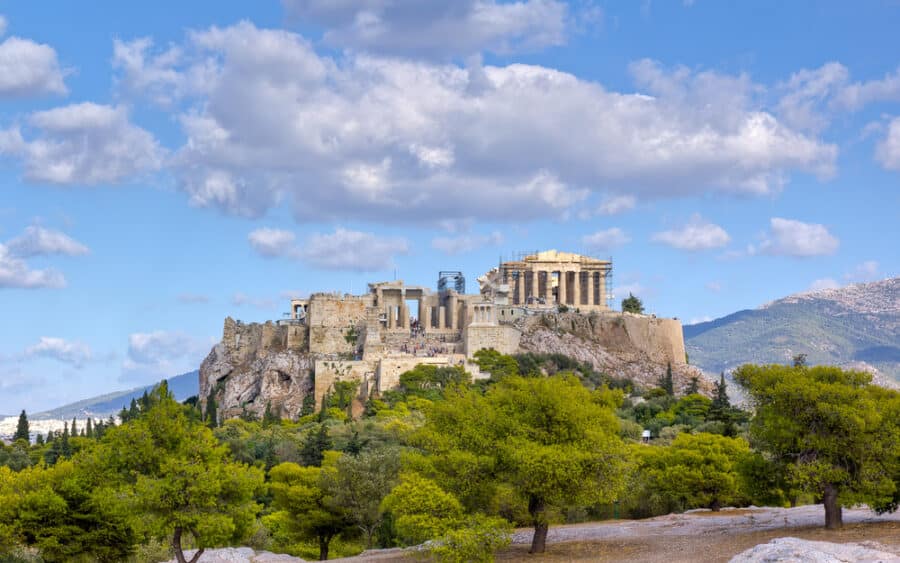
Athens has been inhabited since before 3000 BC, and the Acropolis later became a major Mycenaean fortified citadel.
Today, the magnificent Acropolis Hill and its countless historical ruins can be explored. The main attractions on any trip to the Acropolis include the Parthenon, the Erechtheion, the Propylaia, the Temple of Athena Nike, the Odeon of Herodes Atticus, and the Theatre of Dionysus. In actuality, they are among the most significant tourist attractions on Greece’s mainland.
You must visit the Acropolis Museum while in this ancient Greek city. This modern museum contains galleries focused on the Acropolis monuments and displays major finds from the Acropolis slopes and sanctuary.
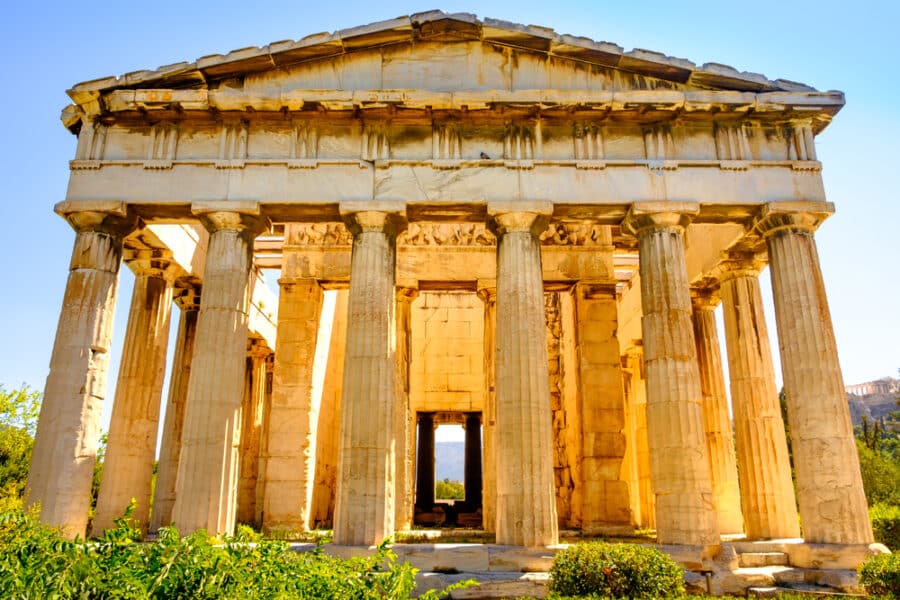
The Ancient Agora of Athens, located just northwest of the Acropolis, is one of the best-known archaeological sites in Greece.
This group of ruins essentially represents an “agora,” a Greek term for a gathering place or marketplace. The Agora, in the city’s center, has a continuous history of habitation that extends over more than 5,000 years.
Today, archaeologists are working to uncover more information about the location in relation to ancient Athens. Visitors can take in the restored Stoa of Attalos, a long colonnaded structure that stretches along the site’s edge, and discover more about the well-preserved Temple of Hephaestus.
Ancient Cities In The Peloponnese Region
2. Sparta
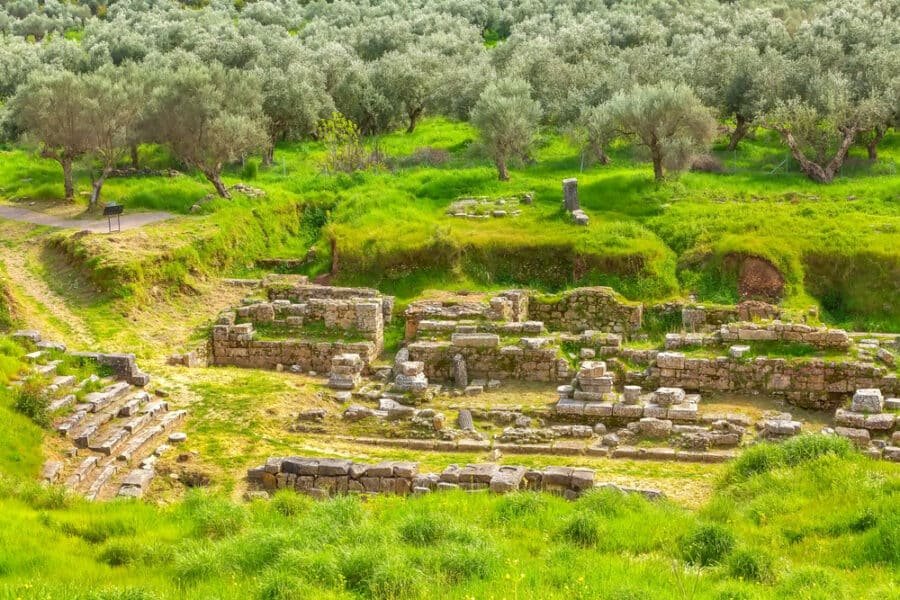
Sparta was a sizable ancient Greek city-state and Athens’ primary adversary. Its military might was its greatest asset. Sparta’s valiant troops served their city. Every adult male was assigned to a slave-run farm and considered a soldier in the Spartan army, which was small.
Starting as a small polis with only five towns, it expanded by annexing other settlements and states, eventually devouring the majority of the Peloponnese and enslaving many of its citizens.
It wielded enormous authority and controlled a vast area by 650 BC. A warrior class controlled its populace. Only through military alliances formed among other important Greek city-states, such as Argos, Athens, Corinth, and Thebes, could Sparta be subdued. At the Battle of Mantinea in 362 BC, it ultimately fell to Thebes.
Temples, columns, a theater from the Hellenistic era, and a modern statue of Leonidas (the Spartan king who led Greek forces at Thermopylae against Xerxes I) can currently be found among Sparta’s ruins.
3. Olympia
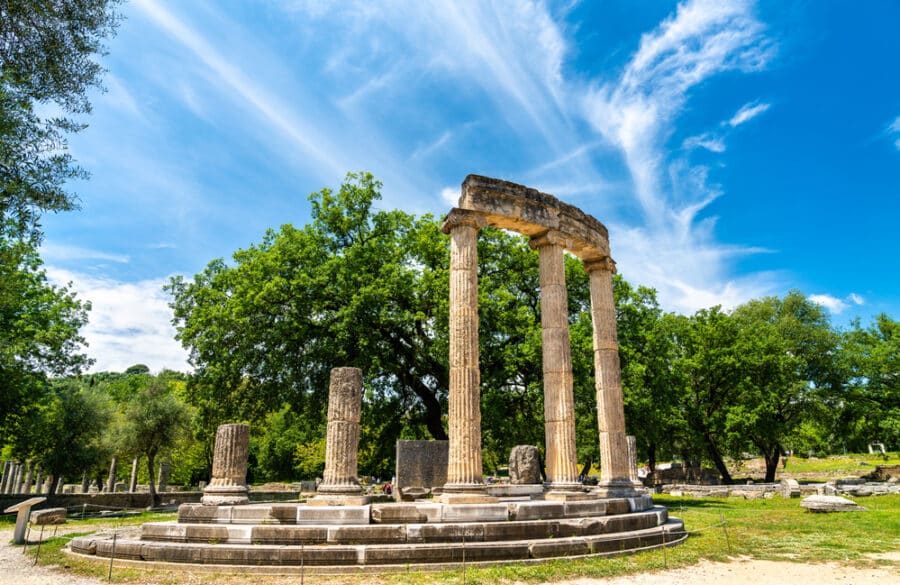
One of the most critical sanctuaries in ancient times, devoted to the worship of the most important of all Greek gods, Zeus, Olympia is located in the heart of the Peloponnese. She is one of the Greek sites loved by children.
Also, the Olympic Games would take place in Ancient Olympia. The first ancient Olympic Games are traditionally dated to 776 BC, and they were held in honor of Zeus.
The Olympics were among the most important Panhellenic festivals, and the Olympic truce (ekecheiria) was intended to ensure safe travel for athletes and visitors during the Games.
When you visit, don’t miss the Temple of Zeus and Hera, the workshop of sculptor Phidias, and the area where the sports and games took place. The Museum of Olympia is another fantastic visit to add to your itinerary.
4. Corinth
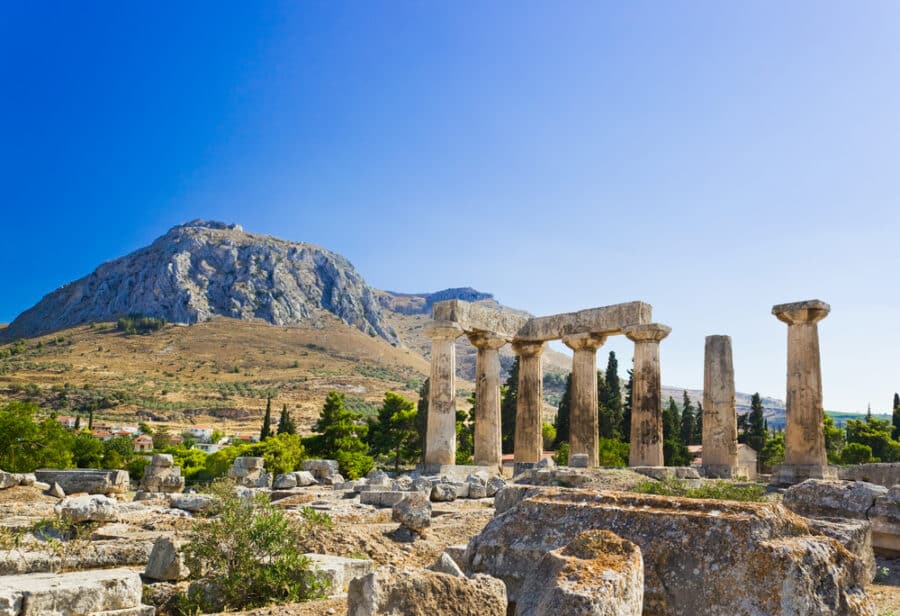
One of the biggest and most significant ancient Greek civilizations was Corinth. The once-massive city was established at the base of Acrocorinth, a steep hill rising about 575 meters above sea level, with fortifications that historically linked the acropolis to routes toward Corinth’s ports.
Today, the city bears the historical imprint of the Byzantines, the Venetians, and the Ottomans.
The Corinth Canal, which links the Saronic Gulf and the Ionian Sea, may be seen in present-day Corinth. You can see this technical marvel, which has turned the ancient Peloponnese peninsula into yet another breathtaking Greek “island,” from above as you cross the artificial Corinth Canal.
Remember to stop by the important Temple of Apollo, constructed around 560 BC and located just beneath Acrocorinth, the Corinthian Acropolis.
5. Mycenae
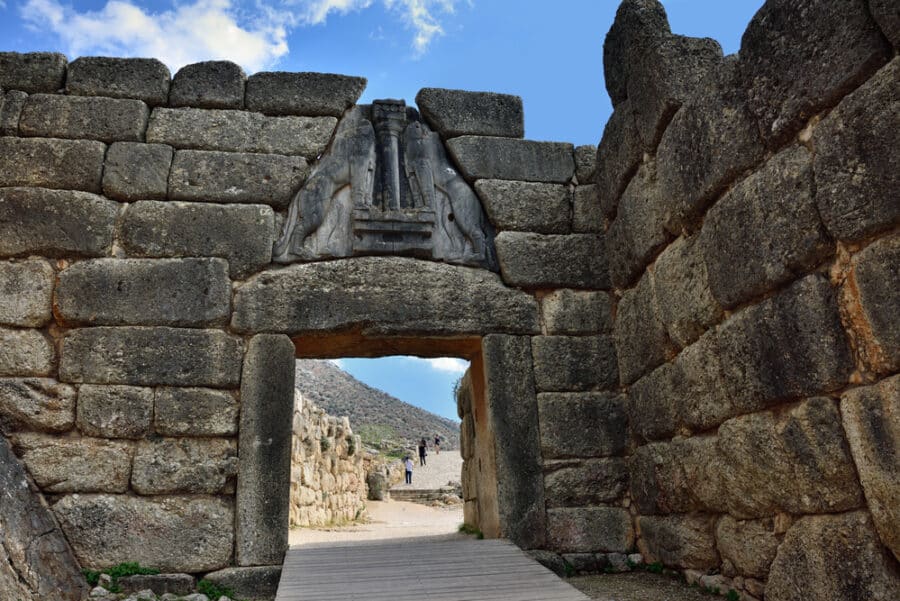
Like Corinth, Mycenae was once a thriving city-state and a prosperous trade hub. Nestled among the rolling hills of the Peloponnese, this ancient city salutes the visitors with all its might and offers them a perspective of a long-gone time.
Mycenae was an important center of power during the Bronze Age and was ruled by various civilizations throughout history.
Nevertheless, today, the city’s prosperous days are behind it. The well-preserved ruins, including the impressive Lion Gate, the palace complex, and the Cyclopean walls, evoke a sense of pride and longing in visitors.
6. Epidaurus
Brands We Use And Trust
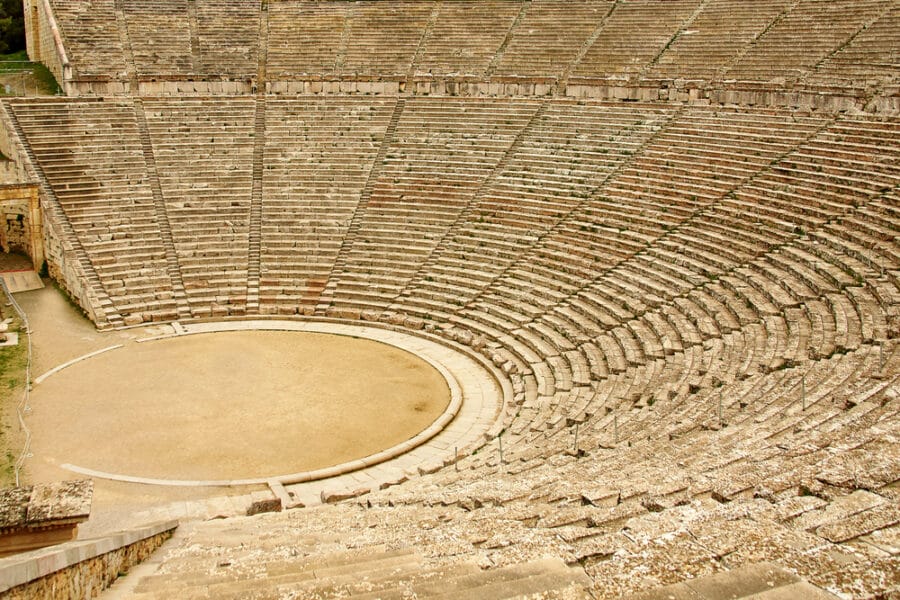
Epidaurus was a small city endowed with a moderate climate, fertile soil, and several natural springs. It was one of the most famous ancient Greek cities for the exquisite acoustics of its well-preserved theater. The Temple of Asclepius, a deity renowned for his exceptional healing abilities, was located inside the city.
As a result, pilgrims came to Epidaurus from all around, dedicating works that helped fund countless buildings and artistic endeavors. The theatre is in good condition and arguably the most popular place to see when in Epidaurus. The ruin is an interesting spot to visit because of the acoustics, which allow visitors to hear clearly from wherever in the stands. Epidaurus’ theater is still utilized today for summertime productions and live music concerts.
7. Argos
This city has a continuous history of settlement from ancient times to the present day. It is located in the Peloponnese region of Greece.
Ancient Macedonia: Pella And Vergina
8. Pella & Vergina
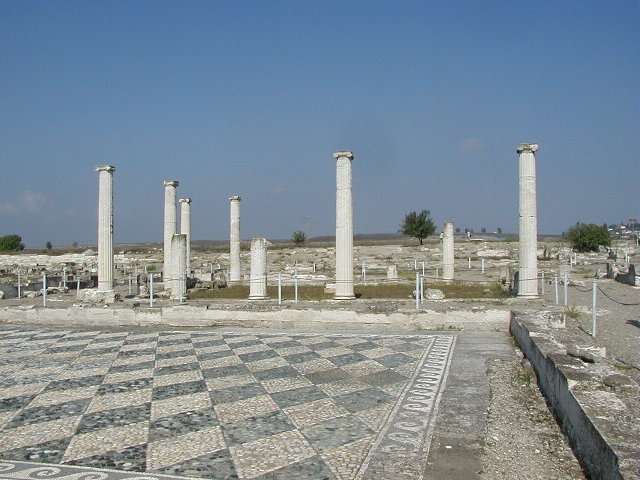
The Ancient Greek Kingdom of Macedonia rose to power during the 4th century BC under the rule of Philip II. You most likely have heard of his son, Alexander the Great, who rolled out the Hellenistic period of Greece when he set out to conquer the world.
The city of Pella, the birthplace of Alexander the Great, is about 35–45 minutes (around 50 km) from Thessaloniki by road.
Once in town, take some time to explore the local museum and the archaeological site of Pella, home to stunning mosaics and artifacts from various periods.
While in the area, add a second stop to your trip by heading to Vergina. Here, it is possible to visit the Museum of the Royal Tombs of Aigai and the Archaeological sites, which exhibit excavations and objects from the splendorous Greek Kingdom of Macedonia.
Ancient Cities In Central Greece
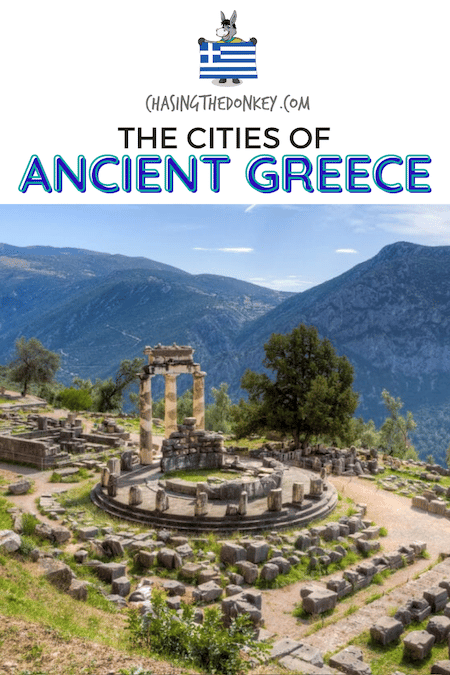
9. Delphi
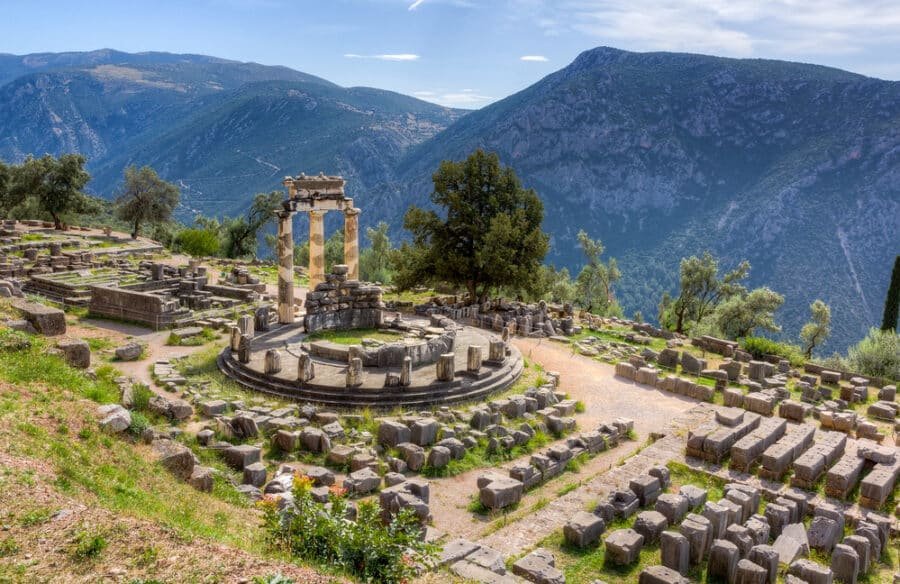
Delphi was a popular destination for pilgrims thousands of years ago. This was because the Apollo Sanctuary in this region was home to one of the most significant oracles in all of Greece. Because of her ability to communicate with the Greek deity Apollo, the oracle (also known as the Pythia) was a valued member of ancient Greek society. People would come to Delphi from all over the world and from all various eras to consult the oracle. Delphi became one of the major cities in ancient Greece because of its presence.
The Pythian games, which were held in Delphi every four years, were also held there. Participants from all over ancient Greece competed in equestrian and athletic competitions for a laurel crown carved from the sacred Apollo tree.
Nowadays, the mountain town of Delphi is frequented by travelers rather than pilgrims. The restaurants perched on cliffs that overlook the lavish olive groves are just one of the many reasons to visit.
10. Thebes
Thebes, which was established 48 kilometers northwest of Athens at the foot of the Teumessus mountain, eventually became the largest city in that area. It is famously known as the home of Hercules and as a rival of Athens.
Ancient Cities On The Greek Islands
11. Knossos, Crete Island
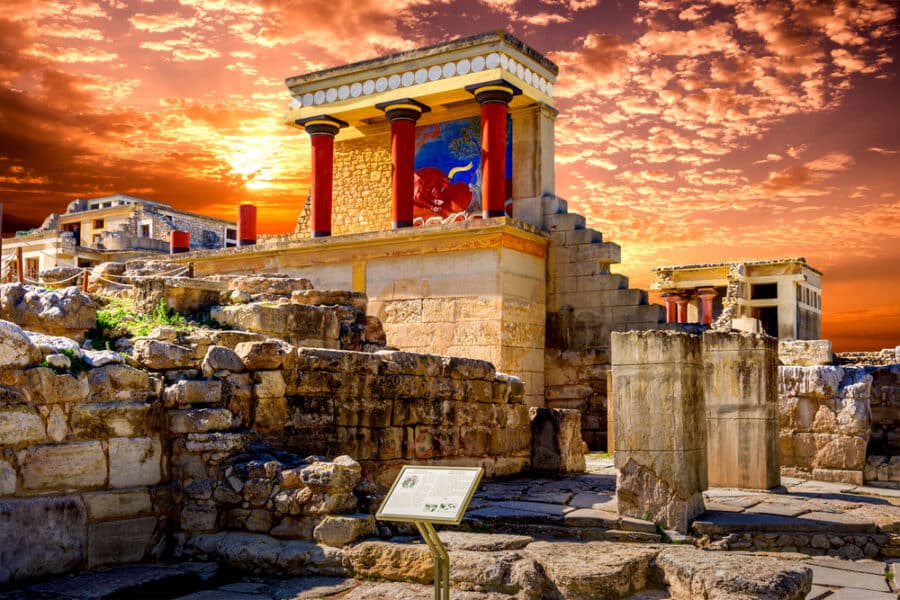
The largest archaeological site in Crete is located at Knossos, the Minoan civilization’s capital. It contains the remnants of a huge palace that once stood where the legendary labyrinth from the Theseus and the Minotaur story is said to have been. The Royal Chambers, porticoes, and irrigation drains are among the site’s countless detailed murals and artworks. It is one of Crete’s most famous archaeological sites.
12. Akrotiri of Thera, Santorini Island
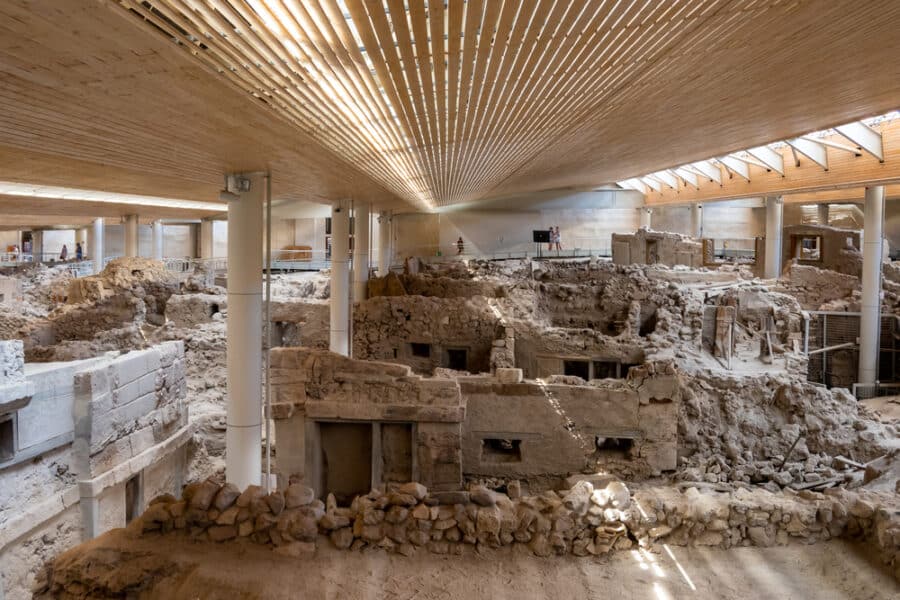
The world-famous sunsets and romantic restaurants draw most visitors to the island of Santorini, but the vacation island is also where the Bronze Age village of Akrotiri once stood. It was a significant Bronze Age settlement that was blanketed in volcanic ash in the 16th century BC, and systematic excavations began in 1967.
It is often nicknamed the “Greek Pompeii” because volcanic ash preserved parts of the settlement, including buildings and frescoes.
13. Eretria, Evia (Euboea) Island
Located about 20 km south of Chalkis, the capital of Evia Island, you can explore the ancient ruins of Eretria, with remains dating back to the ninth century BC. The city was once an important city-state, and Homer mentions that ships from Eretria participated in the Trojan War.
Among the ruins you can see today, there are two remarkable palaces, ancient baths, important temples, and a private residence with unique mosaics.
However, the most essential feature on the site is the ancient theater, among the oldest ones in Greece, dating back to the fifth century BC. The most curious characteristic of the amphitheater is that it was laid on an artificial hill.
After exploring the ancient site, it’s a good idea to head to the Archaeological Museum of Eretria, which features figurines, vases, and other relics from the site, including a remarkable funerary amphora depicting Heracles fighting the Centaurs.
The museum is open 08:30–15:30 and is closed on Tuesdays. The standard ticket is 5€.
14. Aegina Island
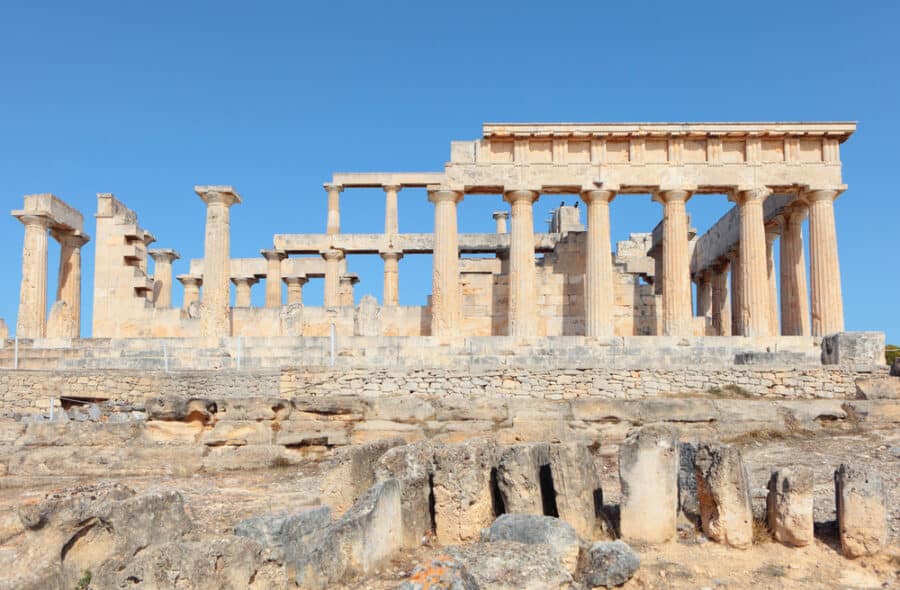
As a whole, this island was known for its impressive naval fleet in 500 BC. With its location between the three main trade routes of Ancient Greece – Corinth, Peloponnese, and Attica – the island became a hub of commercial development.
Wondering what to do in Aegina? Probably one of the places you shouldn’t miss when visiting Aegina is the beautiful Temple of Aphaia, considered one of the best-preserved Classical temples in Greece.
This impressive site dates back to around 500 BC. Located about 13 km from Aegina Town, the site is on a hill and offers stunning views of the surrounding area. The standard ticket is 10€ (reduced 5€).
When you visit, why not also spend an hour discovering the fantastic Archaeological Museum of Aphaia? It’s located right in the archaeological site, and it will offer a broader panorama of life on the island during the Classic period.
15. Samos Island
Of course, Samos is an island we can’t avoid mentioning. The island was a strong maritime city-state and is the birthplace of Pythagoras. A visit to the Pythagoreion and Heraion of Samos is essential to any Greek history tour, especially if you’re a math fan!
The Pythagoreion and the Heraion of Samos are two UNESCO World Heritage Sites on the island. They are a reminder of the island’s ancient past, with ruins that date back to the 8th century BC. Highlights include the remains of fortifications, temples, palaces, and public buildings. The site is also home to a museum, where visitors can learn more about the island’s rich history and culture.
Ancient Greek Cities In Modern-Day Türkiye
16. Ephesus
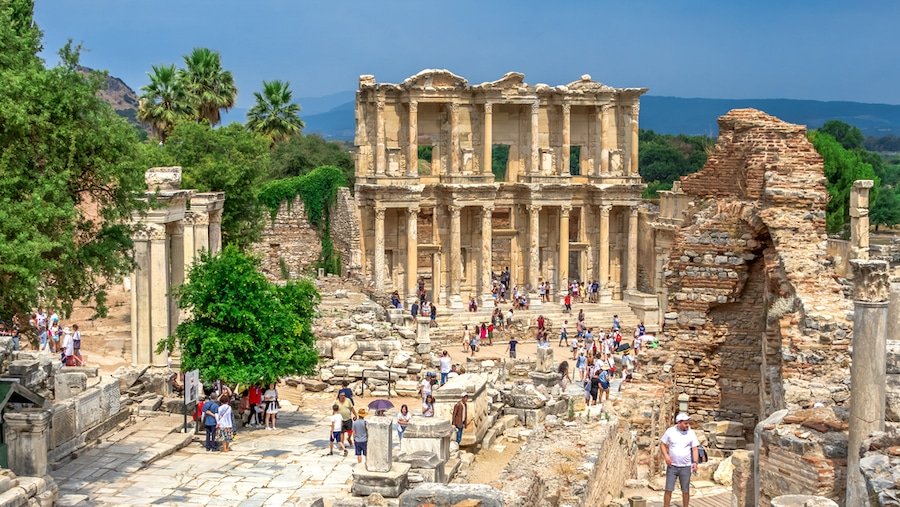
Although Ephesus is in modern-day Turkey, it was originally an ancient Greek city of enormous importance. The city was founded in the 10th century BC and was later taken control of by the Romans in 129 BC. This was when Ephesus’ time really came to fruition, as the city grew into a bustling, massive place of strategic importance near the Aegean. At its peak, around 50,000 people lived in Ephesus.
Much of the architecture you’ll see today reflects the Roman period, including the vast Great Theatre (exceptionally well-preserved) and the Library of Celsus; the Temple of Artemis survives only in limited remains.
In its heyday, the theatre could hold around 25,000 people, and it hosted performances and public events, including gladiatorial spectacles in the Roman era. The Temple of Hadrian and the Library of Celsus were also prominent Roman structures.
The region came under Turkish control in the early 14th century, and over the following centuries, the city’s importance declined.
The history of Ephesus is rich and diverse, and there is a lot of religious significance, too. Many important figures in religious history are said to have visited Ephesus, and the House of the Virgin Mary is said to be where the Virgin Mary spent her last days.
17. Byzantium & Constantinople (Istanbul)
Istanbul is a tale of two continents, empires, and millennia. Known as Byzantium and later Constantinople, Istanbul is one of the most important cities in Mediterranean and Eurasian history.
After centuries in the Roman and Byzantine Empires, the city became an Ottoman capital in 1453. Divided by the Bosphorus Strait, Istanbul’s Western side belongs to Europe, and its Eastern side to Asia.
18. Aphrodisias
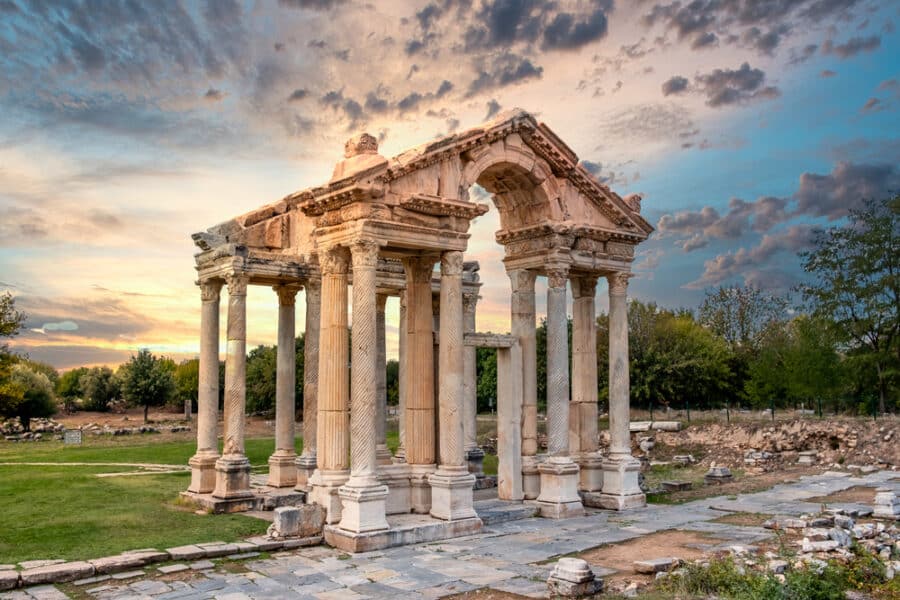
Aphrodisias was an ancient Greek city located in southwestern Turkey. The city was named after the goddess Aphrodite and flourished during the Roman period. Today, the site is a UNESCO World Heritage site and is considered one of the most important archaeological sites in Turkey.
Aphrodisias sits in the fertile valley of the Morsynus River in ancient Caria (near modern Geyre) and preserves major civic, religious, and residential remains within its city walls.
The most impressive monuments at Aphrodisias include the Temple of Aphrodite, the Tetrapylon (a monumental gateway), the Stadium, and the Theater.
- The Temple of Aphrodite was one of the largest temples in the city, dedicated to the goddess of love and beauty. The temple was adorned with numerous statues and reliefs depicting Aphrodite and her worshippers.
- The tetrapylon was a four-sided gateway, decorated with columns, that led into the main street of Aphrodisias. The Stadium was used for athletic competitions and could seat up to 30,000 spectators.
- The theater was used for performances and civic gatherings, and it is commonly estimated to have seated around 8,000 people. Today, visitors can explore the ruins of Aphrodisias and see many of its impressive monuments. The site also has a museum housing artifacts found during excavations at Aphrodisias.
19. Pergamon
In İzmir Province, Pergamon is an archaeological site perched high on the hillside. Pergamon was a major Hellenistic Greek city and later the center of the Attalid Kingdom, and it was famous in antiquity for its library.
The Acropolis of Pergamon, the monumental core of the Attalid Kingdom’s capital, is home to many temples and ruins to explore.
In addition, visitors can explore its well-preserved huge amphitheater and the famous Library of Pergamon.
The Kybele Sanctuary is also part of this site, as are old burial centers and plenty of evidence pointing to different eras, including Byzantine, Roman, and Ottoman.
- 20. Miletus – a premier fortified city on the western coast of Anatolia
- 21. Halicarnassus – one of the Seven Wonders of the Ancient World, today found in Mugla
- 22. Miletus: this ancient Greek city is now located near the modern town of Balat in Aydın Province, Turkey
- 23. Colophon: An ancient city of Ionia, Colophon is now near the town of Değirmendere Fevzi Çakmak in İzmir Province, Turkey
- 24. Syracuse: Once a powerful Greek city-state, Syracuse is now a historic city in the Italian region of Sicily
- 25. Cyrene: An ancient Greek and later Roman city near present-day Shahhat, Libya
FAQs About Ancient Greek Cities
What are the best ancient Greek cities to visit in Greece for first-timers?
For a first trip focused on headline sites, start with Athens (Acropolis and Ancient Agora), then add Delphi, and choose one Peloponnese cluster such as Corinth + Mycenae + Epidaurus, or Olympia if the ancient Games are a priority.
Is Athens really the birthplace of democracy?
Athens is widely associated with the development of early democratic institutions in the Classical period, especially reforms that expanded citizen participation in governance.
What is the difference between the Acropolis and the Ancient Agora in Athens?
The Acropolis is the fortified hilltop sanctuary, home to major temples such as the Parthenon. At the same time, the Ancient Agora was the civic, commercial, and political center of the city below, with key buildings and public spaces.
When did the ancient Olympic Games begin?
The first ancient Olympic Games are traditionally dated to 776 BC, held at Olympia in honor of Zeus.
Did wars stop during the ancient Olympic Games?
The Olympic truce (ekecheiria) was intended to protect travel for athletes and visitors during the Games; it was not a universal end to all warfare across Greece.
Is Akrotiri on Santorini the “Greek Pompeii”?
Akrotiri is often compared to Pompeii because volcanic ash preserved parts of a Bronze Age settlement, including buildings and frescoes. It is a different period and culture from Roman-era Pompeii, but the preservation is what gives it the nickname.
When did systematic excavations at Akrotiri begin?
Systematic excavations at Akrotiri began in 1967 under Spyridon Marinatos, building on earlier investigations on Santorini in the late 19th century.
Are the Pythagoreion and the Heraion on Samos UNESCO World Heritage Sites?
Yes. The UNESCO World Heritage listing for Samos includes the Pythagoreion and the Heraion as part of the same property.
Is Ephesus an ancient Greek city or a Roman city?
Ephesus was originally a Greek city and later became a major Roman-era city; many of the standing monuments visitors see today reflect Roman-period building and rebuilding.
What remains of the Temple of Artemis at Ephesus?
The Temple of Artemis is famous as a Wonder of the Ancient World, but only limited remains survive on the temple site today.
How long do you need at Delphi?
Most travelers spend half a day to a full day at Delphi to see the main sanctuary area and museum at a comfortable pace.
Which Peloponnese sites pair well together in one itinerary?
Corinth, Mycenae, and Epidaurus are commonly combined because they’re relatively close, offer different types of remains, and create an efficient loop from the Athens area.
What is the single best-preserved Classical temple near Athens?
Several temples compete for the title of “best-preserved,” depending on what you mean by preservation and by setting. The Temple of Aphaia on Aegina is often cited as one of the best-preserved Classical temples and is a popular day-trip option.
Move This Adventure To Your Inbox & Get An Instant Freebie

No spam. Unsubscribe at any time.
Key Facts For Visiting These Ancient Greek Cities
| Site | Location | Why It’s Worth Visiting | Time-Sensitive Visitor Info In This Guide |
|---|---|---|---|
| Archaeological Museum of Eretria | Eretria, Evia (Euboea) | Local museum with finds from the ancient site | Published hours 08:30–15:30; Tuesday closed; standard ticket 5€ |
| Akrotiri of Thera | Santorini | Preserved Bronze Age settlement with frescoes | Public access has had periodic closures and schedule changes in recent years. |
| Ancient Olympia | Peloponnese | Major sanctuary of Zeus; ancient Olympic Games site | First Games traditionally dated to 776 BC; the truce focused on safe travel |
| Aphrodisias | Near Geyre, Türkiye | UNESCO site with stadium, Tetrapylon, temple complex | Theatre capacity is commonly estimated at around 8,000 |
- Unique Things To Do In Greece With Kids
- How To Tip In Greece
- Car Rental And Driving Tips For Greece
- Where To Stay In Crete
- What To Expect & Do In September In Greece
- Things To Do In Greece During The Winter
- Packing Tips For Greece
- Things To Do And Eat During Easter In Greece
- How To Travel Greece On A Budget
- How To Get From Santorini To Crete
- Things To Do In Corfu For Families
- Best Cave Hotels In Greece
- Where To Stay On Corfu
- Greek Island Groups – Everything You Need To Know
- Mainland Beaches In Greece Not To Miss
Excellent – as usual