

If you’re deciding which airport to fly into for Croatia, the best choice depends on where you’ll be based. Zagreb (ZAG) is the main airport for the capital and inland Croatia; Split (SPU) is best for Central Dalmatia and nearby islands; and Dubrovnik (DBV) is best for the far south.
Croatia has 9 airports with scheduled commercial passenger flights. Coastal airports are highly seasonal, while Zagreb runs strong year-round, so choosing the airport closest to your final destination usually saves the most time once you land.
Skip Ahead To My Advice Here!
Croatia Airports Overview
Are you planning a trip to Croatia and wondering which airports and airlines operate there? Look no further! From major international airlines to smaller carriers, Croatia is well-connected by air through 9 airports with scheduled commercial passenger service.
So, whether you are traveling for business or pleasure, this guide will help you choose the right airline for your needs and budget. So fasten your seatbelts and get ready to take off with us as we explore the airlines that serve this beautiful European destination.
Croatia Airports Overview
| Airport | IATA | Best For | Typical Drive To City Center | Seasonality Snapshot |
|---|---|---|---|---|
| Zagreb | ZAG | Zagreb + inland Croatia, the widest year-round network | ~20–30 minutes | Strong year-round, expands in summer |
| Split | SPU | Central Dalmatia + islands (Hvar/Brač/Vis) | ~30–45 minutes | Very summer-heavy |
| Dubrovnik | DBV | Dubrovnik + far south | ~25–35 minutes | Very summer-heavy |
| Zadar | ZAD | Zadar region + parts of North/Central Dalmatia | ~15–25 minutes | Summer-heavy, leaner winter schedules |
| Pula | PUY | Istria | ~10–20 minutes | Summer-heavy |
| Rijeka (on Krk Island) | RJK | Kvarner + northern coast | ~30–45 minutes (to Rijeka) | More limited, strongly seasonal |
| Osijek | OSI | Slavonia/eastern Croatia | ~20–30 minutes | Smaller network |
| Brač | BWK | Brač (limited scheduled service) | Varies by resort | Limited and seasonal |
| Lošinj | LSZ | Lošinj (limited scheduled service) | Varies by town | Limited and seasonal |
Croatia is a country located in Central and Southeast Europe. It borders Hungary to the northeast, Serbia to the east, Bosnia and Herzegovina to the southeast, Montenegro to the south, and Slovenia to the southwest. The capital of Croatia is Zagreb.
There are many airports in Croatia, but you cannot fly into all of them. Airports in Croatia with scheduled commercial passenger flights (IATA codes):
- Zagreb (ZAG)
- Split (SPU)
- Dubrovnik (DBV)
- Zadar (ZAD)
- Pula (PUY)
- Rijeka (RJK)
- Osijek (OSI)
- Brač (BWK)
- Lošinj (LSZ)
Nonstop flights to Croatia are widely available from the United Kingdom, Germany, Italy, France, and other European countries, with the most frequent schedules running from late spring through early autumn.
Best Airport To Fly Into Croatia From The United States Or Canada
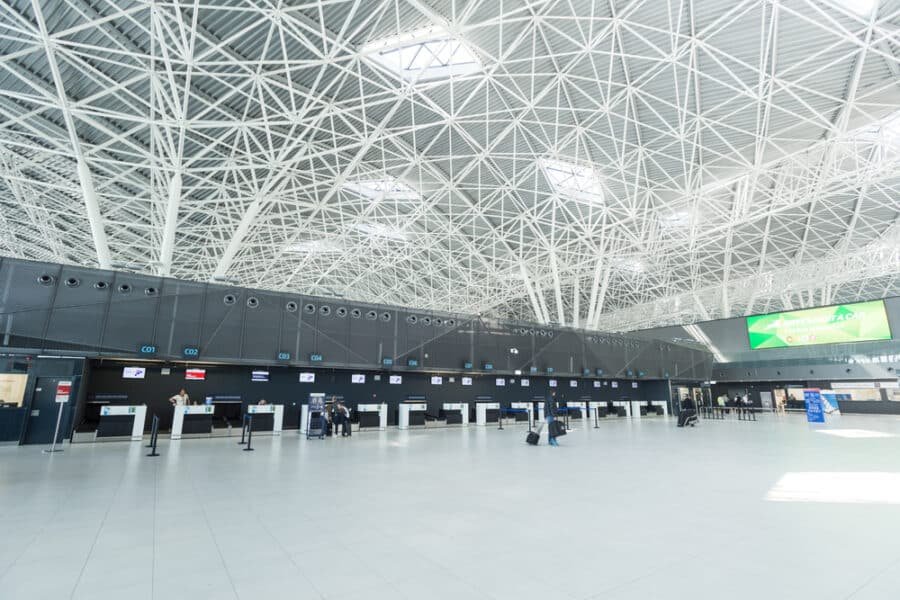
For most travelers coming from the United States or Canada, the most practical arrival airports in Croatia are Zagreb (ZAG), Split (SPU), and Dubrovnik (DBV). Most itineraries still route through big European hubs, but in peak season, you’ll also see more nonstop and one-stop options to the coast. So the “best” airport is usually the one closest to where you’ll actually be staying.
Zagreb Airport (ZAG) is Croatia’s busiest airport, handling roughly about 4.7 million passengers in 2025. It’s roughly 16 km from central Zagreb and usually has the strongest year-round flight network, making it the easiest pick if you’re starting in the capital, heading inland, or want the most reliable connections outside summer.
Split Airport (SPU) is typically the second-busiest, with roughly 3.9 million passengers in 2025. It’s around 20 km from Split (and about 6 km from Trogir), and it’s a top choice for Central Dalmatia and islands like Hvar and Brač—especially in late spring through early autumn when schedules ramp up.
Dubrovnik Airport (DBV) is another major gateway, handling roughly about 3.1 million passengers in 2025. It’s roughly 21 km from Dubrovnik (Old Town area), and it makes the most sense if your trip is focused on Dubrovnik and the far south, where flying into Split can add a lot of extra ground travel.
Brands We Use And Trust
Map Of Commercial Airports In Croatia
Best Airport To Fly Into Croatia For Each Region
Best Airport To Fly Into For The Dalmatian Coast
If you’re dreaming of exploring Croatia’s stunning Dalmatian Coast, touch down at Split Airport. It’s a strong choice for Central Dalmatia and the islands of Hvar, Brač, and Vis, as well as Split itself; for Dubrovnik and the far south, Dubrovnik Airport is usually the more direct option.
Best Airport To Fly Into For Istria
For those seeking to uncover the charm and beauty of the Istria region, Pula Airport is your best bet. Nestled in the heart of Istria, this airport puts you within easy reach of enchanting medieval towns like Rovinj, Poreč, and Motovun, known for their picturesque landscapes and delectable local cuisine.
Best Airport To Fly Into For Zagreb
If your adventure urges you to delve into the vibrant capital, Zagreb, Zagreb Airport is your ticket to exploring this lively city. Whether you’re captivated by its historic districts, vibrant cultural scene, or mouthwatering food markets, Zagreb Airport provides the perfect entry point to begin your urban escapade.
Airlines That Fly To Croatia
If you’re planning a trip to Croatia, you’ll need to know which airlines fly there.
Here’s a list of some airlines that serve Croatia:
- Aer Lingus
- Air Canada
- Air France
- American Airlines
- Austrian Airlines
- British Airways
- Croatia Airlines
- easyJet
- Etihad Airways
- Iberia
- KLM
- Lufthansa
- Norwegian Air Shuttle
- Ryanair
- Scandinavian Airlines
- Swiss International Air Lines
- United Airlines
- Turkish Airlines
Croatia Airlines
Croatia Airlines, the country’s national carrier, focuses primarily on routes within Europe.
Lufthansa
One of Europe’s largest airlines, Lufthansa, offers flights to Croatia from its hubs in Frankfurt and Munich.
Austrian Airlines
Another major European airline, Austrian Airlines, flies to Croatia from its hub in Vienna.
Turkish Airlines
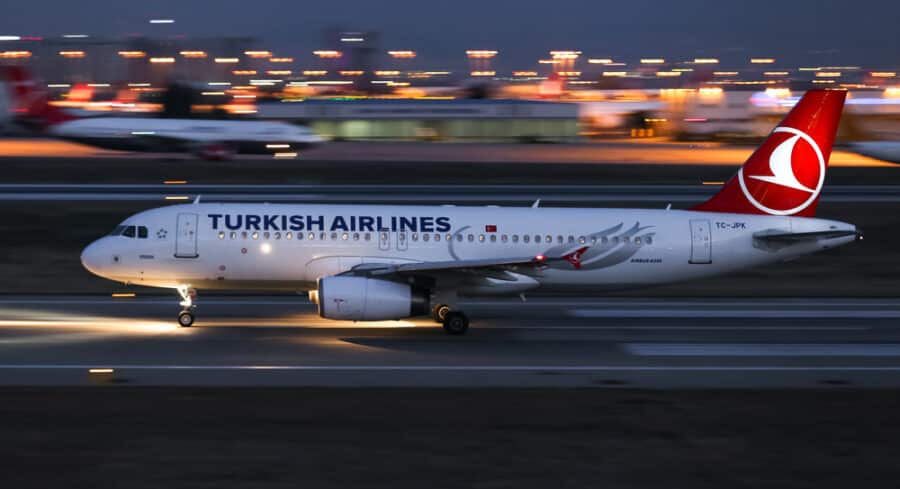
Turkish Airlines is a growing airline with an extensive network, offering flights to Croatia from Istanbul.
Etihad Airways
The national carrier of the United Arab Emirates, Etihad Airways, operates seasonal flights to Croatia, primarily to Dubrovnik.
Croatia Airports: Pros And Cons By Airport
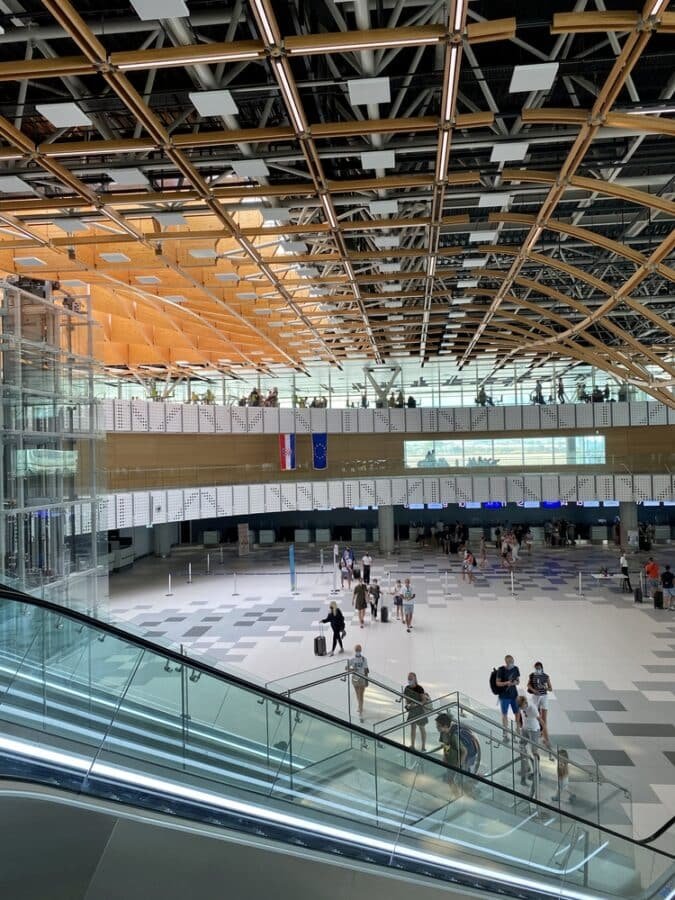
When flying to Croatia, you can choose from several airports. Here is a list of each of the main airports in Croatia and their pros and cons:
Zagreb Airport (ZAG): Main International Hub
+Pros: Conveniently located in the capital city of Zagreb, this airport offers a wide variety of flights from all over Europe.
-Cons: It can be crowded during peak travel times and doesn’t have as many direct flights from North America as some of the other airports on this list.
Airport Lounge: Primeclass Lounge
The Primeclass Lounge at Zagreb Airport offers a cozy, relaxing environment for passengers. With amenities like a self-service buffet, free Wi-Fi, a business center, and access to TV and newspapers, the lounge ensures ultimate comfort.
- Open from 05:00 to 22:00 every day, the lounge can accommodate up to 94 people
- Enjoy high-speed Wi-Fi, reading materials, and an open buffet offering a range of alcoholic and non-alcoholic beverages
- Access to the lounge is available through various memberships or at a walk-in price of 40 €
- Shower facilities are not available
- Reservations can be made via email: zag.business@bta.com.tr
Split Airport (SPU)
+Pros: This airport is located in the popular tourist destination of Split, so it’s easy to get to your final destination from here. There are also a good number of direct flights from North America.
-Cons: During the summer months, this airport can be very crowded due to the influx of tourists. Additionally, there are fewer flight options from other parts of Europe than at other airports on this list.
Split Airport Lounge
The Split Airport Business Lounge, located in the main terminal, offers a comfortable, convenient space to relax before your flights. The lounge offers amenities such as a self-service buffet, free Wi-Fi, workstations, and newspapers/magazines.
- It operates from 5:00 a.m. to 10:00 p.m. daily, accommodating up to 85 guests
- You have access to complimentary snacks and beverages, including alcoholic options. But no real meals to speak of
- Access to the lounge is available through various memberships or as a walk-in guest for a fee of 32 €
- The lounge does not offer shower facilities
Dubrovnik Airport (DBV)
+Pros: Another popular tourist destination, Dubrovnik, is served by a good number of international airlines. The airport is also relatively new and modern, making for a pleasant experience.
+Cons: Due to its popularity with tourists, this airport can get very crowded during the summer season. Additionally, there are not as many flight options from other parts of Europe when compared to some of the other airports on this list
Business Lounge at Dubrovnik Airport
A small lounge with basic seating, drinks, and prepackaged sandwiches for business-class guests.
Pula Airport (PUY)
+Pros: This airport is located on the coast of Istria and offers direct flights from some European cities. The airport is also relatively small, making it easy to navigate.
-Cons: Due to its size, there are not as many flight options from other parts of Europe or North America compared to some of the other airports on this list. Additionally, during peak travel times, this airport can be quite busy.
Rijeka Airport (RJK)
+Pros: This airport is located on the coast of Kvarner Bay and offers direct flights from some European cities. Further, it has a relatively modern terminal, making for an enjoyable experience.
-Cons: Due to its size, there are not as many flight options from other parts of Europe or North America compared to some of the other airports on this list. Additionally, during peak travel times, this airport can be quite busy.
Zadar Airport (ZAD)
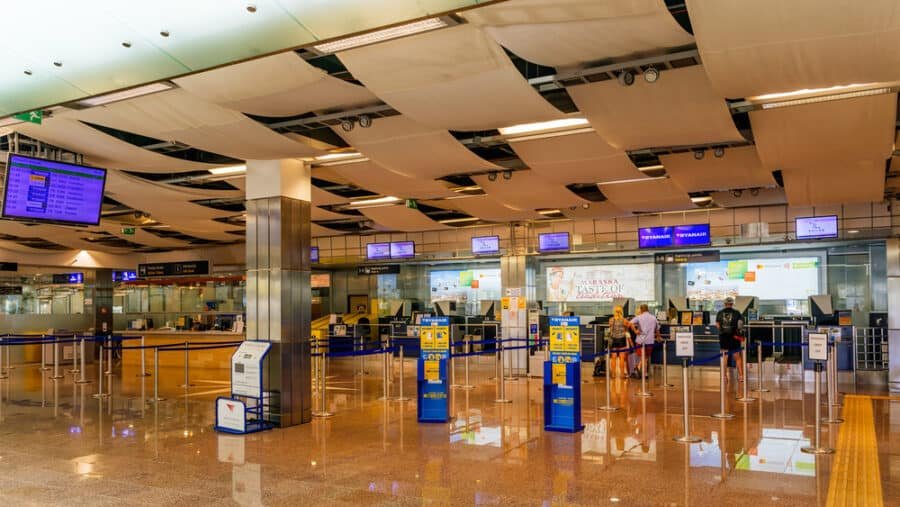
+Pros: This airport is located in the popular tourist destination of Zadar and offers direct flights from some European cities. The airport is also relatively modern, making for a pleasant experience.
-Cons: It’s a smaller airport with more limited facilities than Zagreb or Split, and schedules are more seasonal; in addition to Croatia Airlines, Zadar is served by a mix of low-cost and full-service carriers.
Zagreb “Franjo Tuđman” International Airport
Address: Ul. Rudolfa Fizira 21, 10150 Zagreb
Airport Code: ZAG Website: http://www.zagreb-airport.hr
Split International Airport
Address: Cesta Dr. Franje Tuđmana 1270, 21217 Kaštel Štafilić
Airport Code: SPU Website: http://www.split-airport.hr
Dubrovnik International Airport
Address: Dobrota 24, 20213 Čilipi
Airport Code: DBV Website: https://www.airport-dubrovnik.hr
Zadar International Airport
Address: Ulica I/2A, 23222 Zemunik Donji
Airport Code: ZAD Website: https://www.zadar-airport.hr
Pula International Airport
Address: Ližnjan, Valtursko polje 210, 52100 Pula
Airport Code: PUY Website: https://airport-pula.hr
Osijek International Airport
Address: Vukovarska ul. 67, 31207 Klisa
Airport Code: OSI Website: http://www.osijek-airport.hr
Typical Nonstop Flight Times To Zagreb From European Capitals
Nonstop flight times to Zagreb are generally short from many European capitals. Typical block times (approx.) include:
- London: ~2h 20m
- Paris: ~2h 10m
- Berlin: ~1h 40m
- Rome: ~1h 20m
- Madrid: ~2h 50m
- Amsterdam: ~2h 10m
- Vienna: ~0h 50m
- Athens: ~2h 00m
- Budapest: ~0h 45m
How To Find Better Flight Deals To Croatia

If you’re looking for the best flight deals to Croatia, there are a few things you can do to ensure you get the best price possible.
- Be flexible with your travel dates. You may be able to find cheaper flights if you’re willing to travel on certain days of the week or during off-peak times.
- Check for direct flights from your home airport. This can save you time and money on your overall travel costs.
- Compare prices across multiple airlines and booking sites. Some airlines may offer direct flights to Croatia, while others may offer connecting flights with layovers, so it’s important to compare all your options before making a decision.
- Sign up for fare alerts from your favorite airlines and booking sites. This way, you’ll be notified as soon as prices drop for your desired route.
- Compare pricing between different airlines. Just because one airline flies direct doesn’t mean it will always be the most expensive option.
- Consider flying into a larger Croatian airport such as Zagreb or Dubrovnik. From there, you can easily connect to smaller airports throughout the country.
- Book in advance! The sooner you book, the more likely to find low fares.
Move This Adventure To Your Inbox & Get An Instant Freebie

No spam. Unsubscribe at any time.
Croatia Airports FAQs
How many airports are in Croatia?
Croatia has 9 airports with scheduled commercial passenger flights: Zagreb (ZAG), Split (SPU), Dubrovnik (DBV), Zadar (ZAD), Pula (PUY), Rijeka (RJK), Osijek (OSI), Brač (BWK), and Lošinj (LSZ). In addition, Croatia has smaller sport/training airfields and military facilities that are not used for regular passenger service.
What is the main airport in Croatia?
Zagreb Franjo Tuđman Airport (ZAG) is Croatia’s main hub and the country’s busiest airport.
What is the biggest airport in Croatia?
Zagreb Franjo Tuđman Airport (ZAG) is the largest airport by overall traffic and route network.
Which Croatian airport is best for the Dalmatian coast?
Split Airport (SPU) is usually best for Central Dalmatia and islands like Hvar and Brač, while Dubrovnik Airport (DBV) is typically best for Dubrovnik and the far south.
Which Croatian airport is best for Istria?
Pula Airport (PUY) is the most direct option for Istria, with Rijeka Airport (RJK) also useful for parts of the Kvarner region and northern coast.
Which Croatian airport is best for Zagreb?
Zagreb Airport (ZAG) is the clear choice for Zagreb and makes the most sense if you’ll be exploring inland Croatia.
Which Croatian airports are most practical from the United States or Canada?
For most travelers coming from the United States or Canada, Zagreb (ZAG), Split (SPU), and Dubrovnik (DBV) are the most practical airports because they’re the ones most likely to align with seasonal long-haul options and offer the widest onward connections.
Do the Croatian islands have their own airports?
Only Brač (BWK) and Lošinj (LSZ) have scheduled commercial passenger airports; islands such as Hvar, Vis, Pag, Rab, and Cres do not.
Is “Kaštela/Resnik Airport” a separate airport from Split?
No. “Resnik” is commonly used as an alternative name for Split Airport (SPU), which is located near Kaštela and serves as the main airport for Split.
Does Zadar Airport only have low-cost airlines?
No. Low-cost carriers serve Zadar Airport (ZAD) and also a mix of full-service airlines, with schedules that are more seasonal than Zagreb.
What are typical nonstop flight times to Zagreb from major European capitals?
Typical nonstop block times to Zagreb are roughly: London ~2h 20m, Paris ~2h 10m, Berlin ~1h 40m, Rome ~1h 20m, Amsterdam ~2h 10m, Vienna ~0h 50m, Budapest ~0h 45m, and Athens ~2h 00m.
Croatia Airports Map
Croatia is an incredible country to visit, and with the help of this article, you can now easily find out which airlines offer flights there. Whether it be a budget airline or a full-service carrier, you should have no problem finding the perfect flight for your holiday. Use our list of all the major airlines serving Croatia to start planning your next trip today!
- Croatia Cruises – What You Need To Know
- Croatia Bus Timetables & Online Tickets
- How To Speak To A Taxi Driver In Croatian
- Croatia Airport Transfers
- Take A Private Transfer From Dubrovnik To Split
- Taking The Train From Split To Zagreb
- Ferry Options In Croatia
- Is Croatia Safe To Travel? Helpful Safety Tips
- Guide To Airports In Serbia
- How To Get From Turkey To Croatia
- What To Wear On A Plane To Look Good & Be Comfy