

Greek temples can be visited across mainland Greece and the islands, with many of the most famous sites still accessible today. Highlights include the Acropolis in Athens, the Temple of Poseidon at Cape Sounion, Delphi’s Sanctuary of Apollo, Olympia, and several well-preserved island temples.
This guide focuses on temples you can realistically visit now, whether as easy day trips from Athens or as part of a wider trip through Greece.
This belief—that divine presence resided within cult statues—helps explain why Greek temples were designed to be so monumental and richly detailed.
Skip Ahead To My Advice Here!
Famous Ancient Greek Temples You Can Visit Today
While many lie in ruins today, some are exceptionally well preserved, and you can head out and see many of them on your travels. However, remember that the Ancient Greeks traveled and conquered extensive territory. For that reason, these temples are spread across a large area.
If you’re short on time, this table provides a quick overview of each temple’s location, approximate construction date, and what you’ll see onsite today.
| Temple / Site | Where | Rough Date | What IIt’sKnown For | Onsite Today |
|---|---|---|---|---|
| Temple of Hera | Olympia | c. 580 BC | Oldest temple at Olympia; Olympic flame ceremony altar nearby | Ruins and altar area |
| Temple of Poseidon | Cape Sounion (Attica) | c. 444–440 BC | Clifftop setting above the Aegean; sunset views | 15 of 34 columns standing |
| Temple of Apollo | Ancient Corinth | c. 560 BC | Early Doric temple in limestone | Notable standing columns |
| Temple of Apollo (Sanctuary) | Delphi | 510 BC temple; rebuilt later | Oracle of Delphi (Pythia) | Sanctuary ruins |
| Temple of Aphaea | Aegina | c. 500 BC | Doric temple; famous pedimental sculptures | Standing architecture; sculpture mainly in museums |
| Parthenon | Acropolis, Athens | 447–432 BC | Iconic temple of Athena | Major monument under long-term conservation |
| Temple of Athena Nike | Acropolis, Athens | c. 420 BC | Small Acropolis temple dedicated to Athena Nike | Restored temple structure |
| Temple of Hephaistos | Ancient Agora, Athens | begun 449 BC | Among the best-preserved Greek temples | Standing temple with later church history |
| Temple of Olympian Zeus | Central Athens | Completed 131 AD | Once the largest temple in Greece | 15 of 104 columns standing |
| Erechtheion | Acropolis, Athens | 421–406 BC | Ionic temple; Caryatids | The standing structure and porch remain |
| Temple of Apollo Epicurius | Bassae (Arcadia) | c. 420–400 BC | Remote mountain temple; UNESCO site | Significant remains (often under protective covering) |
| Sanctuary of Asclepius (Temple Area) | Epidaurus | 4th century BC | Major healing sanctuary; famous theatre nearby | Temple footprint and sanctuary ruins |
| Temple of Demeter (Sangri) | Naxos | c. 530 BC | Notable marble temple; partly restored | Partially restored remains |
| Heraion of Samos | Samos | Archaic period (multiple phases) | Vast sanctuary; famous single-standing column | Sanctuary ruins; one prominent column |
1. Temple Of Hera In Olympia
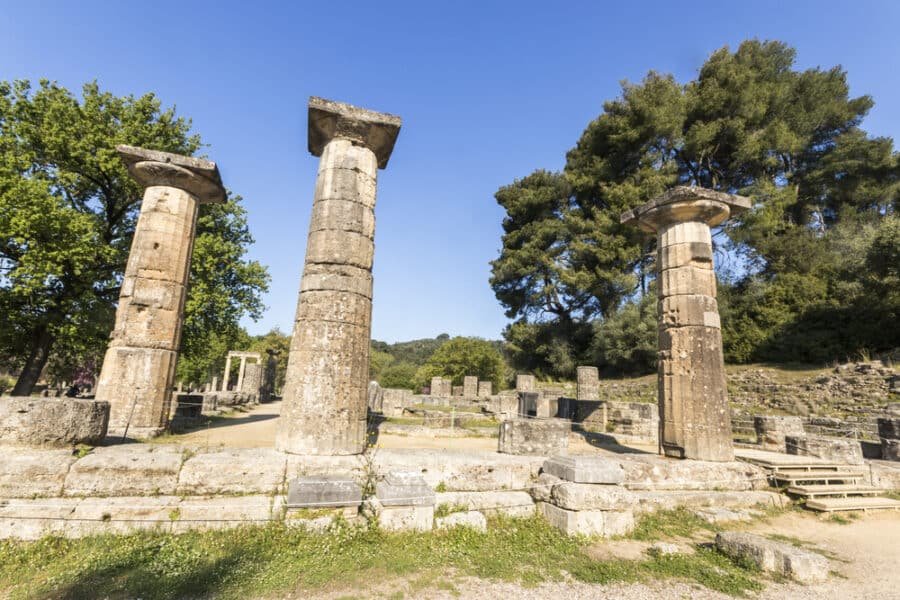
This is one of the most important temples at ancient Olympia. This is the oldest temple at Olympia, built around 580 BC and later destroyed by an earthquake in the early 4th century AD.
Just before the Olympic Games, you’ll see the Olympic flame lit at the altar of the huge temple, then carried around the world.
2. Temple Of Poseidon At Cape Sounion
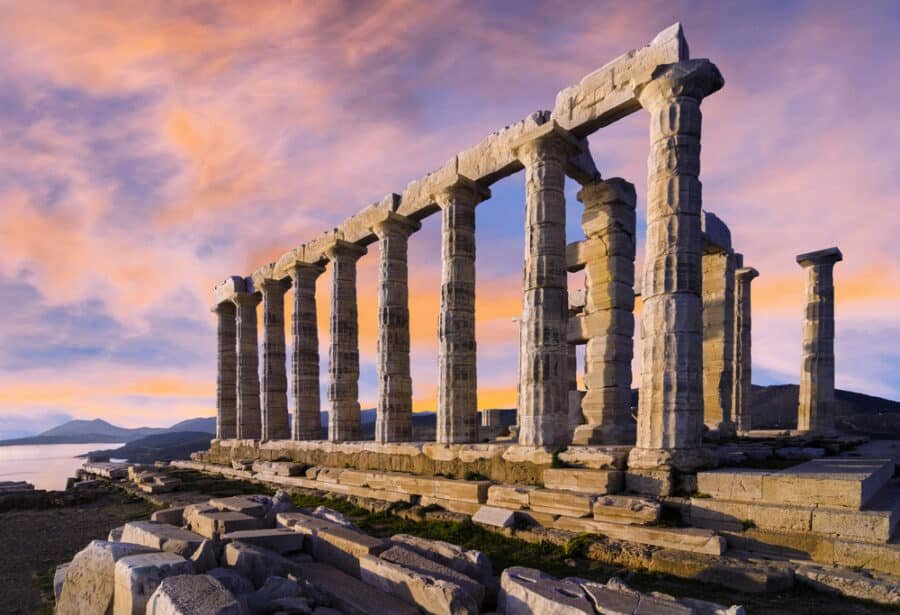
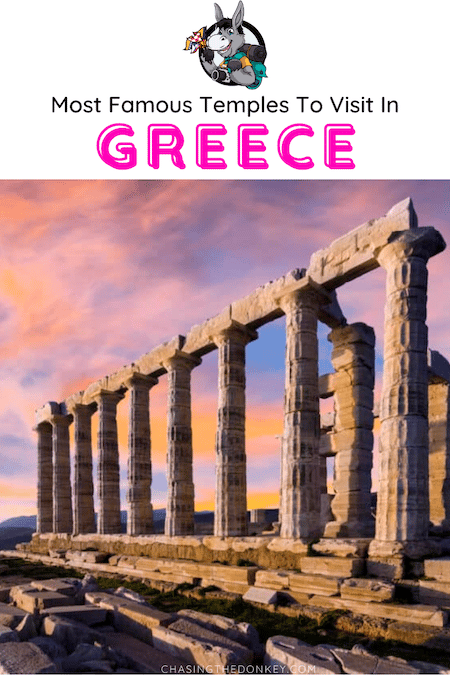
The Temple of Poseidon at Cape Sounion was built around 444–440 BC and stands dramatically on cliffs about 60 meters above the sea.
The Greek temple located at the tip of the Attica peninsula is the Temple of Poseidon at Sounion. This magnificent temple stands on a peninsula overlooking the Aegean Sea and offers jaw-dropping views, especially at sunset.
The Temple of Poseidon at Sounion is one of the major monuments of the Golden Age of Athens. It was constructed in the mid-5th century BC, around the same time as the Parthenon and other significant structures on the Acropolis of Athens.
Dedicated to Poseidon, the God of the sea, earthquakes, and horses, the temple served as both a place of worship and a beacon for ancient sailors, symbolizing their safe return to Attica. The temple is built of local marble and originally had 34 Doric columns, of which 15 still stand.
Its idyllic location and remnants of its grandeur make it a popular destination for anyone seeking to experience a piece of ancient Greek history and enjoy the stunning natural beauty of the Attica coastline.
3. Temple Of Apollo In Ancient Corinth
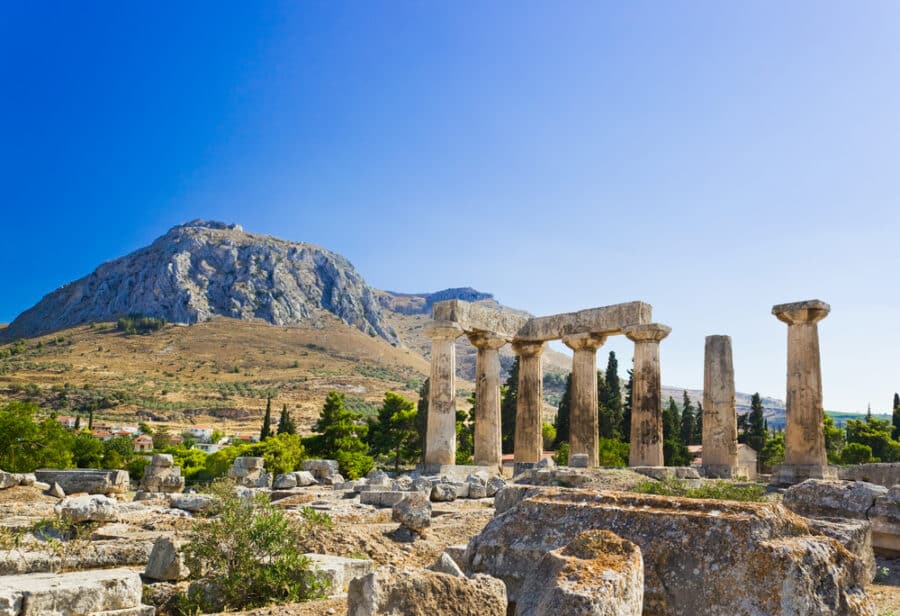
The Temple of Apollo in Corinth is among the earliest surviving Doric temples in Greece. Built around 560 BC, it is made of limestone. The temple served as a major civic and religious symbol for ancient Corinth and was closely linked to the city’s prosperity.
The temple remained a prominent landmark through the Roman period, and today its standing columns are one of Corinth’s best-known symbols.
4. Temple Of Apollo In Delphi
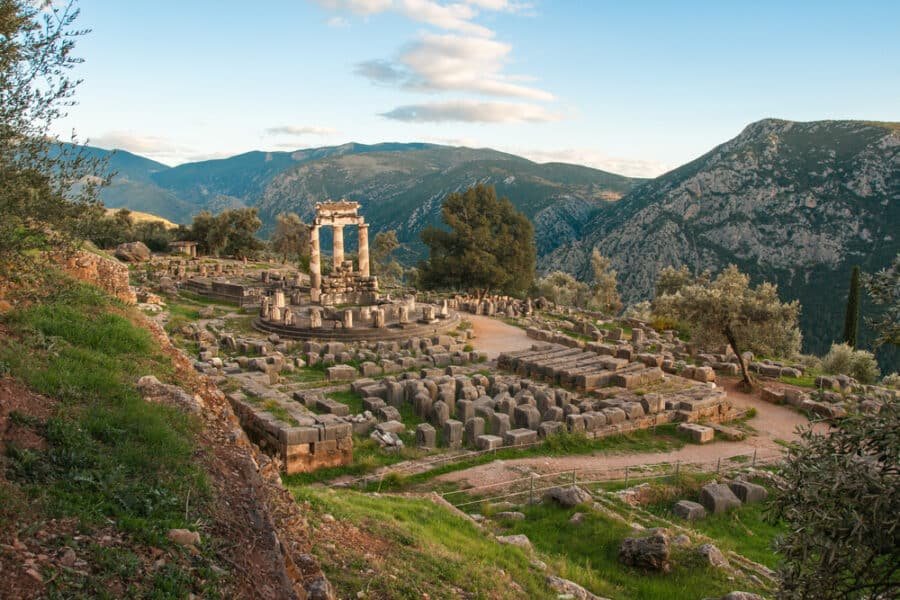
Located in Delphi, the Temple of Apollo is one of the most important sanctuaries of the ancient Greek world. The archaic temple was constructed in 510 BC. Historically, Pythia, a famous oracle, conducted her services in the temple.
The 510 BC temple was destroyed by an earthquake in 373 BC, and the ruins of the sanctuary remain open to visitors today.
5. Temple Of Aphaea On Aegina
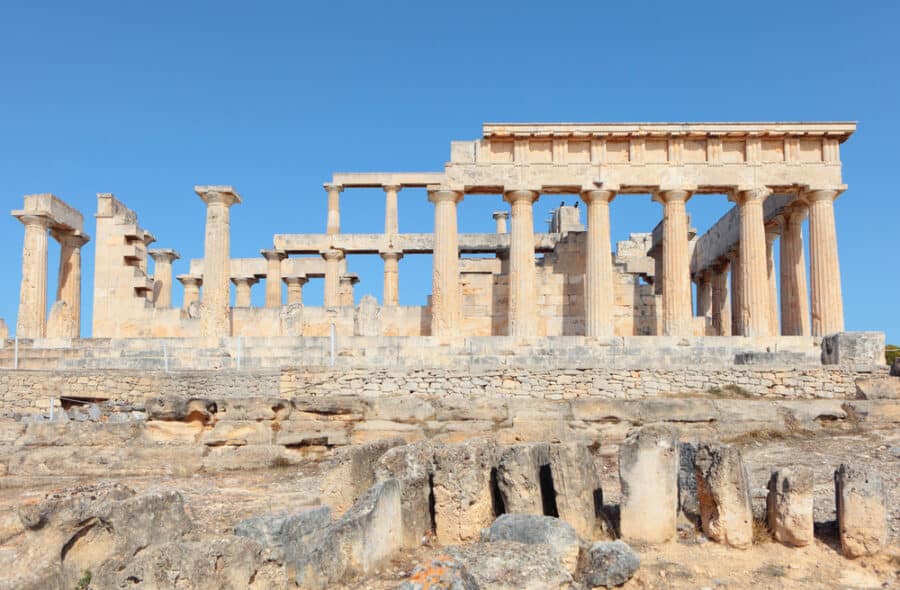
You can find the Temple of Aphaea on the island of Aegina, built around 500 BC on the site of an earlier temple destroyed by fire around 510 BC.
This Doric temple originally had 32 columns. Many of the temple’s pedimental sculptures (including Trojan War scenes) are on display in Munich; what you see onsite today is primarily architectural remains.
6. Parthenon On The Acropolis In Athens
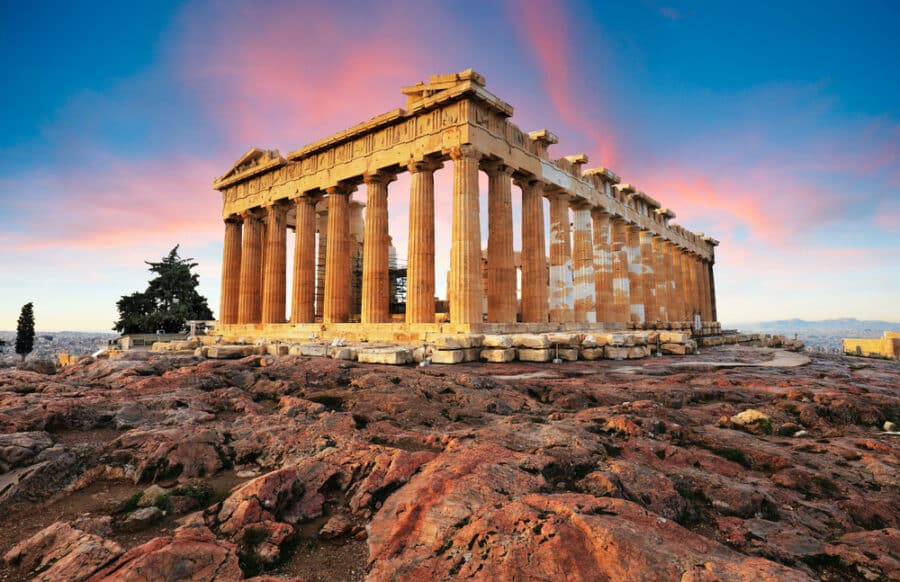
The Parthenon is one of the most important buildings of ancient Greece and a must-see on the Acropolis.
This is one of the most important buildings in ancient Greece,s built between 447 and 432 BC. It sits atop the Acropolis in Athens and was dedicated to Athena, the city’s patron deity.
The Parthenon was built during the height of the Athenian Empire and was intended as a celebration of strength.
7. Temple Of Athena Nike On The Acropolis
On the Acropolis, you will also find the Temple of Athena Nike. This temple dates to around 420 BC and is dedicated to Athena Nike (Athena as bringer of victory). Kallikrates designed the temple, which is among the most visited in the complex.
You can see the temple on the southwestern corner of the Acropolis.
8. Temple Of Hephaistos In The Ancient Agora
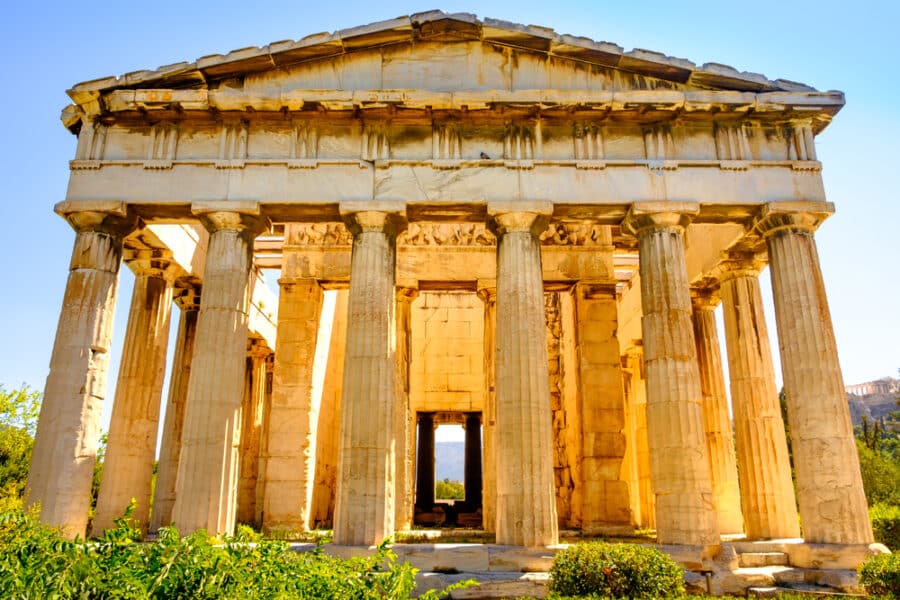
This is one of the best-preserved ancient Greek temples in Greece. It is dedicated to the God of fire, Hephaistos. The temple, made of marble, has six columns on one side and 13 on the other. It is thought to date back to around 450 BC. You can find it at the Ancient Agora of Athens, on a low hill on the site’s western side.
Brands We Use And Trust
9. Temple Of Olympian Zeus In Athens
This was once the largest temple in Greece, and its remaining columns still convey its scale today. Construction began in the 6th century BC, and the temple was completed under Emperor Hadrian in 131 AD, about 638 years later. Although only 15 of the original 104 columns remain, it’s easy to imagine its grandeur.
In antiquity, the sanctuary featured monumental sculpture and a massive cult statue; today, the site consists primarily of standing columns and foundations.
10. Erechtheion On The Acropolis In Athens
Toward the northern side of the Acropolis, you will find this beautiful temple, which was built between 421 and 406 BC. It was designed to accommodate multiple cults across the uneven terrain of the Acropolis.
The temple is associated with Erechtheus, the mythical king of Athens. An interesting detail is the southern side of the temple, which features six female statues rather than regular columns to support the structure.
11. Temple Of Apollo Epicurius At Bassae
In the mountains of Arcadia, you’ll find this temple built in the second half of the 5th century BC (roughly 420–400 BC). It was dedicated to Apollo Epicurius and built by the Phigaleians. They believed that Apollo himself protected them from invasion and plague.
This is a very well-preserved Greek temple, probably due to its hidden location. The columns are in excellent condition, and many of them look as they did originally.
12. Temple Of Asclepius At Epidaurus
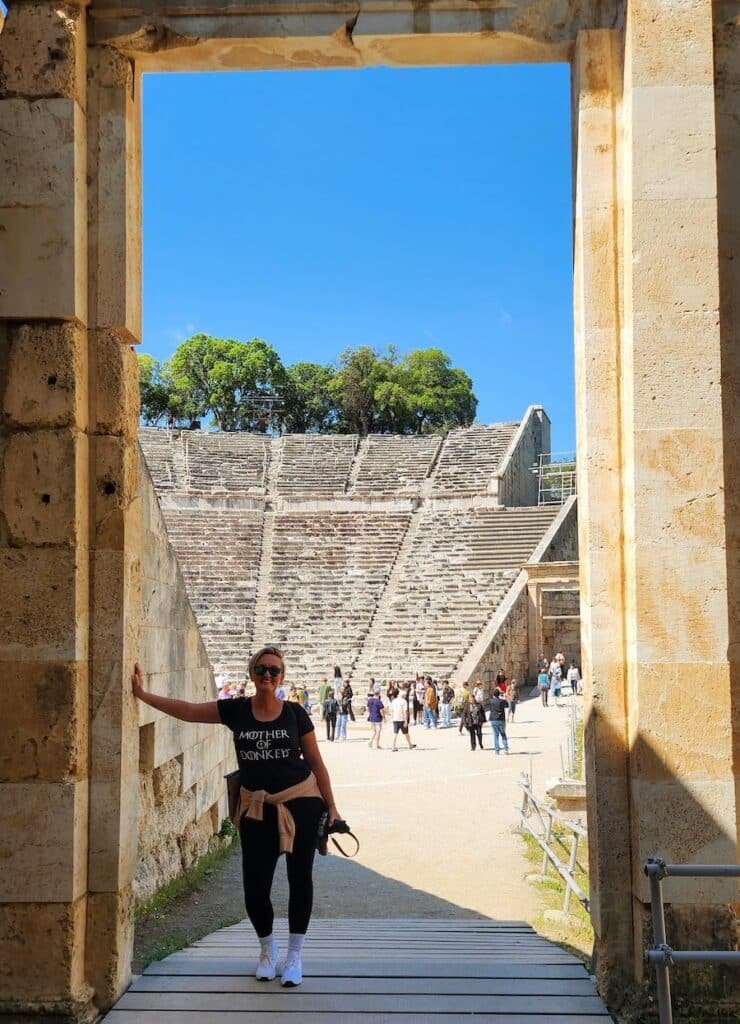
Dedicated to the healer god Asclepius, this was one of the major healing sanctuaries of the ancient Greek world.
The 4th-century BC temple was Doric with a 6-by-11 column plan. The statue of Asclepius is no longer onsite, but the sanctuary remains a major archaeological visit, alongside the famous theatre.
13. Temple Of Demeter At Sangri On Naxos
The Temple of Demeter at Sangri on Naxos was built around 530 BC from Naxian marble. Located on Naxos, the Temple of Demeter at Sangri is a notable inland archaeological site that can be combined with beach time on the island. It is partially restored and set in a rural area of Naxos.
14. Heraion Of Samos
If yyou’reon holiday in Samos, this temple is a must-visit. It is a large structure, built during the Archaic period and located near the mouth of the Imvrasos River. It is closely linked with the goddess Hera. The later great temple at the Heraion was famous for its vast colonnades; today, one standing column is often pointed out onsite and is commonly called “olona.”
FAQs About Greek Temples You Can Still Visit
What are the best Greek temples to visit in Greece right now?
Top picks most travelers can visit on a single trip include the Parthenon, the Erechtheion, and the Temple of Athena Nike on the Acropolis in Athens; the Temple of Hephaistos in the Ancient Agora; the Temple of Olympian Zeus in central Athens; the Temple of Poseidon at Cape Sounion; and the Temple of Apollo sanctuary at Delphi.
Which Greek temple is the best preserved?
The Temple of Hephaistos in the Ancient Agora of Athens is widely considered one of the best-preserved ancient Greek temples, owing in part to its later conversion into a Christian church around AD 700.
How long did the Temple of Olympian Zeus in Athens take to build?
Construction began in the 6th century BC, and the temple was completed under Emperor Hadrian in 131 AD—about 638 years later.
How many columns are left at the Temple of Olympian Zeus today?
Only 15 columns remain standing today out of the original 104.
Is the “60 meters high” claim about the Temple of Poseidon at Sounion accurate?
The temple itself is not 60 meters tall; the commonly cited “60 meters” refers to the cliffs above sea level at Cape Sounio, where the sanctuary sits.
Can you do Delphi and Cape Sounion as day trips from Athens?
Yes. Delphi and Cape Sounion are among the most popular day trips from Athens, and both are routinely visited independently or on organized tours.
Why is Delphi’s Temple of Apollo so famous?
Delphi was home to the Oracle of Delphi (Pythia) and was one of the most important sanctuaries in the ancient Greek world. The archaic Temple of Apollo was constructed in 510 BC and destroyed by an earthquake in 373 BC; the sanctuary’s remains are still open to visitors today.
Are there famous Greek temples outside Greece?
Yes. Major temples from the ancient Greek world are located outside modern Greece, particularly in southern Italy (Magna Graecia) and western Turkey, reflecting the spread of Greek colonies and cultural influence.
Is the Temple of Concordia in Sicily a Greek temple?
Yes. The Temple of Concordia in Agrigento, Sicily (in the Valley of the Temples) is a well-preserved Doric temple from the 5th century BC, built in what was then part of the Greek world.
What is the difference between a temple and a sanctuary in ancient Greece?
A temple is the main building that houses the cult image and serves ritual functions. At the same time, a sanctuary is the broader sacred area that may include multiple buildings, altars, treasuries, and spaces for festivals and gatherings.
Do ancient Greek temples have statues inside today?
Typically, no. While temples once housed cult statues and sculptures, most original statues are lost or on display in museums; today, most sites are viewed as architectural remains, foundations, and standing columns.
[/su_boxYou nowou havonlyst a few Greek temples to vvisit todecide which one you will see first.- Unique Things To Do In Greece With Kids
- How To Tip In Greece
- Car Rental And Driving Tips For Greece
- Where To Stay In Crete
- What To Expect & Do In September In Greece
- Things To Do In Greece During The Winter
- Packing Tips For Greece
- Things To Do And Eat During Easter In Greece
- How To Travel Greece On A Budget
- How To Get From Santorini To Crete
- Things To Do In Corfu For Families
- Guide To Santorini With Kids
- How To Choose Between Santorini and Crete
- Guide To Meteora Monasteries
- How To Choose Between Athens And Thessaloniki
You missed a few.