

Istanbul is one of those cities where five days feels generous on paper and surprisingly short once you arrive. With layers of Roman, Byzantine, and Ottoman history stacked across two continents, even a well-planned itinerary requires careful choices.
Having visited Istanbul multiple times over the years, I’ve learned how to balance the city’s unmissable landmarks with time to wander neighborhoods, ride ferries across the Bosporus, and experience daily life beyond the postcard sights.
My 5-day Istanbul itinerary is designed for first-time visitors who want to see the city’s major landmarks, experience both the European and Asian sides, and move at a realistic pace without rushing from one sight to the next.
Formerly known as Byzantium and later Constantinople, Istanbul officially adopted its current name in 1930 and is now Turkey’s largest city. Shaped by Greco-Roman, Byzantine, and Ottoman rule, it remains one of the world’s few cities to span two continents.
This guide pulls together Istanbul’s essential sights — from landmark mosques to imperial palaces — and shows how to organize them into a realistic 5-day itinerary. While five days is only a starting point, it’s enough for first-time visitors to experience the city’s highlights without rushing.
This itinerary groups nearby sights together, balances walking-heavy days with ferry rides and visits to neighborhoods, and reflects how visitors actually move around Istanbul today rather than how it appears on a map.
Skip Ahead To My Advice Here!
5-Day Istanbul Itinerary Ideas For First-Time Visitors
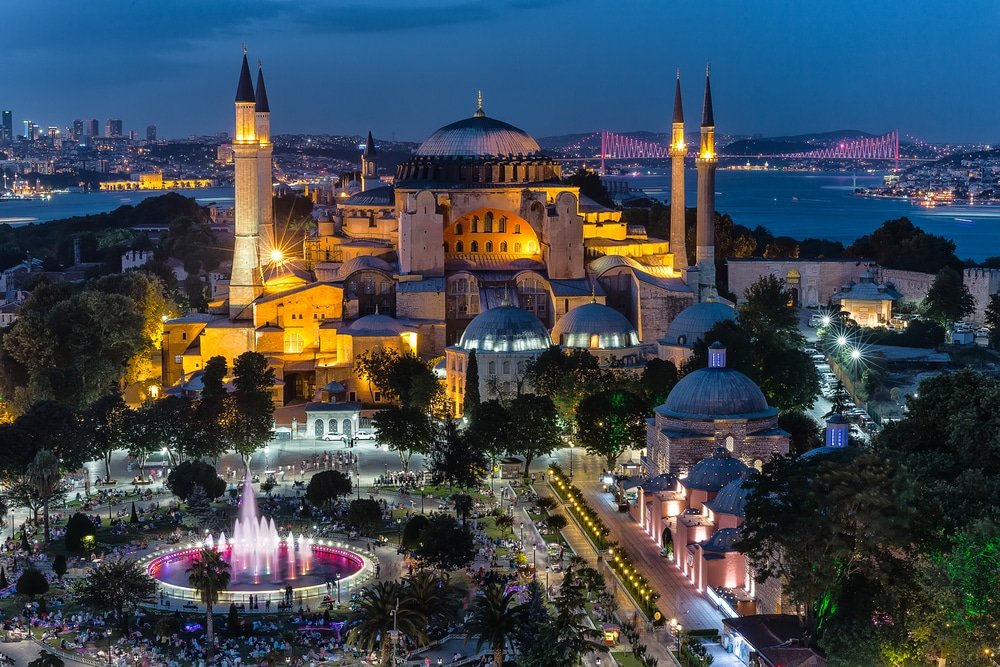
If you’re wondering how to plan a 5-day trip to Istanbul, never fear!
We’ve put together several different itineraries that cover all the essential sights while allowing you time to stop and smell the roses – as well as eat plenty of kofte, pide, and baklava.
5 Days In Istanbul Itinerary Option One: Classic First-Time Highlights
- Day 1: Explore Hagia Sophia and the Blue Mosque in the morning, then head to the Topkapi Palace in the afternoon
- Day 2: Shop the Grand Bazaar and visit the Suleymaniye complex
- Day 3: Climb the Galata Tower, enjoy royal splendor at Dolmabahçe Palace, and see a whirling dervish performance
- Day 4: Inhale the spices at the Egyptian Bazaar, then take a ferry ride up the Bosporus from Eminonu to see Ortakoy
- Day 5: Take a food tour to Kadikoy and see a bit of Istanbul’s Asian side
5 Days In Istanbul Itinerary Option Two: History And Palace Focus
- Day 1: Haggle at the Grand Bazaar, climb the Galata Tower, and explore the synagogues and churches of Karakoy
- Day 2: Have a palace day at Dolmabahce and Beylerbeyi
- Day 3: Cross the Bosporus to Kadikoy via the Maiden’s Tower and wander Istanbul’s Asian side
- Day 4: Compare the city’s premier mosques, including Hagia Sophia, Blue Mosque, and Suleymaniye
- Day 5: Picnic in Gülhane, excavate history at the Istanbul Archaeological Museums, and explore the Topkapi Palace
5 Days In Istanbul Itinerary Option Three: Slower Pace And Neighborhoods
- Day 1: Throw yourself into the bazaars, then visit the Suleymaniye complex
- Day 2: Marvel at the 19th-century Imperial Ottoman architecture of Dolmabahce, Beylerbeyi, and Ortakoy
- Day 3: See the wonders of Sultanahmet before ending the day with a Bosporus dinner cruise
- Day 4: Clamber over the Rumeli Fortress and visit the neighboring museums
- Day 5: Ascend the Galata Tower, visit a traditional hammam, and enjoy a drink on the Karakoy waterfront
Highlights From These Istanbul Itineraries
Below you’ll find a list of what to see in Istanbul, from Ottoman palaces and Islamic mosques to Roman temples and bustling markets. You might not be able to fit all of them into 5 days, but at least you’ll have plenty of options to build your itinerary.
Hagia Sophia
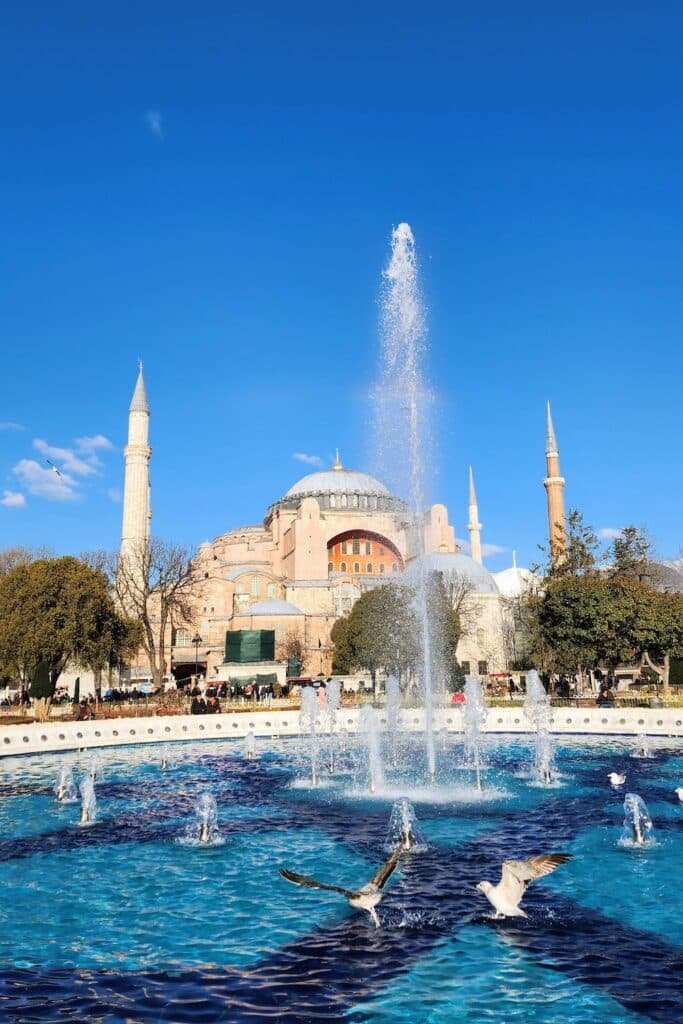
An enduring symbol of Istanbul, the Hagia Sophia was initially constructed as a Christian church in 537 by Emperor Justinian I of the Byzantine Empire. After the fall of Constantinople, it was converted into a mosque, then a museum, and, more recently, returned to a mosque.
The famous dome – an architectural marvel 1,500 years ago – is still a highlight of the Istanbul cityscape. Inside, ostentatious chandeliers, gilded mosaics of Jesus, and golden Arabic script glitter over the daily worshipers.
Note: As of January 2024, Hagia Sophia Grand Mosque introduced a distinct policy for tourists and worshippers. Visitors entering for cultural purposes pay an entry fee of approximately €25 to access the upper gallery. This ticket grants you access to the gallery floor, where you can admire the sanctuary’s stunning Ottoman and Byzantine features, including the historic mosaics.
This new policy is all about balancing the preservation of this iconic site and enhancing the visitor experience, while ensuring that daily worship remains undisturbed.
Handy QR codes offer insights in 23 languages, making your visit both informative and enjoyable. For the latest updates and details, it’s a good idea to check out their official website.
Blue Mosque
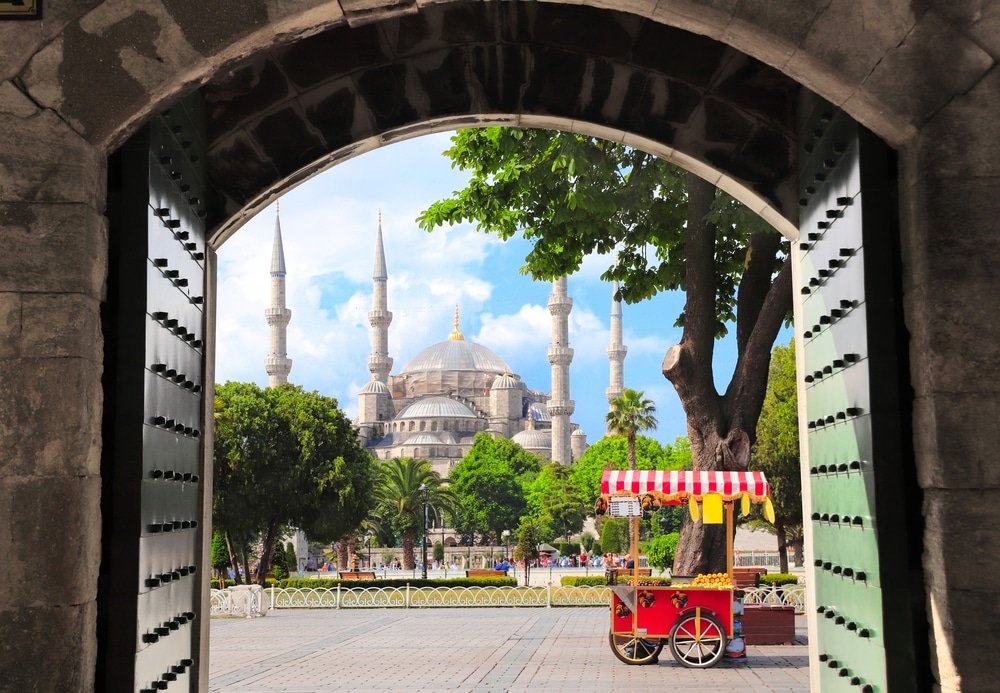
Officially known as Sultan Ahmed Mosque, the Blue Mosque is directly across from the Hagia Sophia. While not quite as historic – it was built in the 1600s – it was designed to appear more imposing, with everything done bigger and better than before.
While you might think its colloquial name comes from the domes’ light blue color as seen from the exterior, it’s actually called the Blue Mosque because of the vivid blue tilework decorating its interior.
Basilica Cistern
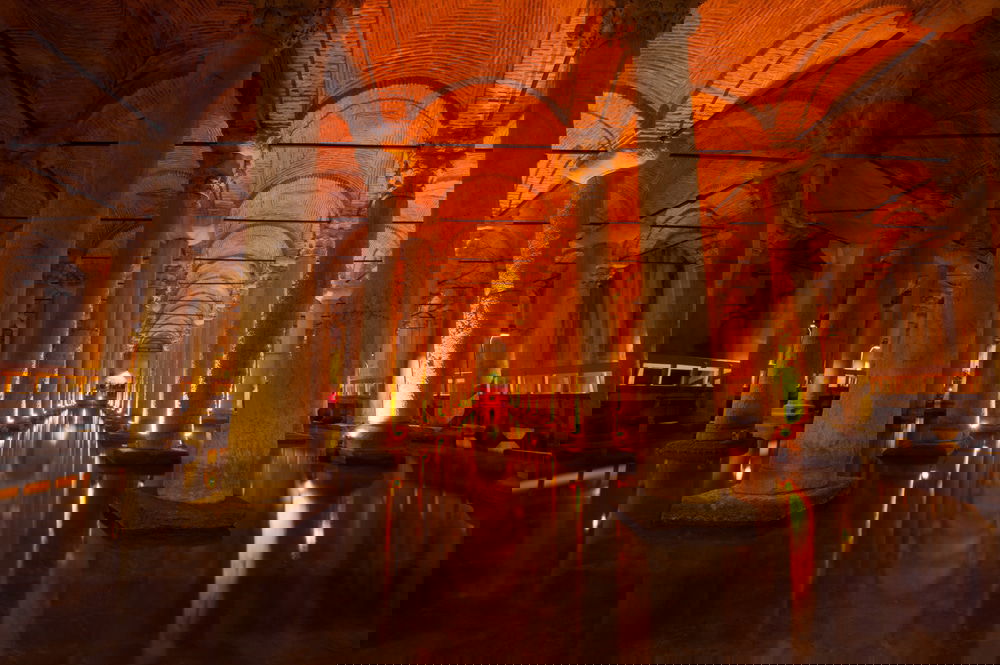
A mini labyrinth of walkways suspended over silent pools, the Basilica Cistern is a subterranean cavern engineered by the Byzantines to store water. Today, you can wander through the echoing space, which has been eerily lit to showcase the impressive stone pillars that support the roof.
One of the highlights down here is the Medusa head column bases. These intricately sculpted gorgon faces were probably just scavenged randomly from other ancient sites, but now lend an air of haunted mystery to the cistern.
Gulhane Park
‘Gulhane’ means ‘House of Roses,’ so it’s no surprise that Istanbul’s oldest public park is brimming with flowers, in between which local couples canoodle and families picnic.
Right in the heart of the city, it’s a lovely green space where you can relax with a snack and enjoy some people-watching in between the more frenetic crowds that flock to Hagia Sophia and the Topkapi Palace.
Topkapi Palace
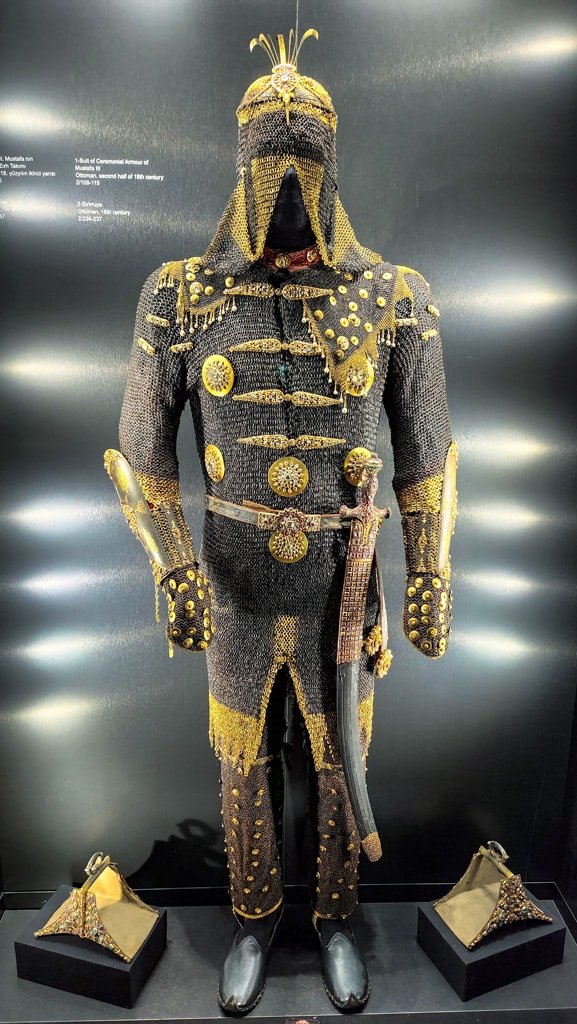
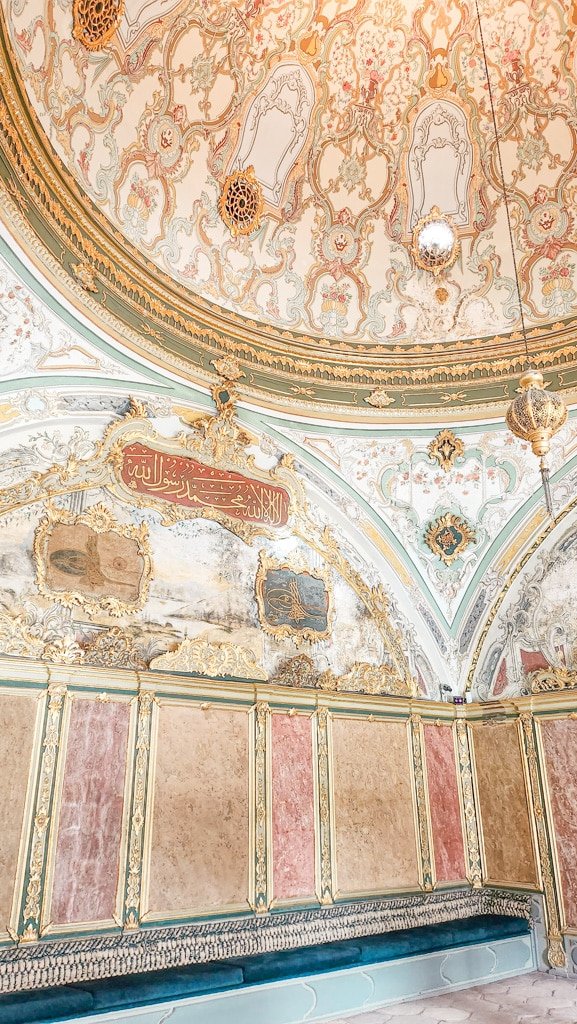
A luxurious complex that reflects the former might of the Ottoman Empire, the Topkapi Palace occupies a prime position atop one of the highest points of old Constantinople, commanding a view of the city and the sea.
Bursting with intricate, colorful tilework and well-kempt gardens, it was the main imperial residence for around 400 years. Today, the most impressively preserved part is the harem rooms, where every surface is decorated with ornate craftsmanship.
Hagia Irene
Part of the Topkapi Palace but separately ticketed, the Hagia Irene makes for an interesting comparison to the Hagia Sophia. Unlike Hagia Sophia, Hagia Irene was never converted into a mosque and today functions primarily as a museum and concert venue, with a notably austere interior.
While some might find the lack of ornamentation dull, it’s a testament to the ravages of time unchecked by the human hand.
Istanbul Archaeological Museums
A few short steps from the main Topkapi Palace complex, the İstanbul Archaeological Museums preserve a mixture of salvaged treasures from the ancient world, including Babylonian brickwork, Greek sarcophagi, Roman statuary, and Byzantine jewelry. History buffs will find a trove of artifacts to explore, scavenged from all over Turkey.
Grand Bazaar
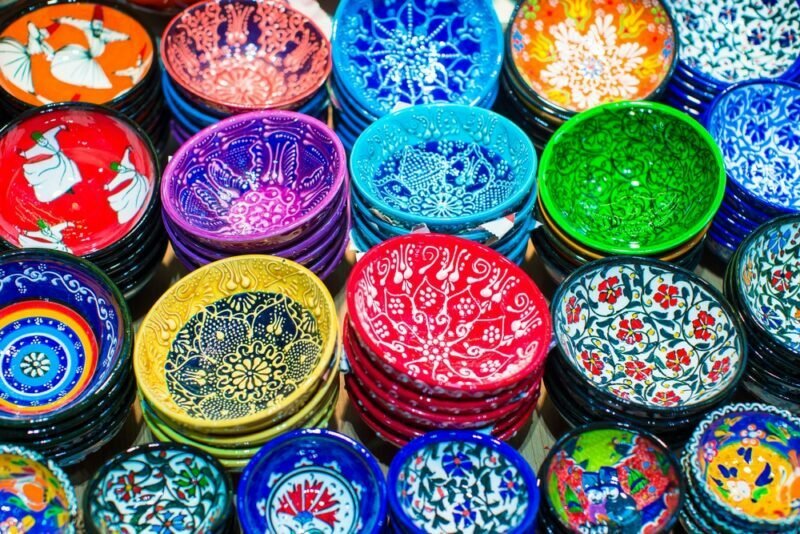
Sometimes described as the world’s oldest shopping mall, the Grand Bazaar is a dizzying series of covered streets filled with souvenirs for tourists, from decorative objects and hand-woven carpets to local clothing and sweets.
While it is essential to at least check out this centuries-old marketplace, bear in mind it can be a bit overwhelming (and overpriced) given the crowds and touts.
Spice Market
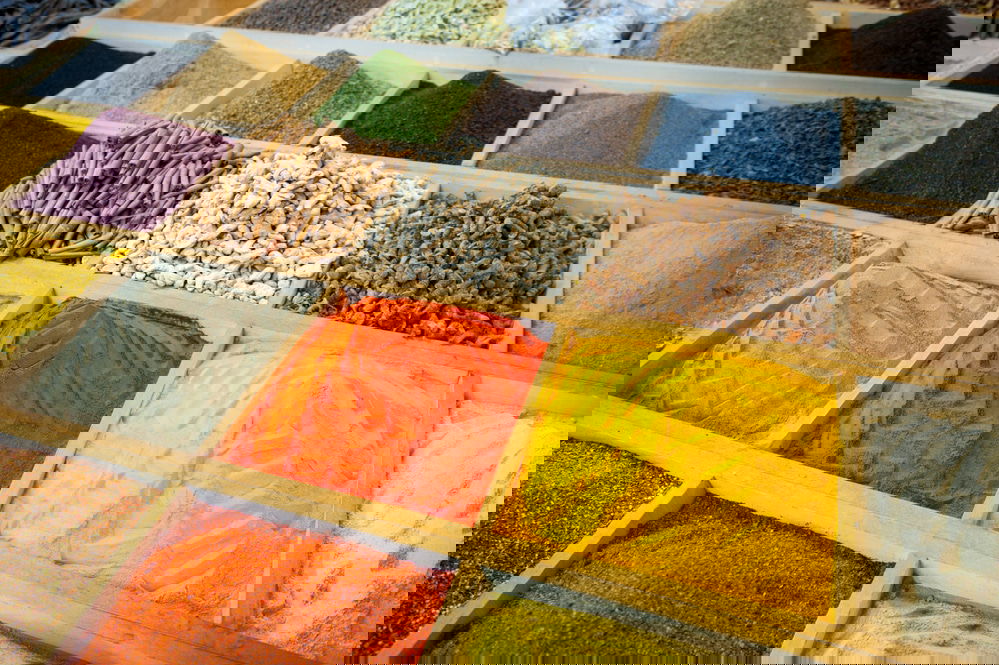
Also known as the Egyptian Bazaar, the Spice Market generally focuses more on foodstuffs than the Grand Bazaar. It has also become a bit of a tourist trap. Still, the buzzing atmosphere and aromatic smells make it worth a visit – though we’d recommend heading to a more local spot to purchase any sumac, pomegranate syrups, and Turkish delight you wish to take home.
Mosque Of Suleyman The Magnificent
The third great mosque of Istanbul, the Suleymaniye Mosque, was built by the renowned Suleyman the Magnificent in the mid-1500s. It remained the largest mosque in Istanbul until the Çamlıca Mosque opened to worshippers in 2019.
Inside the religious complex, you’ll also find several elaborate mausoleums belonging to the imperial family.
Galata Tower
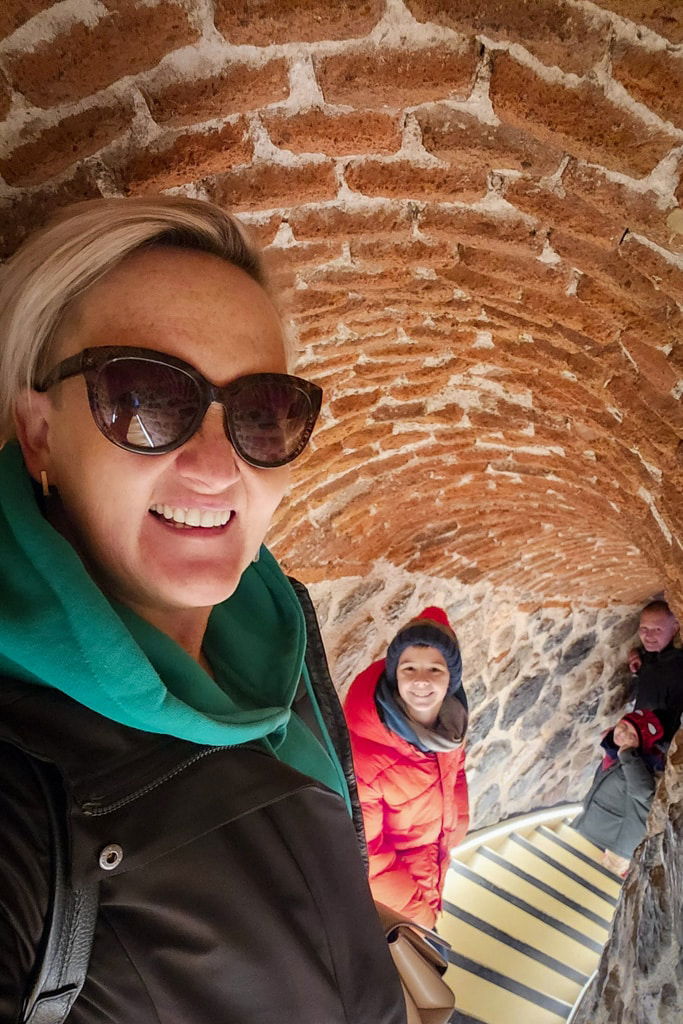
The circular Galata Tower dates back to the mid-13th century and owes its Romanesque architectural style to the Genoese traders who built it as a lookout.
Over time, it was used as a fire-detection point and even a prison before being turned into a museum. Even though the Galata Tower is no longer the tallest building in Istanbul, it still offers some of the most amazing panoramic views of the old city. If you visit during one of the daily calls to prayer, you can experience the priceless sensation of having a chorus of melodic voices envelop you from all sides.
Dolmabahce Palace
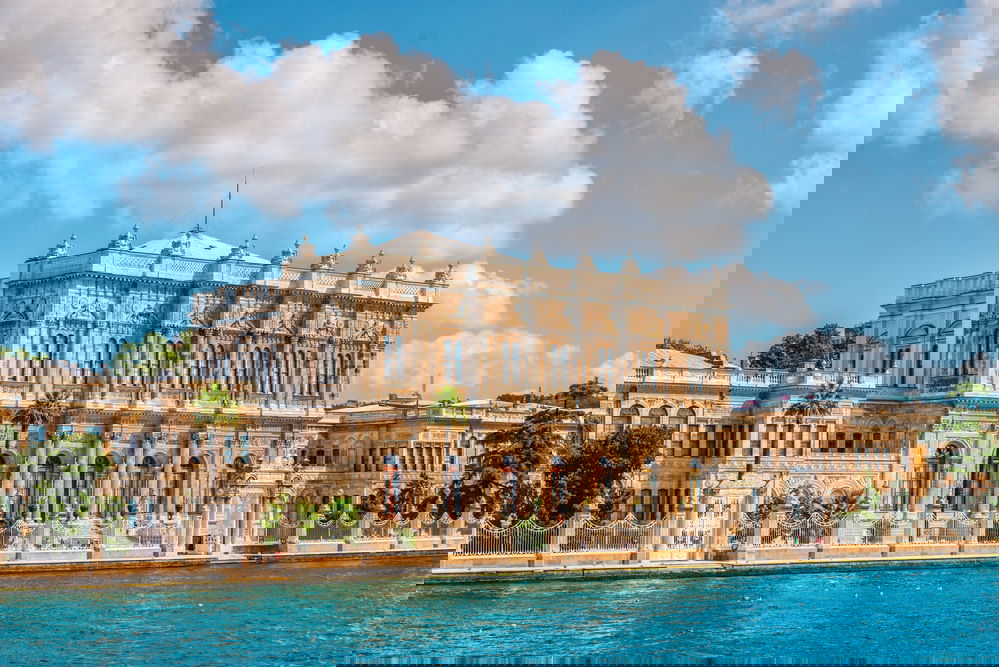
While we might deem the Topkapi Palace a historical marvel today, by the 1800s, the Ottoman sultans were beginning to think their traditional residence was a bit old-fashioned. As a result, several new palaces were built in the European style along the Bosporus, none larger and more elaborate than Dolmabahce.
Requiring 13 years to complete, the building’s extensive use of gold and crystal was so costly that it contributed to the Ottoman state defaulting on its debts.
Beylerbeyi Palace
Built along a similar model to Dolmabahce but on a smaller scale, the Beylerbeyi Palace offers a sense of the kind of opulence the 19th-century sultans were obsessed with – but with way fewer visitors. This is the palace to visit for a quieter, more relaxed royal retreat.
Bosporus Cruise
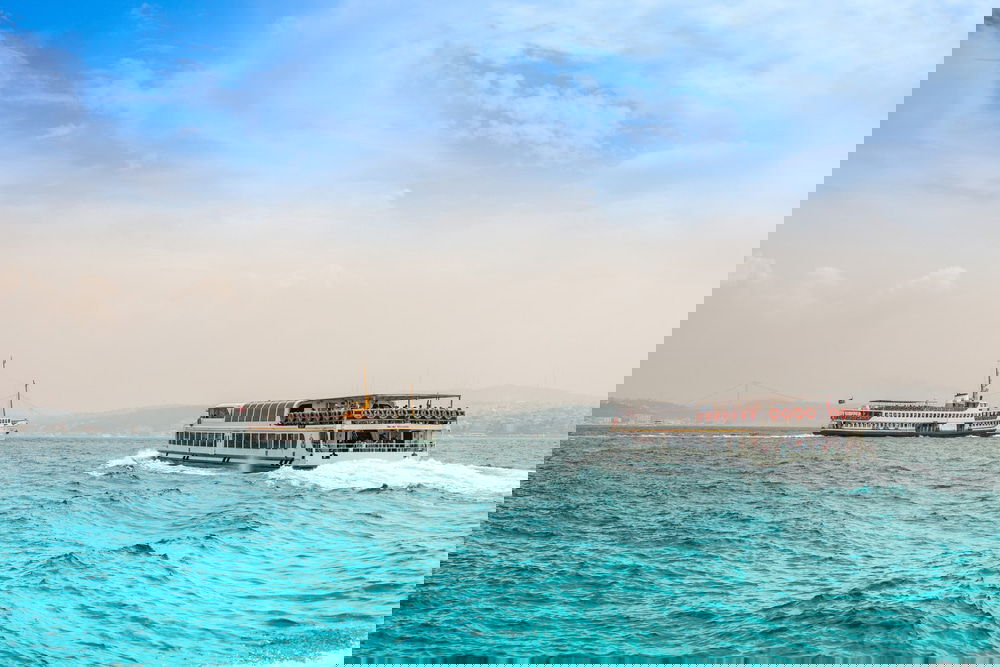
No visit to Istanbul is complete without a trip on the waters of the Bosporus. The simplest way to do this is to catch one of the local ferries, which travel regularly between the European and Asian sides, as well as up and down the waterway between Eminonu and Ortakoy.
Alternatively, there are loads of companies running private tours as well as some rather charming dinner cruises.
Maiden’s Tower
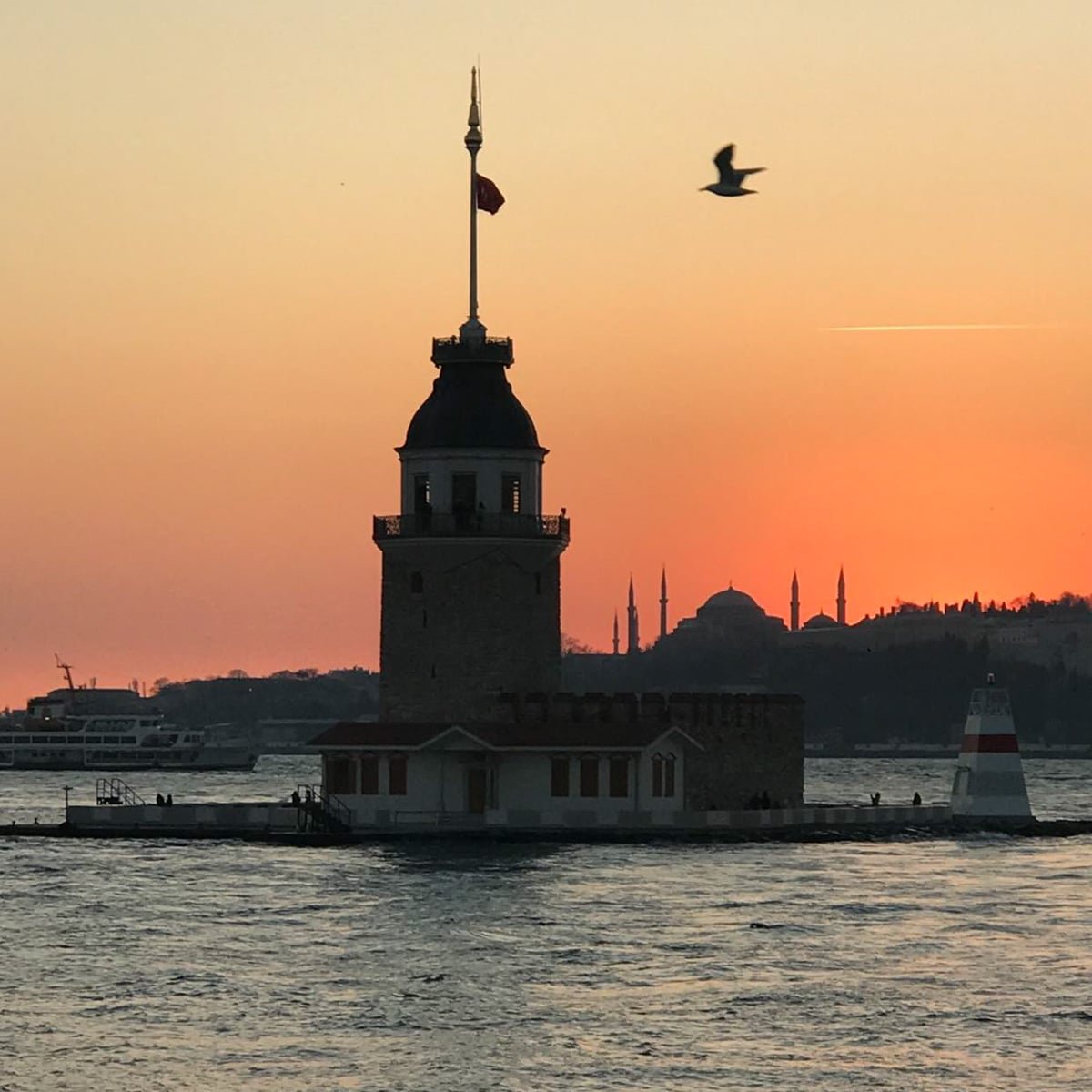
As you cross the Bosporus, keep an eye out for the Maiden’s Tower. Marooned in the middle of the waterway, there are several legendary antecedents for the building, including a romantic tale involving a doomed princess.
In reality, however, the original tower, thought to have been built a couple of thousand years ago, was probably some military installation. The current structure dates largely to the Ottoman period and reopened to the public in 2023 after extensive restoration, now housing a small museum and a café.
Kadikoy
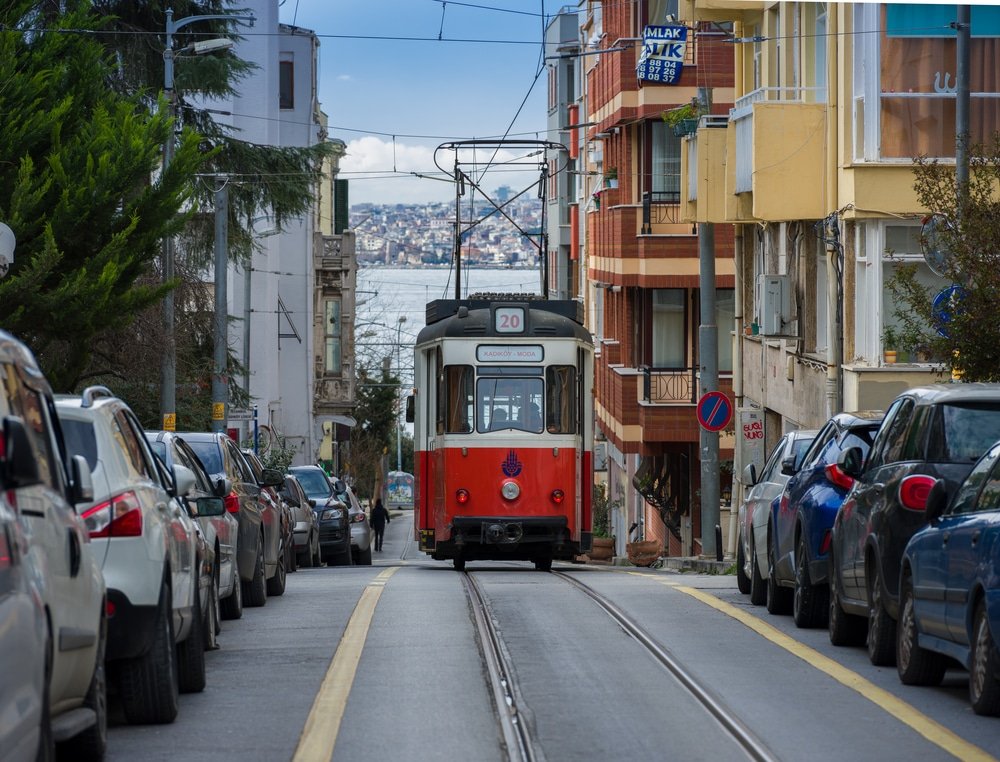
For tourists in a rush, the Asian side of Istanbul is often shunted off the itinerary, but you really can’t say you’ve properly been to the city unless you’ve seen both sides.
Once a completely separate settlement from Old Constantinople, today Kadikoy offers an alternative view of Turkey’s biggest metropolis, complete with buzzing, pedestrianized streets lined with cafes and shops. A particular highlight is the seafood market, complemented by restaurants that will cook up the fresh catch for your gastronomic pleasure.
Pera Palace
The Pera Palace has been one of Istanbul’s most luxurious hotels for more than a century. That’s not the reason we’ve included it here, however.
Instead, you should pop in for a refreshing drink at the Orient Bar so you can say you’ve traveled in the footsteps of such icons as Ernest Hemingway, Alfred Hitchcock, and Agatha Christie. Don’t forget to pop your head around the door of the famous Room 101, which now hosts an exhibit commemorating Mustafa Kemal Atatürk, Turkey’s first president.
Taksim Square
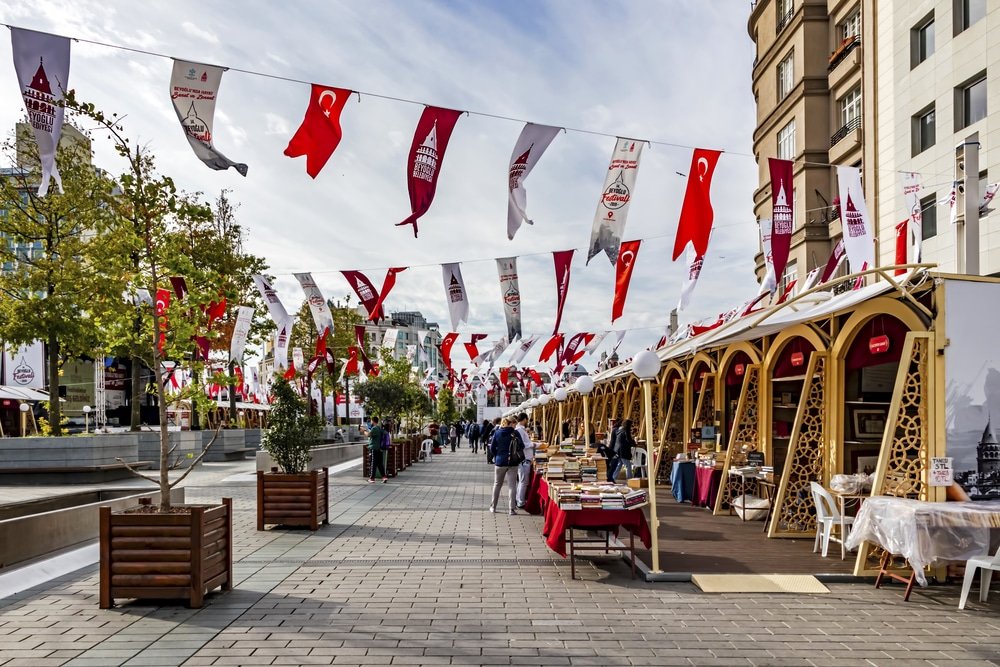
The beating heart of modern Istanbul, Taksim Square is an open space enveloped by eateries, hotels, and shopping streets. At its heart is the Republic Monument, a sculpture commemorating the reformulation of the Ottoman Empire into the Turkish Republic.
While Taksim Square is far from the most impressive thing to see in Istanbul, you will probably pass through the area on your way to other sights, and it’s worth stopping off to take in the sights and sounds of the modern city at its most vibrant.
Ortakoy Mosque
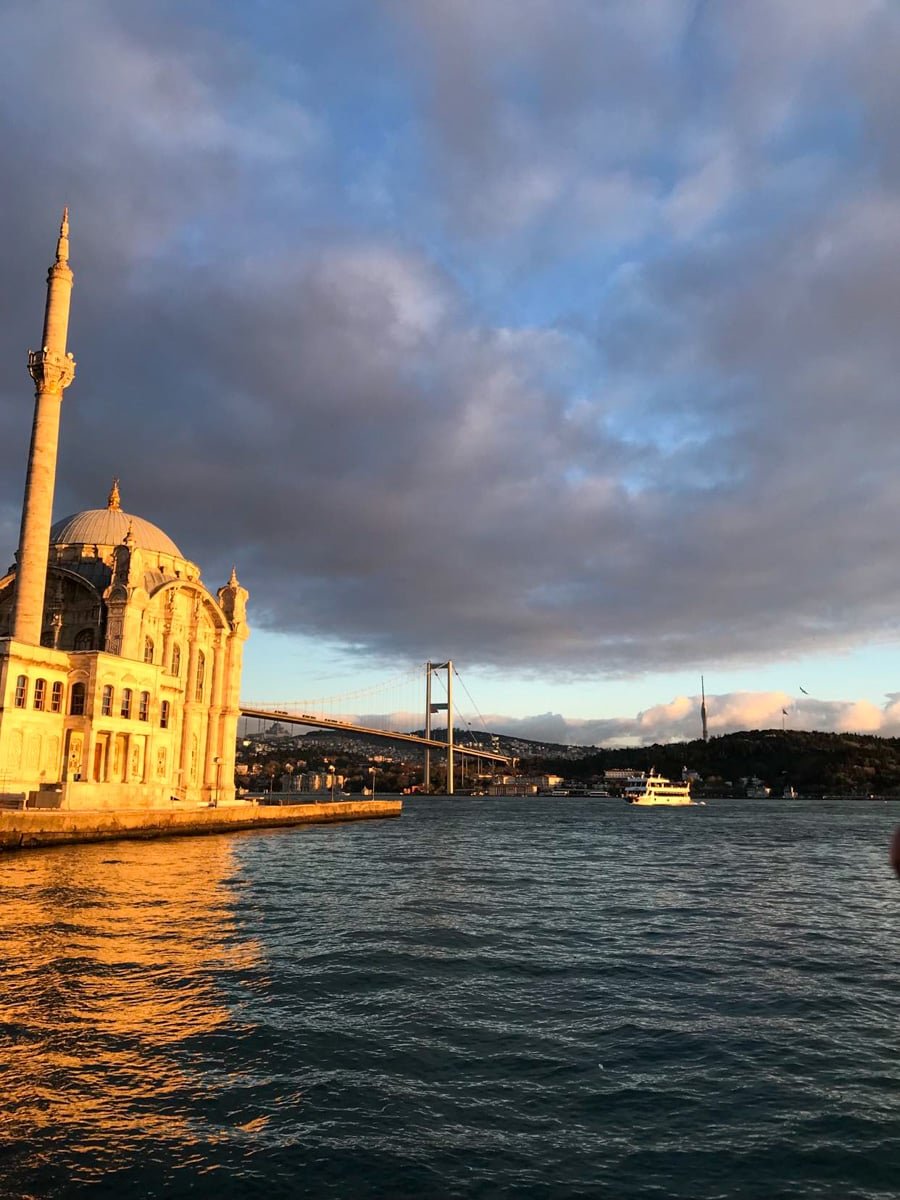
A bit further north from the main stretch of tourist hotspots, Ortakoy Mosque was built around the same time as the Dolmabahce and Beylerbeyi palaces – a fact readily evident in the architecture’s similarity.
Blending Western and Ottoman features, the gleaming white facade conceals a riotous homage to baroque design, complete with enormous windows and pastel-pink ornamentation.
Rumeli Fortress
Even further up the Bosporus, the Rumeli Fortress is a magnificent ruin, originally built as part of a grand plan to finally bring about the fall of Constantinople. This city had remained unconquered for hundreds of years thanks to (almost) impenetrable walls. Today, the picturesque stone walls and forbidding towers are a beautiful place to explore and relax.
Turkish Breakfast
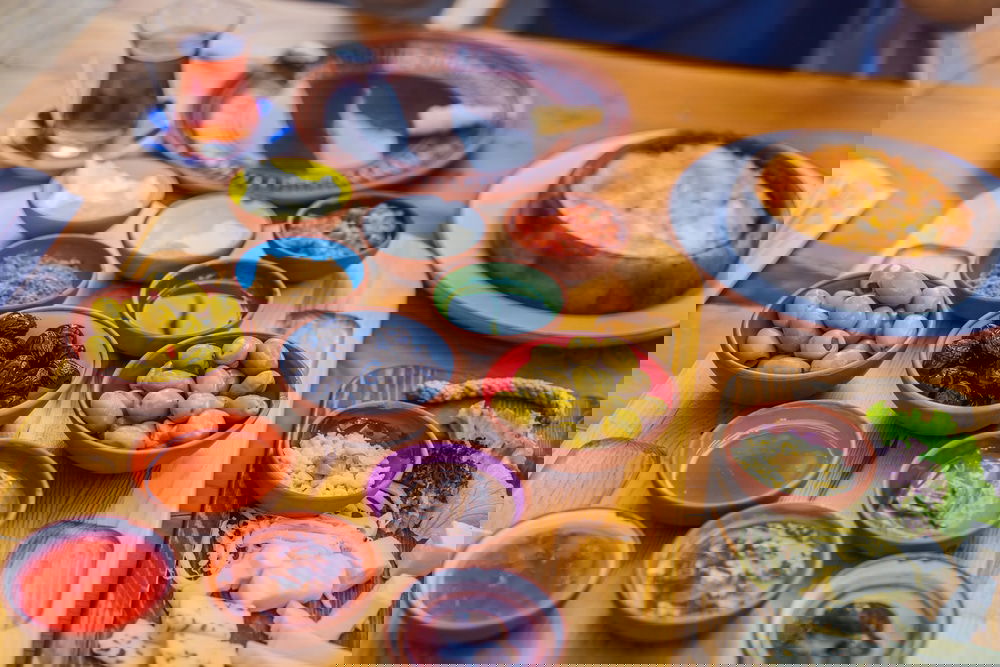
There are a couple of must-do cultural highlights you can’t miss in Turkey, and one of them is a scrumptious breakfast.
These meals are like a tasting platter of local foods, consisting of olives, tomatoes, cold cuts, local cheeses, dips, and freshly baked bread, accompanied by a glass of black tea.
Kilic Ali Pasa Hamami
Going to the hammam is another activity you cannot miss while in Istanbul. There are loads of these traditional Turkish baths spread throughout the city. Still, we particularly recommend Kilic Ali Pasa if you want a pampering experience that blends modern comfort within a meticulously restored building. It’s essentially the best of both worlds, offering a divine taste of the hammam experience within a setting that caters to linguistically challenged tourists.
Galata Mevlevi Museum
The Mevlevi are famous throughout the world for their ritual in honor of Allah that involves a dizzying twirling dance – hence their designation as “whirling dervishes.” This museum is dedicated to exploring the traditions and beliefs of this religious sect. There are also regular performances if you want to experience this Masterpiece of the Oral and Intangible Heritage of Humanity for yourself.
Whirling dervish ceremonies here are held on specific days and times, and performances may be suspended during religious periods.
Chora Church
Chora Church has undergone status changes in recent years and reopened as a mosque in 2024, with access conditions differing from its former museum operation.
While it is a little further out from the main tourist areas of Istanbul, what has kept this religious edifice a popular side attraction is not its Byzantine stone exterior – although that is beautiful as well – but the unparalleled collection of mosaics and frescoes that continue to adorn the interior, which are more than 700 years old.
Brands We Use And Trust
Is Five Days Enough To See Istanbul?
Is it worth it to go to Istanbul for 5 days? Yes, absolutely! Any 5-day Istanbul itinerary will enable you to see all the essential attractions that any visitor cannot miss, such as Hagia Sophia and the Topkapi Palace.
In fact, we can say with some authority that a quintet of days is an ample amount of time to at least dip your toe in the waters of what Turkey’s largest city has to offer, from devouring delicious breakfast platters to haggling in the Grand Bazaar.
When Five Days In Istanbul May Feel Too Short
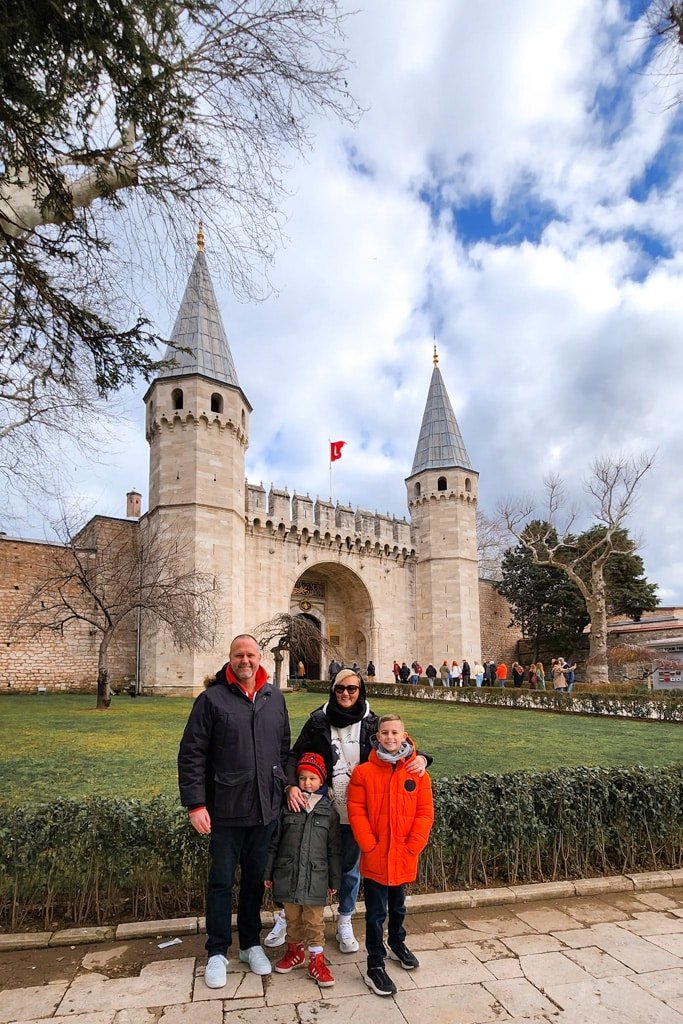
Yes, you can see all the major sights in Istanbul in 5 days, but how many days in Istanbul do you really need to immerse yourself in the culture?
If you are more of a leisurely traveler who doesn’t like to cram a ton of activities into a short space of time, you could easily spend upwards of a week methodically exploring the various districts and attractions of Istanbul.
Just taking in Fatih, the area that roughly corresponds to old Constantinople, can take a couple of days, filled as it is with Byzantine, Ottoman, and modern-day marvels.
Longer stays give you more time to see some of the lesser-visited but still impressive spots, such as the Rumeli Fortress, a Medieval fortification situated on the north side of Istanbul that exudes power and intimidation, or Miniaturk, a park containing miniature recreations of some of Turkey’s most famous landmarks that’s fun for all the family.
Most short visits to Istanbul focus on the European side, with perhaps just a little time left over for the fascinating Asian side.
If you do have a few days extra, however, it’s worth delving a little deeper into what this part of Istanbul has to offer.
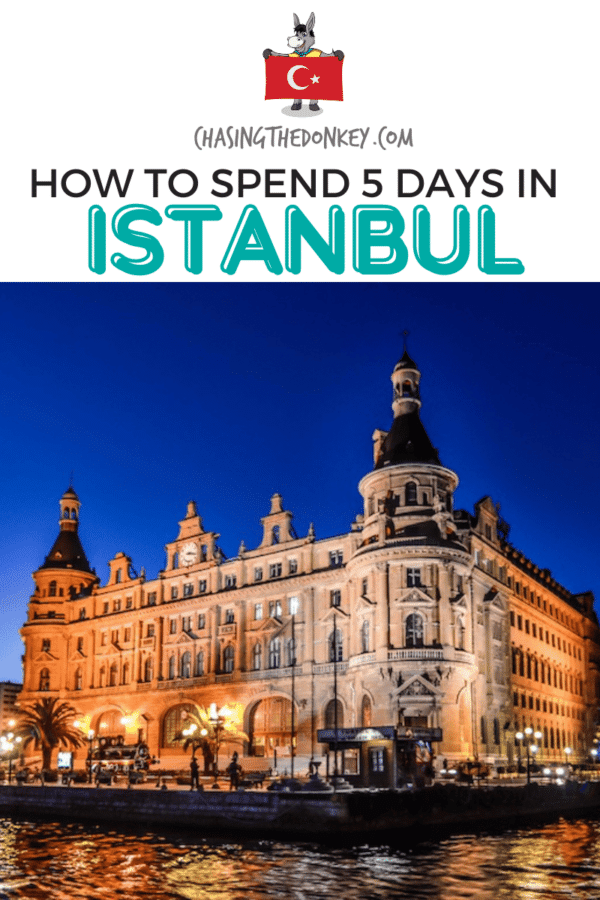
It’s here, for instance, that you’ll find the Kadikoy market, filled with fresh produce and delicious local snacks, as well as the fantastic Haydarpaşa Train Station. This grand neoclassical stone building stands upon the banks of the Bosporus.
The Kadikoy-Moda area, in particular, has become a beacon of cool in recent years, with lots of trendy bars, cafes, and artsy venues scattered throughout.
An extended Istanbul travel itinerary also allows for a day trip to some of the surrounding regions. One of the most popular natural escapes among locals is Belgrad Forest, a verdant green space less than an hour’s drive from downtown that is perfect for a spring or summer picnic away from the metropolis’s bustle.
Another place we love to visit during the warmer months is the Prince’s Islands. These picturesque landmasses are easily accessible from Istanbul by ferry, offering sandy coastlines, forested islands, and pretty wooden houses.
Getting Around Istanbul: Transport Options Explained
| Transport Type | Use Case | Notes |
|---|---|---|
| Tram (T1) | Historic sights | Connects Sultanahmet, Grand Bazaar, Eminönü |
| Metro | Longer distances | Includes airport connection via M11 |
| Ferry | Bosporus crossings | Scenic and commuter-friendly |
| Marmaray | Fast continent crossing | Rail tunnel beneath the Bosporus |
| Taxi / App Taxi | Door-to-door travel | Uber operates via licensed taxis |
Istanbul has an amazing range of public transportation options. Some of these epitomize efficiency when you want to get to your destination as quickly as possible, while others offer a scenic route or a journey into the past.
For almost all pieces of public transport, you will need an Istanbulkart. This card can be purchased from vending machines and kiosks for a fee that is typically around 70 Turkish Lira, subject to change, after which you can load as much money as you want to cover your travel as you go.
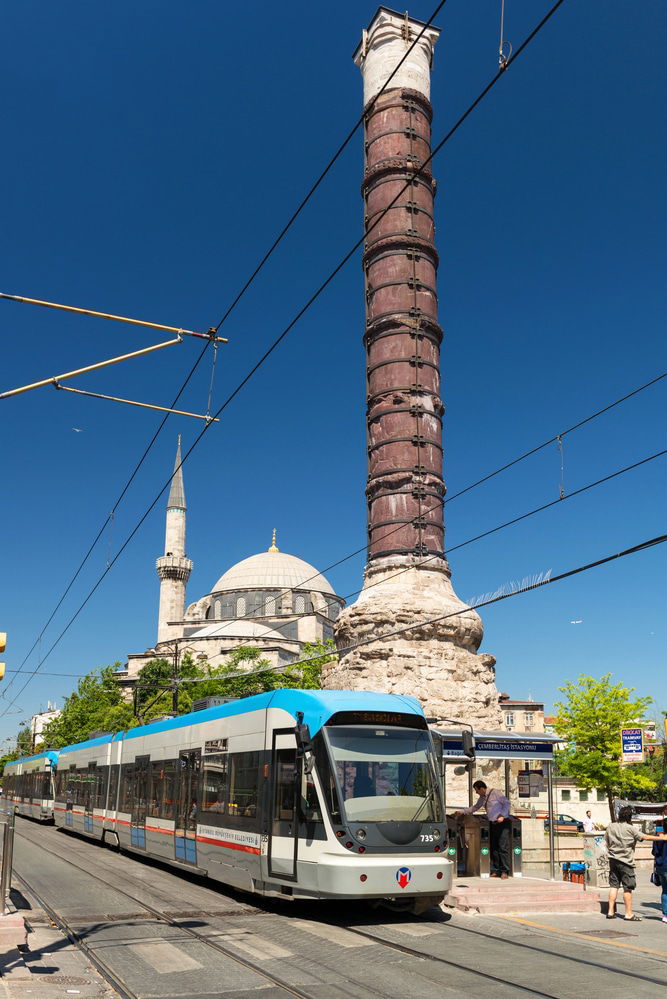
As a rough guide, a single journey on the metro, bus, or tram costs in the high-teens Turkish Lira, with fares adjusted periodically.
Take the modern tram: The most useful form of public transport for tourists is the tram, particularly the T1. This line connects some of Istanbul’s most popular spots, including the Hagia Sophia, the Grand Bazaar, and the Galata Tower.
Take the historical tram: Istanbul has two heritage tramways, one on the European side and one on the Asian side of the metropolis. These short lines provide a nostalgic journey into the city’s past, having resurrected the old-fashioned tram cars.
It’s definitely worth hopping on the T2 at some point, which runs along the bustling pedestrianized shopping street of Istiklal Street, just for the experience.
Hop on the underground: The underground consists of more than ten lines, which snake their way across the city. One of the most useful routes is the M11, which connects Istanbul Airport with Kağıthane and Gayrettepe, where it links with the metro network.
- Use the bus: there are hundreds of lines that cover almost the entire city. While they can be convenient, they are arguably the least comfortable method of transport due to the crowding, as well as being a bit of a head-scratcher to figure out.
- Enjoy the ferry: you can pay for a private boat trip, but why bother when the public ferry offers delightful views of the Bosporus for a fraction of the price? Bear in mindthat the local commuters actively use these boats, so if you want a relaxing journey crossing the water between the European and Asian sides of Istanbul, try to travel during theweekdaysy when people are at the office.
- Cross continents on the Marmaray: the Marmaray commuter line offers a fast rail alternative to ferries for crossing the Bosporus using public transport, alongside the Metrobüs corridor. It’s obviously less scenic, but also a much faster method of getting between Istanbul’s European and Asian halves.
- Try the funicular: described as the second-oldest subterranean transportation system still in existence after the London Underground, Istanbul’s Karakoy-Beyoglu funicular (also known as F2) is another piece of public transport that offers a window into Istanbul’s past. It essentially relieves people of the need to clamber up the steep slope between Karakoy and Beyoglu. There’s also a second, more modern funicular connecting Taksim and Kabatas.
- Experience a dolmus: a shared taxi used by locals to get from place to place. Essentially small minibuses, they seat around eight people and cost different prices (paid in cash) depending on your route. The destinations are written on the front of the vehicles, but this is still a more challenging way for tourists to travel and is only recommended for the adventurous.
- Hail a ride: Uber operates in Istanbul by dispatching licensed yellow taxis through its app rather than private ride-share vehicles. There’s also a local equivalent you can use called BiTaksi, which has a built-in English version.
- Risk a taxi: We use the word ‘risk’ because Istanbul’s taxis are notorious for trying to scam unwary travelers. While you’ll see plenty of yellow cabs on the streets of Istanbul, they may be one of the least reliable transport options. If you do take one, insist the ride is metered, pay with small bills, and ask for change – tipping the driver beyond rounding up the total is not a local custom.
Move This Adventure To Your Inbox & Get An Instant Freebie

No spam. Unsubscribe at any time.
Spending 5 Days In Istanbul FAQs
Is five days enough to see Istanbul?
Five days is enough to see Istanbul’s major highlights, including Sultanahmet’s historic core, a Bosporus crossing, and time on both the European and Asian sides. While it won’t cover everything, it allows a balanced first visit without feeling overly rushed.
What are the must-see attractions in a five-day Istanbul itinerary?
Key sights typically include Hagia Sophia, the Blue Mosque, Topkapi Palace, the Grand Bazaar, a Bosporus ferry ride, Galata Tower, and at least one visit to the Asian side, such as Kadıköy.
Should I stay on the European or Asian side of Istanbul?
Most first-time visitors choose the European side for proximity to major historical sights, while the Asian side offers a more local atmosphere and excellent food scenes. With five days, it’s realistic to experience both.
How much time should I spend in Sultanahmet?
Two days is a practical amount of time to explore Sultanahmet at a comfortable pace, covering major landmarks without rushing through long queues or museum complexes.
Is public transport easy to use in Istanbul?
Istanbul has an extensive public transport network, including trams, metro lines, ferries, funiculars, and commuter rail. An Istanbulkart is used across nearly all services and makes moving around the city straightforward.
What cultural etiquette should visitors be aware of?
When entering mosques, visitors remove their shoes and dress modestly, covering their shoulders and knees, and women cover their hair. Outside religious sites, Istanbul is generally liberal in dress and behavior.