

Athens is loud, intense, and unforgettable—but sometimes, you need a pause. Just beyond the city, the Saronic Islands offer one of the easiest island escapes in Greece, with ferries from Piraeus reaching islands like Aegina and Hydra in as little as 30 minutes. Having visited both islands multiple times, I’ve found that while they’re often compared, they deliver very different experiences.
Aegina is all about convenience, beach variety, and flexibility, while Hydra is slower, car-free, and centred around one of the prettiest harbours in Greece. This up-to-date Aegina vs Hydra guide breaks down ferry times, transport rules, beaches, atmosphere, and practical differences—so you can confidently choose the island that fits your trip right now.
Things To Know Before Visiting Aegina Or Hydra
- High-speed ferries sell out quickly in summer.
- Hydra has many stairs and steep lanes.
- Aegina offers multiple arrival ports.
- Winter ferry schedules are reduced.
These practical differences matter most for travellers planning a short stay or day trip, where ferry time, walking distance, and ease of getting around can shape the entire experience.
| Key fact | Aegina | Hydra |
|---|---|---|
| Main departure port (Athens) | Piraeus | Piraeus |
| Typical one-way ferry time | ~30–40 min (high-speed) or ~1h 15m (conventional) | ~1h 05m–2h 20m (service-dependent) |
| Arrival ports | Multiple (Aegina Town, Souvala, Agia Marina) | Hydra Harbor |
| Cars/bikes | Cars allowed (you can bring a vehicle on some services) | Car-free; bicycles generally prohibited |
| Getting around | Taxi, bus, car/scooter, walking | Walking, water taxis/boats, and pack animals are used for goods |
| Best fit if you want… | More beach variety + easiest/shortest trip | Harbour vibes + walking + “no traffic” atmosphere |
Keep reading below for our in-depth analysis on weighing up Aegina vs. Hydra.
Skip Ahead To My Advice Here!
Aegina: Best For Easy Access And Beach Variety

Aegina is one of the closest Greek islands to Athens, and the ferry takes around 30–40 minutes on high-speed services or about 1 hour 15 minutes on conventional ferries, with year-round routes.
Most ferries to Aegina depart from Gate E8 in Piraeus (gates can change), so check your ticket/app on the day.
Good to know: Ferries arrive at multiple ports on Aegina (Aegina Town plus other ports depending on the route), so double-check the port name on your ticket if you’re staying outside Aegina Town.
Of course, locals often flock to Aegina during the summer months for a quick holiday to enjoy the dramatic landscapes of this island, so you will find it quite busy, especially on the weekends.
However, despite that, it still retains its laid-back charm, especially if you venture just outside the main town, also called Aegina.
Aegina is larger than Hydra, which means there are more beaches to explore, and it’s often easier to escape the busiest spots once you get beyond Aegina Town. Beaches here range from sand to pebbles, and the water is usually calm and clear on sheltered days.
If you’re a fan of ancient ruins, Aegina is a great spot to enjoy a little history without the crowds you’ll encounter in Athens. The Temple of Aphaia is part of the triangle formed by this site, the Parthenon, and the Temple of Poseidon at Cape Sounion. You should also visit the Cathedral of Saint Nectarios while you’re there.
Aegina is home to many traditional taverns, restaurants, and small bars where you can sit back and relax, and you can even enjoy a fantastic view back over to Athens.
In peak summer months, high-speed ferries to Aegina often sell out on weekends, and conventional ferries may be the more reliable option for last-minute travel.
Brands We Use And Trust
Hydra: Best For Car-Free Walking And Harbour Atmosphere
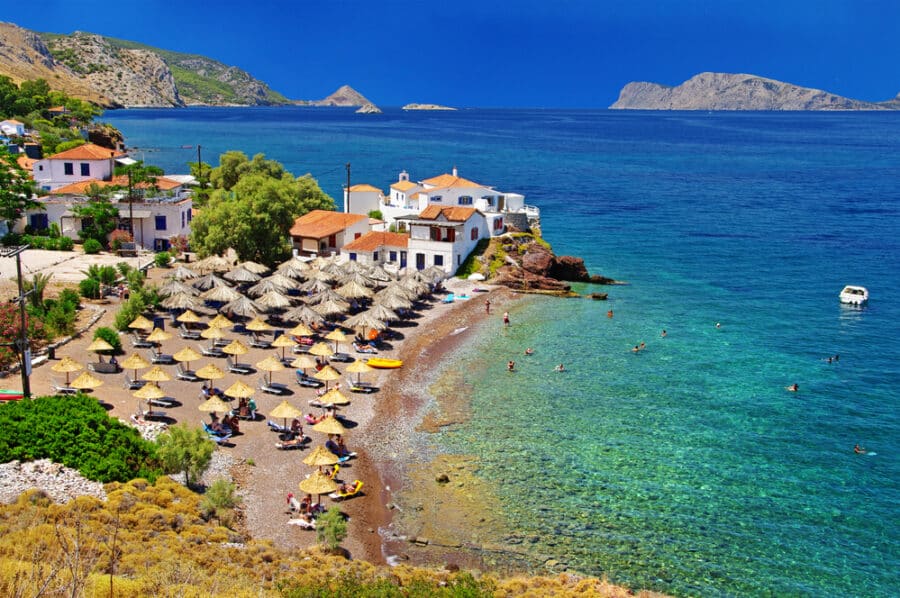
The ferry from Athens (Piraeus) to Hydra usually takes about 1 hour 5 minutes to 2 hours 20 minutes, depending on the service, and routes generally run year-round, weather permitting.
Good to know: Hydra is car-free by law, and bicycles are prohibited under local law, so expect lots of walking (often on steps) along stone lanes.
Mobility note: Hydra’s harbour area is fairly flat, but many accommodations feature steep lanes and many steps—something to factor in if you’re travelling with a stroller, heavy luggage, or limited mobility.
The great thing about Hydra is that it’s as laid-back as possible, thanks to its long-standing ban on motor vehicles.
In the absence of motor vehicles, you’ll get around on foot, by water taxi/boat, or by pack animals used to transport goods.
The harbor is a beautiful place to sit and watch the world go by, and you can also catch sight of the famous donkeys. Many tavernas are here, and it’s a popular spot for sunset walks.
Hydra has a more traditional look than Aegina, with stone mansions and historic houses climbing the hillside.
The winding, narrow streets are ideal for slow explorations, and there are many small cafés you can stop and enjoy.
Of course, Hydra’s beaches are beautiful, though they’re mostly pebbly and accessed on foot or by boat. Although the island is smaller, it can feel less hectic away from the harbour area, especially if you explore on foot or by boat.
High-speed ferries to Hydra are more susceptible to strong winds than conventional ferries, which can lead to delays or cancellations during rough weather.
Potential Downsides Of Visiting Aegina Or Hydra
Aegina and Hydra are undoubtedly captivating destinations, each boasting its unique charm and allure. As you’ve seen, they offer a rich blend of natural beauty, cultural heritage, and tranquil vibes, making them popular choices for travelers seeking a taste of Greek island life.
However, like any travel destination, they also have a few downsides worth considering. Here’s a look at some aspects that may be less favorable, helping you make a well-rounded decision for your trip.
Crowding from Cruise Ships: Aegina can become crowded with day-trippers and organized day-cruise groups, especially during peak season and on weekends.
Limited Quiet Spots in Peak Season: Aegina is relatively compact, so in summer, the truly quiet areas can be harder to find, especially on weekends.
Hydra
Transportation Limitations: Hydra does not allow cars, so getting around involves walking (often on steps) or using water taxis, which may not suit everyone.
Accommodation prices on Hydra are typically higher than on Aegina, especially during summer and public holidays, due to limited supply and strong demand.
Things To See And Do On Aegina
- Visit ancient Greek temples, such as the Temple of Apollo and the Temple of Aphaia.
- Explore Orthodox cathedrals on the island
- Enjoy the relaxing beaches
- Indulge in the delicious local pistachios
- Experience the charm of the island and its authentic Greek atmosphere
- Check out the Tower of Markellos
Things To See And Do On Hydra
- See the famous donkeys around the harbour and village lanes
- Explore the scenic harbors and take in the picturesque views
- Admire the traditional Greek houses and island architecture
- Try local sweets and seafood
- Immerse yourself in the serene environment and savor the authentic Greek island lifestyle.
Aegina Or Hydra: Which Island Is Better For Your Trip?
Both Aegina and Hydra are beautiful islands of the Saronic Gulf, and if you have the time, it’s well worth visiting both. However, Aegina has a practical edge because it is closer to Athens and requires less ferry travel time.
There are more facilities in Aegina Town, which may or may not matter to you. However, Hydra is undoubtedly more authentic and laid-back, so if that’s what you’re looking for, perhaps Hydra would be the winner for your next trip.
Is Aegina or Hydra better for a day trip from Athens?
Aegina is usually the easiest day trip due to its very short ferry time and frequent departures. Hydra also works well for a day trip, but it involves a longer ferry ride and more walking upon arrival.
Can you visit both Aegina and Hydra in one day?
Yes, some organised day cruises from Athens include both islands, often alongside a third stop. Time on each island is limited, so these tours offer a taste rather than an in-depth visit.
How long is the ferry from Athens to Aegina?
High-speed ferries typically take 30–40 minutes, while conventional ferries take around 1 hour and 15 minutes, depending on the service.
How long is the ferry from Athens to Hydra?
Ferry travel time to Hydra ranges from about 1 hour 5 minutes to over 2 hours, depending on the operator, route, and intermediate stops.
Is Hydra really car-free?
Yes. Cars and bicycles are prohibited on Hydr by law. Transportation is by foot, water taxi, or pack animals for goods.
Which island is better for beaches?
Aegina offers a wider variety of beaches, including sandy and pebbly options. Hydra’s swimming spots are mostly rocky or pebbly and often accessed by foot or boat.
Which island is less crowded?
Both islands get busy in summer, but Aegina sees more day-trippers on weekends. Hydra feels quieter away from the harbour, especially in the mornings and evenings.
Which island is more affordable?
Aegina is generally more affordable for accommodation and dining. Hydra tends to be more expensive due to limited accommodation supply and higher demand.
When is the best time to visit Aegina or Hydra?
Late spring and early autumn offer the best balance of good weather and fewer crowds. Summer is lively but busier, while winter has fewer ferry services.