

This list pulls together famous ancient Greek statues and statue-groups—and, crucially for trip planning, where you can actually see them today, whether that’s Athens, Delphi, Olympia, Rome, Paris, Munich, London, or Los Angeles. I’m based in Croatia and have spent years traveling through Greece and the wider region, with a strong focus on museums and ruins. Hence, the emphasis here is practical: confirmed locations, commonly used names (so you can find the right label in the gallery), and quick context on what’s original versus a later Roman copy.
Skip Ahead To My Advice Here!
Key Facts And Where To See Famous Greek Statues Today
| Statue / Work | Where To See It Today | What To Know (Accuracy-Critical) |
|---|---|---|
| Venus de Milo (Aphrodite of Milos) | Louvre, Paris | 2nd century BC; attribution to Alexandros is disputed |
| Colossus of Rhodes | Rhodes (site context only) | No confirmed physical remains survive |
| Winged Victory of Samothrace | Louvre, Paris | c. 190 BC; found on Samothrace; sculptor not securely known |
| Discobolus | National Roman Museum, Rome | The original was bronze; surviving examples are Roman marble copies |
| Statue of Zeus at Olympia | Not extant | Lost in antiquity; made of gold and ivory on a wooden framework |
| Athena Parthenos (Varvakeion Athena copy) | National Archaeological Museum, Athens | Roman-era marble copy of the lost original cult statue |
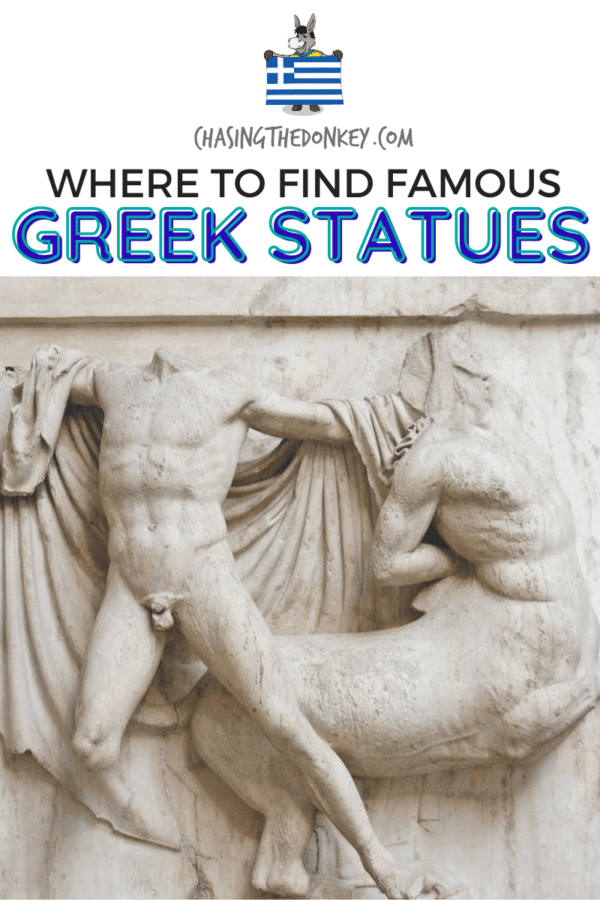
| Parthenon Metopes | British Museum, London | Architectural relief panels (not standalone statues) |
| Laocoön and His Sons | Vatican Museums, Vatican City | Commonly dated early 1st century AD; attribution/dating debated |
Ancient Greek statues remain among the most influential works of art, admired for their realism, balance, and technical mastery. From idealized athletes to powerful gods and mythological scenes, these sculptures have shaped Western art for centuries and continue to draw visitors from around the world.
While many people assume all famous Greek statues are in Greece, that’s no longer the case. Some of the most important surviving works are now displayed in museums across Europe and the United States, while others remain in Athens, Delphi, Olympia, and other historic Greek sites.
Below, you’ll find a curated list of famous ancient Greek statues and statue-groups, along with where you can actually see them today—whether that’s inside a major museum or, in some cases, only through archaeological context where the original no longer survives.
If you’re a fan of Greek statues, let’s check out some of the most famous and where you can see them.
1. Aphrodite Of Milos – Venus de Milo, The Louvre Museum
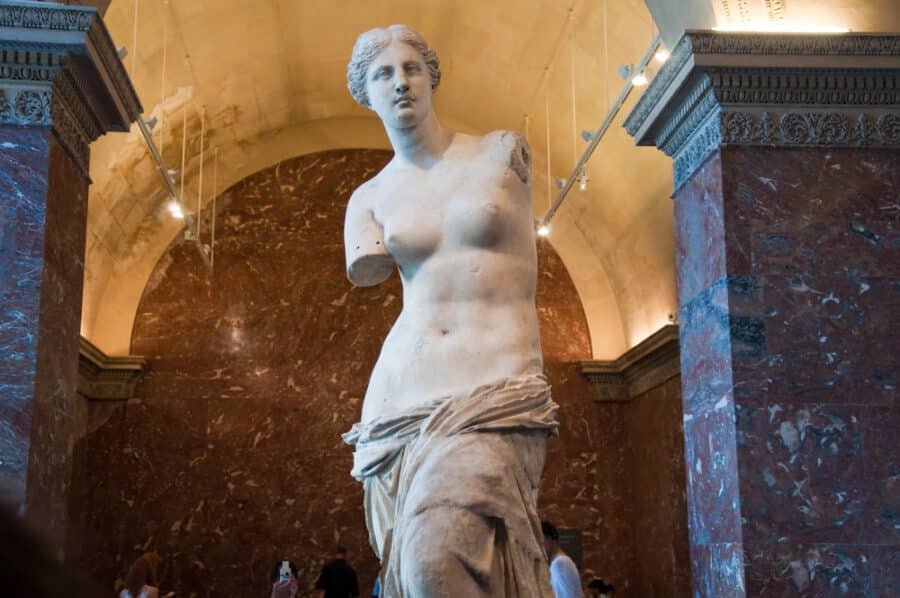
This is one of the most famous ancient Greek statues, generally dated to the 2nd century BC (often cited around 160–110 BC). It is sometimes attributed to Alexandros of Antioch on the Maeander, but that attribution is disputed.
The Aphrodite of Milos is made of marble and is 203cm high. It was found on Milos in 1820, and considerable mystery surrounds it. Art historians continue to debate its proportions and the intent behind its expression.
You can see this statue in The Louvre in Paris.
2. The Colossus Of Rhodes, Rhodes Island
One of the Seven Wonders of the Ancient World, the Colossus of Rhodes, was a towering statue of the sun god Helios on the island of Rhodes. It was destroyed by an earthquake in 226 BC, and no confirmed physical remains survive today.
3. The Lady of Auxerre, The Louvre, Paris
Created around 650–625 BCE, this limestone statue is in the Louvre in Paris. It was identified in 1907 in storage at the Auxerre Museum, and its original provenance is unknown.
Much about the statue remains uncertain, including its original function and identity, due to the lack of archaeological context. Some interpretations suggest it may depict a goddess (sometimes identified as Persephone), but no identification is certain.
4. Nike Of Samothraki – The Winged Victory of Samothraki, The Louvre
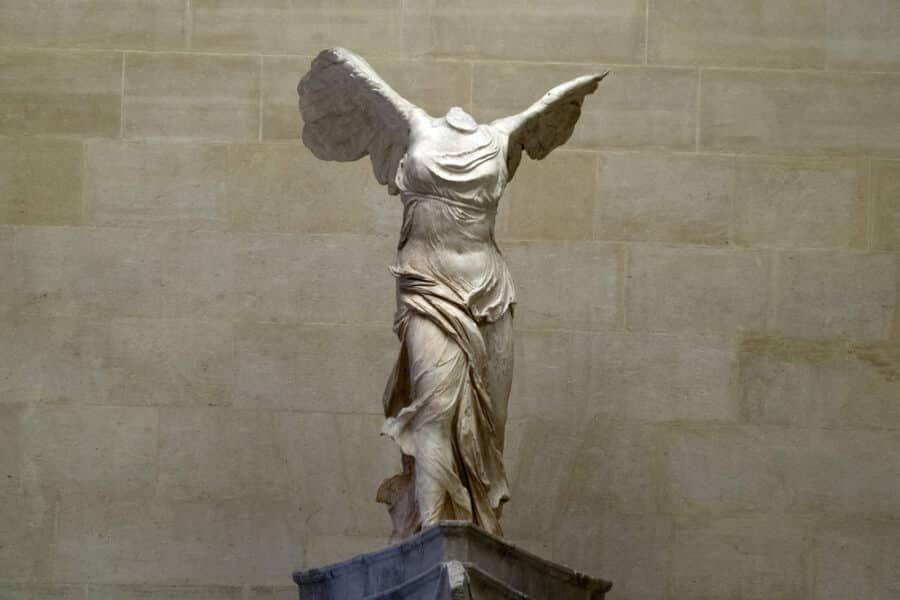
This statue, also known as the Winged Victory of Samothrace, is generally dated to around 190 BC. It is a Hellenistic sculpture of the goddess Nike. The sculptor is not securely known (it is sometimes associated with Pythokritos). It was discovered in 1863 on the Greek island of Samothrace and found in fragments.
However, it was pieced back together, and the Goddess of Victory can now be seen in person in the Louvre in Paris.
The statue depicts the goddess as a winged woman standing on a ship, with strong winds blowing directly at her.
Brands We Use And Trust
5. Kleobis and Biton, Delphi Archaeological Museum, Delphi
These statues are generally dated to around 580 BCE and were found at Delphi during excavations in 1893 and 1894.
Made of marble, the base bears an inscription naming Polymedes of Argos as the sculptor.
There are various theories about what the statue represents, but they are all deeply rooted in ancient Greek mythology.
6. Ermis Of Praxiteles, Archaeological Museum of Olympia
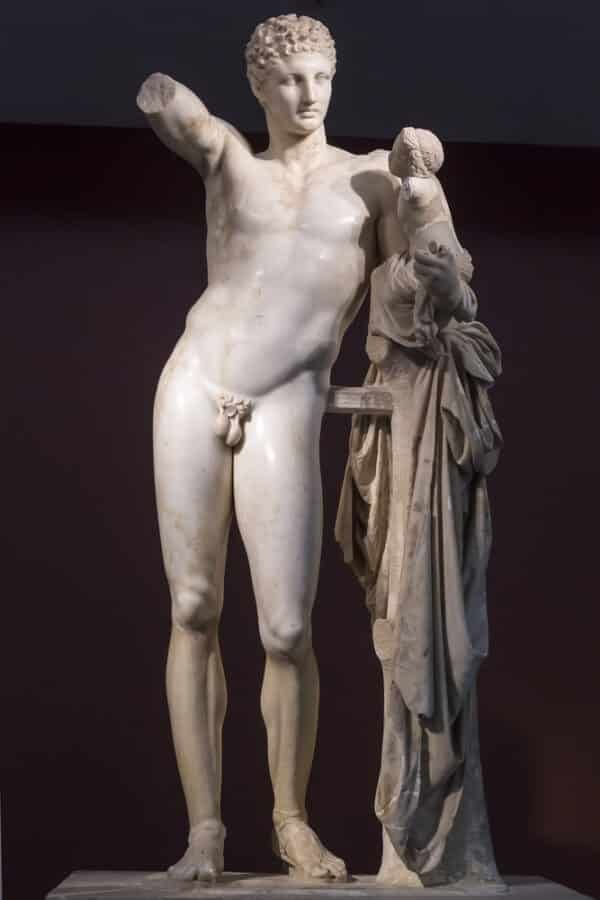
This particular statue was found in 1877 and is of Hermes, a Greek God. It was found in the Temple of Hera in Olympia and dates back to the 4th century.
The most intriguing aspect of this statue is its subtle expression, which can appear to change with the angle and lighting.
You can see this statue in the Archaeological Museum of Olympia.
7. Peplos Kore, Acropolis Museum, Athens
You can see this beautiful statue in the Acropolis Museum, dating back to 530 BCE. The statue is of a Greek woman and is made of marble. Traces and analyses indicate it was originally painted in vivid colors, like many archaic sculptures, even though it appears mostly unpainted today. The statue was originally found in three pieces during the excavation of the Acropolis.
8. Discobolus (Discus Thrower) – National Roman Museum, Rome, Italy
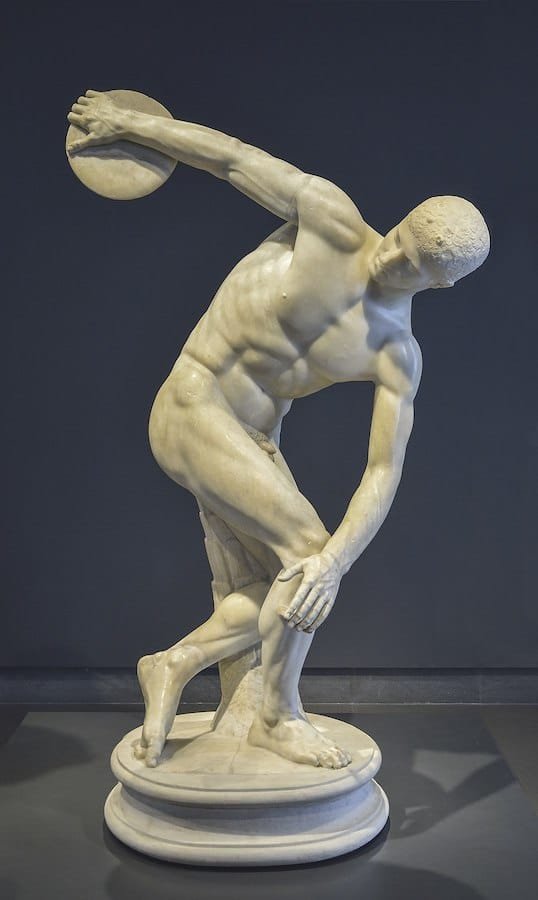
The Discobolus is a famous statue of a man throwing a discus. The original by Myron was a bronze created in the 5th century BCE; what you see today in Rome is a Roman marble copy (or copies) on display at the National Roman Museum.
The surviving versions are marble Roman copies, approximately life-size, 1.5–1.7 meters tall, depending on the specific copy. The Discobolus is widely regarded as one of the most iconic sculptures of antiquity. It is thought to represent the athletic ideal of the time, and its beauty has been praised for centuries. The statue is said to capture the moment just before the discus is released, and the figure’s energy and movement are conveyed with great skill.
Despite its popularity, little is known about the statue’s original context. An athlete or wealthy patron may have commissioned it, or it may have been part of a larger work, such as a fountain or shrine. Whatever its original purpose, the Discobolus is now recognized as an ancient masterpiece of Greek art.
If you’re planning a visit, confirm which Discobolus version is currently on display, as the National Roman Museum operates across multiple venues in Rome.
9. The Sacred Gate Kouros – Dipylon Kouros, Archaeological Museum, Athens
This ancient statue, made of Naxian marble, is generally dated to around 600 BC and is associated with an anonymous workshop sometimes referred to as the “Dipylon Master.” It is approximately 2.1 meters high and is a unique, well-preserved statue. The statue was found in 2002 in the Kerameikos cemetery area near the Sacred Gate.
You can see this statue at the National Archaeological Museum in Athens.
10. Dying Warrior, Glyptothek Museum, Munich, Germany
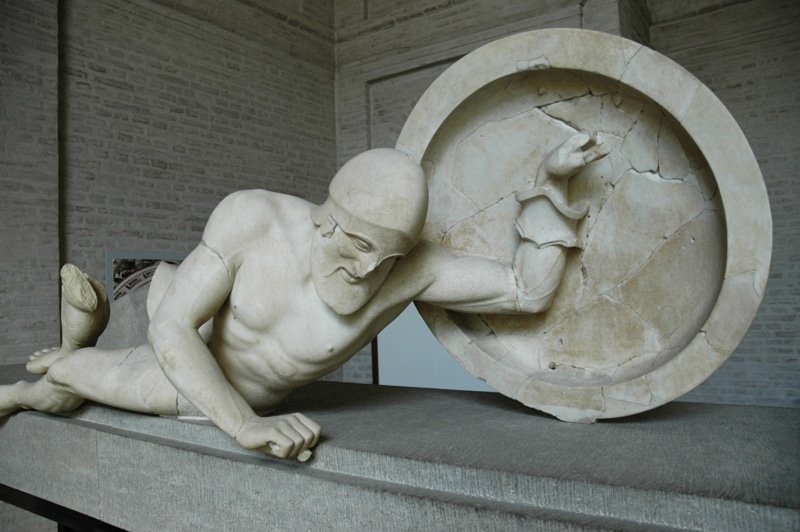
You will have to travel to Munich to see this statue, dated to around 505–500 BCE, from the east pediment of the Temple of Aphaia on Aegina. The statue was originally held in the Temple of Aphaia on the island of Aegina, and several statues were removed. The figure is often described as a fallen (or “dying”) warrior; specific identifications (such as Laomedon) are uncertain.
11. Moschophoros – The Calf Bearer, Acropolis Museum, Athens
This particular statue dates back to around 560 BC and was found in the Acropolis in 1864. It was excavated in pieces, and it is believed that, when it was created, it stood 1.65 meters tall. The man in the statue is shown carrying a calf on his shoulders; he is a strong, powerful figure. An inscription on the statue tells its story; from there, we can see that the creator was wealthy.
You can see this statue in the Acropolis Museum in Athens.
12. Heniokhos – Charioteer Of Delphi, Delphi Archaeological Museum
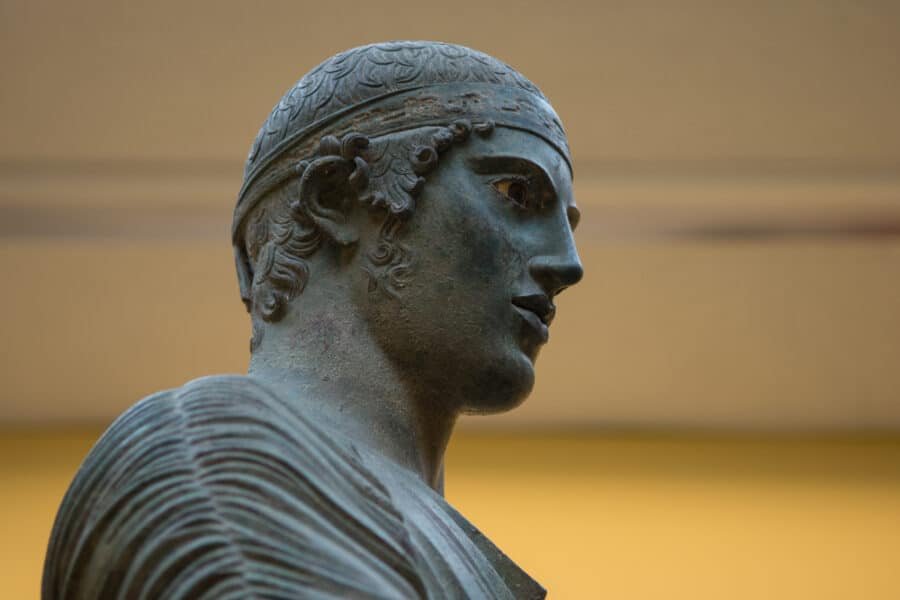
Heniokhos was found in the Sanctuary of Apollo in Delphi in 1896 and is generally dated to around 478–474 BC. The sculptor is not securely known. This is one of the oldest statues from Ancient Greece, depicting a chariot driver after he wins a race.
You can see this statue in the Delphi Archaeological Museum.
13. Leda and The Swan, J. Paul Getty Museum, Los Angeles
The Leda and the Swan in Los Angeles is a 1st-century AD Roman version of an earlier Greek statue from the 300s BC, often attributed to Timotheos. The sculpture is based on the myth of Zeus seducing Leda, the Queen of Sparta, after transforming himself into a swan.
14. Kritios Boy, Acropolis Museum, Athens
Created in 480 BCE, this statue was discovered in 1866 during the exploration of the Acropolis. When archaeologists found it, the head was missing, and the missing part was found 23 years later. This is a small marble sculpture. It is thought that the sculpture is an attempt to try and understand the human body.
15. Laocoön and His Sons, Vatican Museum
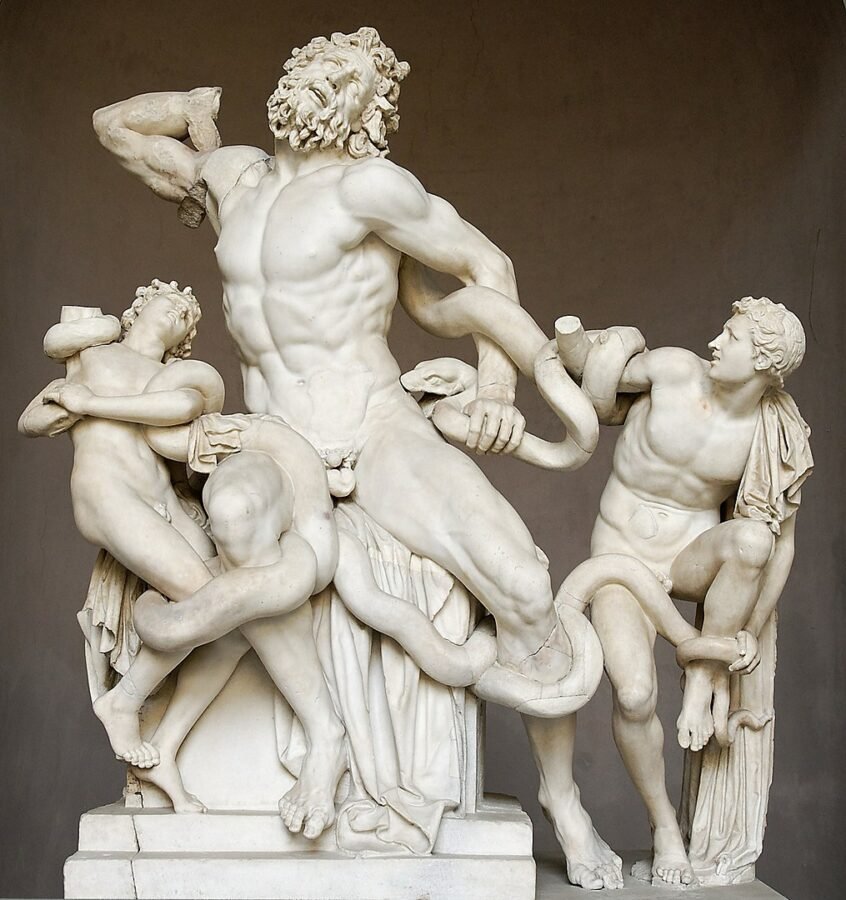
The Laocoön and His Sons sculpture is in the Vatican Museums and is among the most famous sculptures in the world. The sculpture depicts Laocoön, a Trojan priest, and his two sons being attacked by a giant serpent. The story behind the sculpture is that Laocoön warned the Trojans not to accept the Wooden Horse from the ancient Greeks, as it was likely a trap.
However, the Trojans did not heed his advice and brought the horse into their city. In the myth, serpents are sent by the gods to kill Laocoön and his sons (the specific deity varies by source). The sculpture is generally dated to the early 1st century AD and is traditionally attributed to Rhodian sculptors Agesander, Athenodoros, and Polydorus (exact dating is debated).
The sculpture was found in 1506 near Rome and has been on display at the Vatican Museum since 1512. The Laocoön and His Sons sculpture is one of the most famous sculptures in the world due to its detailed carving and its tragic story.
If you ever have the chance to visit the Vatican Museums, be sure to see this remarkable work of art, often accessed via the Pio-Clementine Museum route.
16. Artemision Bronze, National Archaeological Museum, Athens
This particular statue was removed from Cape Artemision in 1926, and nobody knows who created it. However, it is believed to date to around 460 BC and depicts Zeus or Poseidon. The figure is depicted nude, with proportions that reflected the ancient Greek ideal of the male body.
You can see this statue in the National Archaeological Museum in Athens.
17. Zeus and Ganymede, Olympia Archaeological Museum
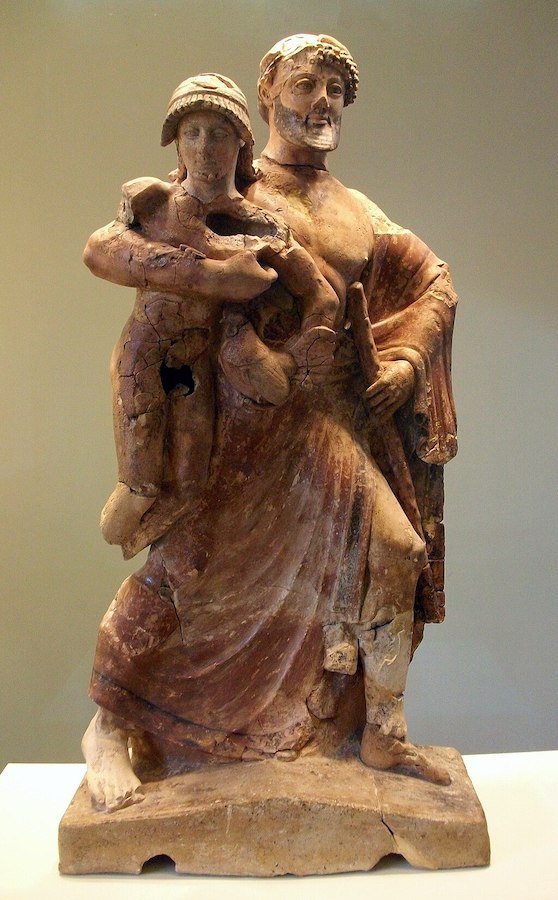
Dating back to 470 BCE, this terracotta sculpture depicts Zeus carrying Ganymede toward Mount Olympus. It is a large-scale depiction, possibly intended to appear near life-size. It’s a statute of importance because it’s pretty unusual for its time, but it’s also thought to have been made between two different eras, which might explain its construction differences.
18. Statue of Zeus at Olympia, Temple of Zeus, Olympia, Greece
The original statue was a giant seated figure about 12.4 meters tall, made by Phidias around 435 BCE. It was a chryselephantine work (gold and ivory on a wooden framework) with a richly decorated throne, and it was lost in antiquity.
19. The Riace Bronzes, Reggio Calabria, Italy
These two full-size bronze warrior statues date to about 460–450 BCE and are now in Reggio Calabria, Italy. They were found in 1972, submerged in the seabed off the coast of Calabria, by a recreational diver. The diver initially worried the find might be sinister, as they saw an arm protruding from the sand, but fortunately it turned out to be a statue and not a human.
20. The Parthenon Metopes, The British Museum, London
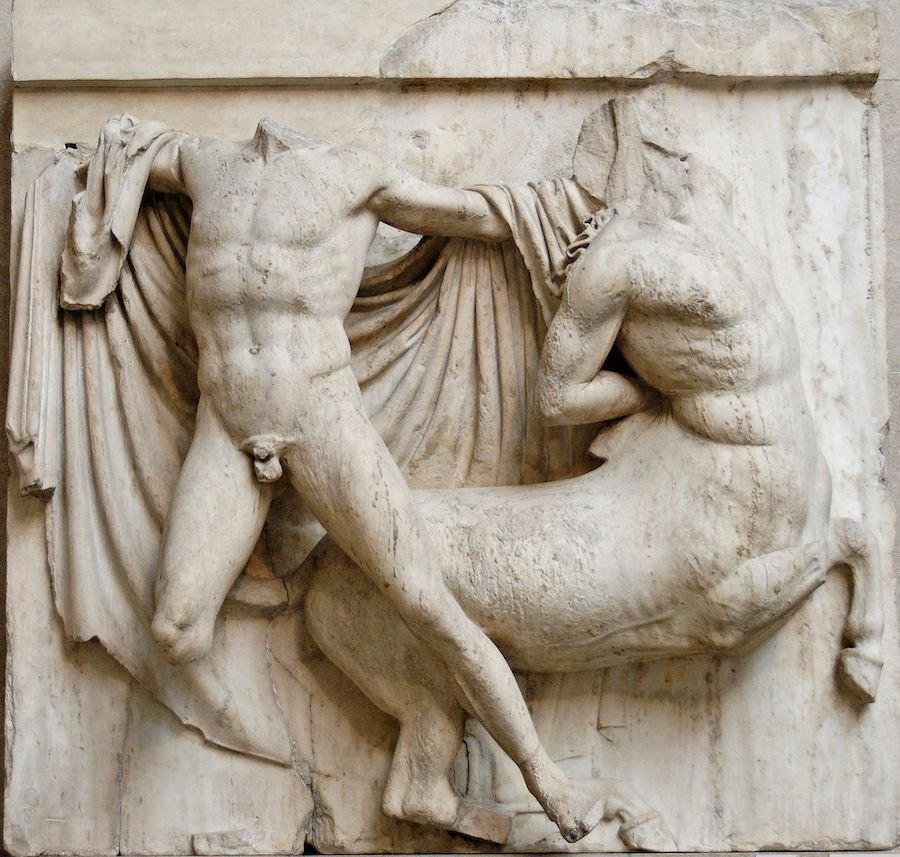
If you visit the British Museum, you can see Parthenon metopes (sculpted marble relief panels) carved in the mid-5th century BCE (generally dated between about 447 and 438 BCE). It was created to enhance the Parthenon’s beauty and features scenes from mythology.
21. Athena Parthenos (Varvakeion Athena Copy), National Archaeological Museum, Athens
The original Athena Parthenos by Phidias (gold and ivory on a wooden core) no longer survives. In Athens, the National Archaeological Museum displays the Varvakeion Athena, a Roman-era marble statuette widely regarded as the most faithful surviving copy of the original cult statue that once stood in the Parthenon.
22. The Farnese Hercules, National Archaeological Museum, Naples
If you’re into muscle and mythology, the Farnese Hercules at the National Archaeological Museum in Naples is a must-see.
This massive Roman-era marble statue, signed by Glykon, is based on an earlier Greek original (generally attributed to Lysippos or his circle) and depicts Hercules resting after his labors.
The sheer size of this sculpture is awe-inspiring, perfectly encapsulating the strength and endurance of one of mythology’s most famous heroes.
23. The Diadumenos, National Archaeological Museum of Athens
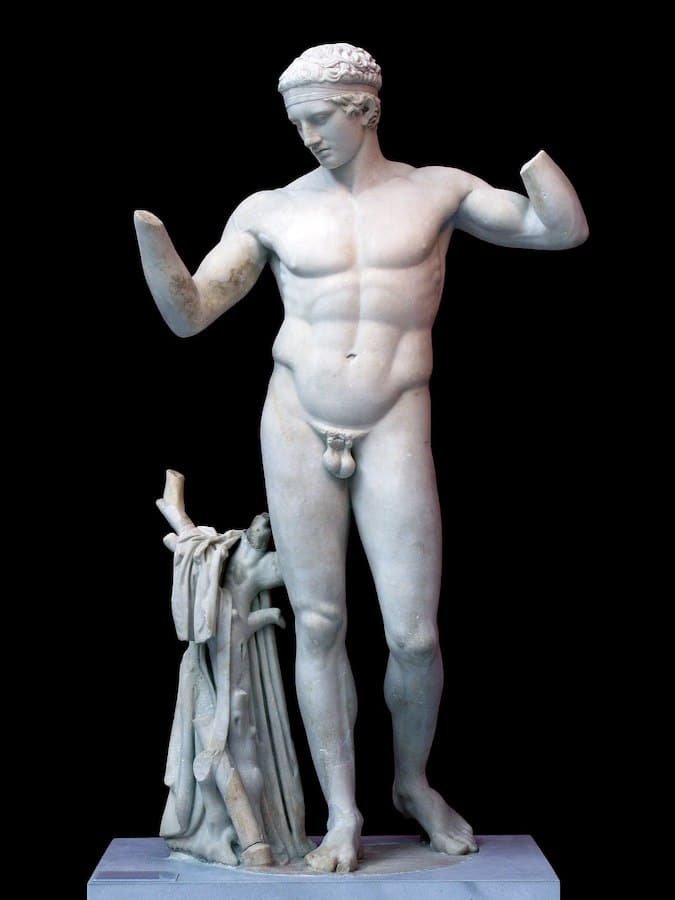
Over in the National Archaeological Museum of Athens, you’ll find the Diadumenos. It is a later (Hellenistic-era) marble copy of Polykleitos’ famous bronze original, and it was found on Delos.
It portrays a young athlete tying a victory ribbon around his head, symbolizing triumph and beauty. The Diadumenos is a prime example of classical Greek sculpture, showcasing the idealized human form that has influenced artists for centuries.
24. The Barberini Faun, Glyptothek, Munich, Germany
At the Glyptothek in Munich, Germany, the Barberini Faun takes center stage. This Hellenistic sculpture of a sleeping satyr, a mythical creature known for its wild nature, is captivating in its realism and relaxed pose.
The detail in the faun’s muscular yet languid body and the peaceful expression as it sleeps is a beautiful representation of Greek art’s evolution from idealism to realism.
25. Boxer at Rest, National Roman Museum, Rome, Italy
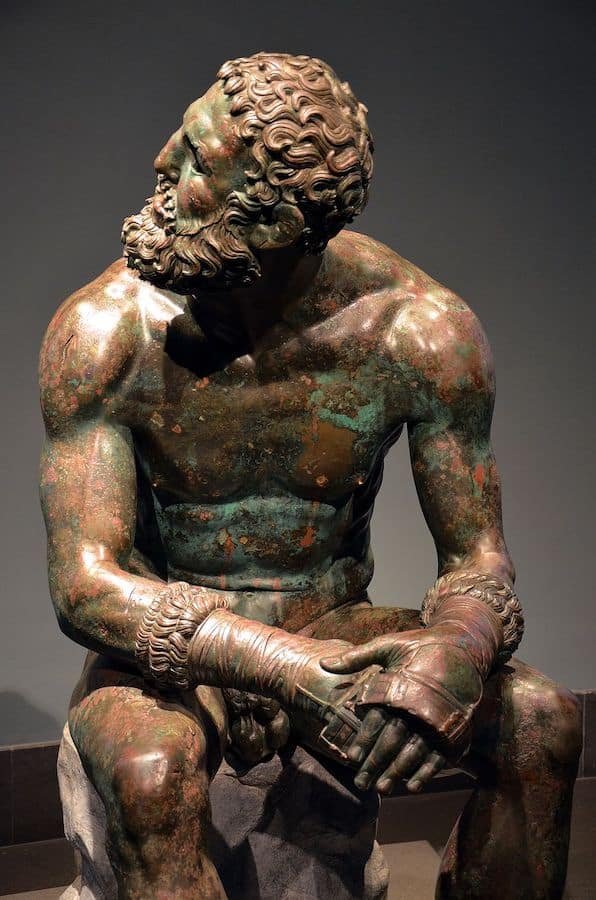
Last but not least, the Boxer at Rest in the National Roman Museum in Rome is an absolute masterpiece of ancient bronze sculpture. Also known as the Terme Boxer, this stunning figure of a seated, resting boxer, complete with detailed features like bruises and cuts, tells a story of ancient athletic contests.
The realism and emotion captured in this sculpture make it one of the finest examples of Greek bronze work, offering a glimpse into the lives of ancient athletes.
Are all the famous “Greek statues” located in Greece?
No. Many major ancient Greek sculptures are in Greece. Still, a significant number are on display in museums abroad, due to historical excavations, collecting, and acquisitions—especially in cities such as Paris, Rome, London, Munich, and Los Angeles.
Is the Discobolus in Rome an original Greek bronze?
No. Myron’s original Discobolus was a bronze from the 5th century BCE, but what survives today are Roman marble copies held in museum collections, including in Rome.
Can you still see the Colossus of Rhodes today?
No confirmed physical remains of the Colossus survive. You can visit Rhodes and see the areas traditionally associated with its ancient setting, but the statue itself is lost.
Is the Statue of Zeus at Olympia still in the Temple of Zeus?
No. The original Statue of Zeus at Olympia was lost in antiquity. Olympia is still worth visiting for its archaeological site and museums, but the statue no longer stands.
Is the Athena Parthenos on display in Athens?
The original gold-and-ivory Athena Parthenos by Phidias is no longer extant. In Athens, the National Archaeological Museum displays the Varvakeion Athena, a Roman-era marble statuette widely considered the most faithful surviving copy.
Was the Winged Victory of Samothrace found in Turkey?
No. It was discovered in 1863 on the Greek island of Samothrace and is now on display at the Louvre in Paris.
Are ancient Greek statues supposed to look plain white?
Many were originally painted. What appears to be bare marble today often preserves pigment traces or evidence from scientific analysis, indicating colors that have faded or disappeared over time.
Are the Parthenon metopes “statues”?
No. Metopes are carved marble relief panels (architectural sculpture) that formed part of the Parthenon’s decorative program, not standalone statues.
Is the Laocoön group definitely dated to 40 BC and made by an unknown sculptor?
No. It is commonly dated to the early 1st century AD and is traditionally attributed to Rhodian sculptors Agesander, Athenodoros, and Polydorus, though exact dating and attribution remain debated.
How do I avoid going to the wrong museum location for a statue in Rome?
In Rome, several “National Roman Museum” venues exist across the city. Always confirm the specific venue and current display location before you go, especially for marquee works that sometimes rotate or move.
We hope that this list of famous Greek statues has been interesting. Please let us know in the comments below about any others we should add.
- 5 Lesser-Known Greek Islands
- How To Rent A Car In Greece + Driving Tips
- How To Tip In Greece
- What To See & Do In Santorini In The Winter
- Guide To Traveling The Balkan Countries
- What To Expect & Do In September In Greece
- Unique Ideas For Kids In Greece
- Where To Stay In Mykonos
- Most Beautiful Cities In Greece
- Fascinating Facts About Greece
theys are soo cute