

Coffee in Greece is a daily social ritual built around conversation, not speed. After ordering coffee everywhere from village kafeneia to modern cafés in Athens and Thessaloniki, I’ve learned that understanding Greek coffee styles — from ellinikós and frappé to freddo espresso — makes everyday travel feel easier and more local.
My guide explains how coffee is ordered in Greece today, how sweetness and strength are described, and what to expect in both traditional and modern cafés.
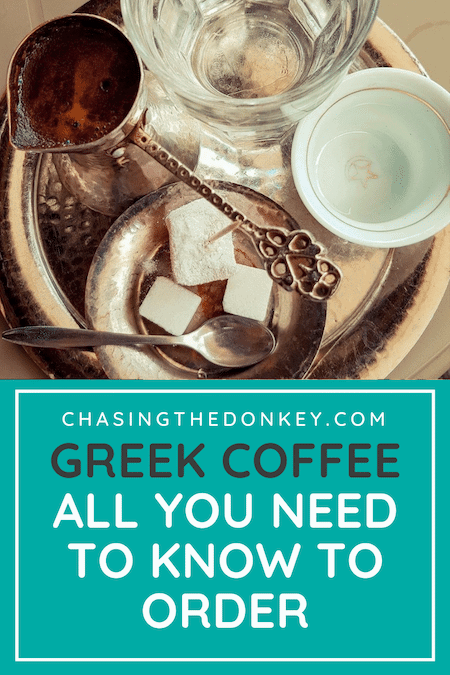
Greek coffee in Greece has roots that go back centuries. Introduced during Ottoman rule, the brew now called Greek coffee was historically referred to as “Turkish coffee” until the mid-20th century, when the name shifted as part of broader cultural changes in Greece. Today, the tiny cups you’ll see in cafés are a direct continuation of that long social tradition.
A very brief timeline of coffee in Greece helps put today’s café culture into context:
- 16th–19th centuries: Coffee arrives in Greece during Ottoman rule and becomes part of daily social life.
- Early 20th century: Greek coffee is widely consumed in kafeneia and becomes a staple of social gatherings.
- 1957: Frappé is accidentally invented at the Thessaloniki International Fair, eventually becoming Greece’s signature iced coffee.
- 1990s: Freddo espresso and freddo cappuccino emerge, reflecting Italian espresso influence.
- 2010s–today: Specialty and third-wave coffee culture grows, especially in Athens and Thessaloniki.
Coffee culture in Greece is about presence, not productivity. Meeting someone “for a coffee” often means settling in for a conversation that can last hours. It’s common to linger over a single cup, especially when seated, and there’s no pressure to rush or order repeatedly.
Whether you’re stopping at a traditional café in a small town or sitting outside at an Athens coffee spot, learning how coffee is ordered and enjoyed will quickly become one of the highlights of traveling in Greece. And while Greek isn’t an easy language to pronounce, many people appreciate the effort when visitors try a few words — even a simple order goes a long way.
Skip Ahead To My Advice Here!
How To Order Coffee In Greece Like A Local
Ordering coffee in Greece is simple once you know two things: the coffee style and how sweet you want it. Most cafés will ask about sugar before anything else.
Start with the coffee type:
Ellinikós kafés (Greek coffee), frappé (iced instant coffee), freddo espresso, freddo cappuccino, espresso, or cappuccino.
Then choose sweetness:
Skéto = no sugar
Métrio = medium-sweet
Glykó = sweet
Example orders:
Ena ellinikós skéto, parakaló
Ena freddo espresso métrio
Ena frappé me gála
When you sit down for coffee, expect to linger. Coffee in Greece is rarely rushed, and a single cup can last an hour or more. Greek coffee usually comes with a glass of cold water, and there’s no pressure to order again.
Ordering & Drinking Coffee In Greece – Coffee Culture In Greece
It’s not that hard to order coffee in Greece, but it depends on what you want to try.
First, decide whether you’re in the mood for a hot cup of coffee or a cold version of the black beverage.
After your first sip of Greek coffee, you’ll soon know whether you prefer it hot or cold, so try both to decide.
The simplest way to say it at a bar or cafeteria is “Ena kafé, parakaló,” which translates to “One coffee, please.”
Typically, the questions that follow are whether you want it with sugar and, if so, how much.
Your coffee can be served skéto (no sugar), métrio (medium-sweet), or glykó (sweet).
Brands We Use And Trust
Which Coffee To Try In Greek Cafés And Coffee Shops
1. Greek Coffee (Ellinikós Kafés / Ελληνικός Καφές)
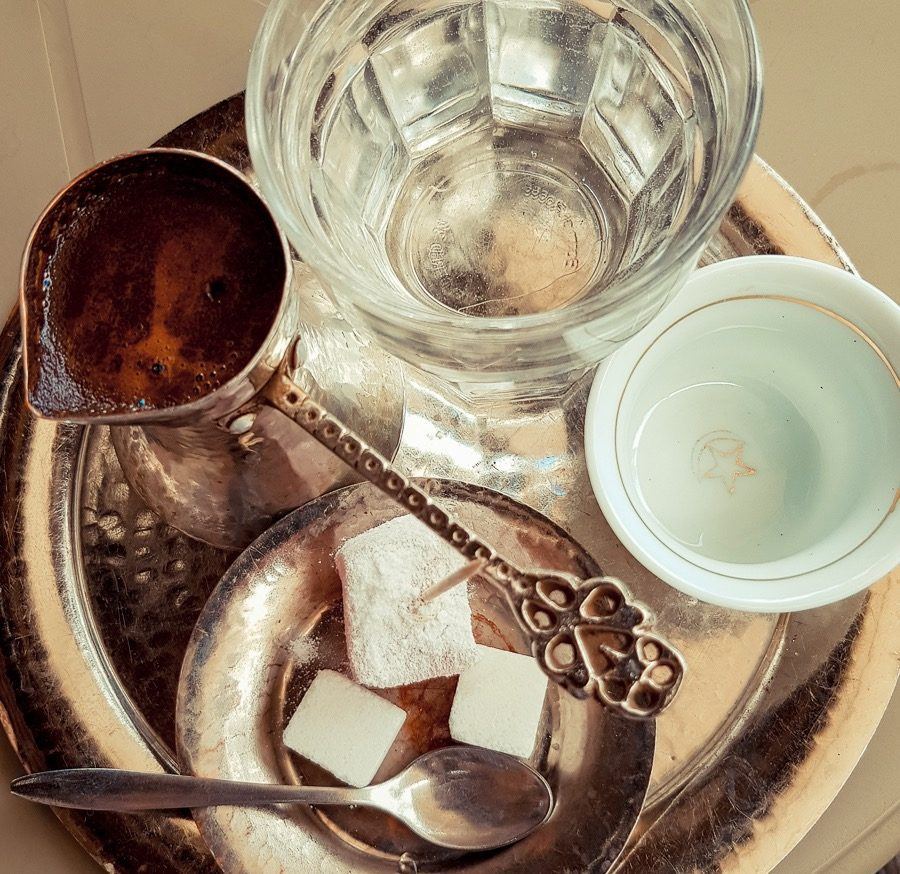
This is the traditional coffee you’ll find in kafeneia across Greece. It’s made with very finely ground coffee simmered with water (and optional sugar) in a small pot called a bríki (μπρίκι). It’s served unfiltered, with the grounds settling at the bottom and a foam on top called kaimáki (καϊμάκι).
You order it by sweetness:
- Skéto – no sugar
- Métrio – medium-sweet
- Glykó – sweet
You can also order diplo (double).
2. Greek Frappé (Frappé / Φραπέ)
A classic Greek iced coffee made with instant coffee, water, sugar (optional), and sometimes milk. It’s shaken or frothed until foamy and served over ice. This is especially common in summer and in traditional cafés.
Order variations:
- Frappé skéto
- Frappé métrio
- Frappé glykó
- Frappé me gála (with milk)
3. Freddo Espresso (Φρέντο Εσπρέσο)
One of the most common coffees in Greece today. A double espresso poured over ice and shaken or blended to chill it, usually with a light crema-like foam on top.
This is ordered simply as:
Ena freddo espresso
Sugar is added on request.
4. Freddo Cappuccino (Φρέντο Καπουτσίνο)
A freddo espresso topped with cold frothed milk foam. Extremely popular in cities and beach areas.
Order:
Ena freddo cappuccino
It usually comes with thick milk foam on top rather than mixed through.
5. Espresso (Εσπρέσο)
A standard espresso made with ground coffee beans. This is not called ellinikós.
Order options:
- Espresso
- Espresso diplo (double)
6. Espresso Macchiato
An espresso with a small amount of milk foam. There is no Greek-specific name for this drink.
Ordered as: espresso macchiato.
7. Cappuccino (Καπουτσίνο)
Espresso with steamed milk and foam. Common in the morning and midday.
Order:
- Cappuccino
- Cappuccino diplo
8. Filter Coffee (Kafés Filtrou / Καφές Φίλτρου)
Standard drip or filter coffee.
Order:
Ena kafé filtrou
You may also hear it casually called galikós kafés (French-style), especially in older cafés.
9. Instant Hot Coffee (Nes / Νες)
Instant coffee served hot.
Order:
Ena nes
10. Iced Americano
Espresso poured over ice and topped with cold water. Not traditional, but available in many modern cafés.
Order:
Iced Americano
11. Greek Coffee With Mastic (Ellinikós Me Mastícha)
A specialty variation of Greek coffee flavored with mastiha, the aromatic resin from Chios.
Availability varies by café.
Traditional Greek Coffee: What To Know Before You Drink It
Greek coffee is meant to be sipped slowly, never gulped. The grounds remain in the cup and are not drunk. It’s usually served with a glass of cold water and sometimes a small sweet like loukoumi.
In traditional Greek cafés, coffee isn’t just a drink — it’s a social hub. You’ll often hear Greeks say pame gia kafe (“let’s go for coffee”), but it doesn’t always mean just coffee. It can imply sitting down to talk, catching up for hours, or even having a light meal. The phrase is about spending time together, not what’s in the cup.
Traditional Greek Coffee

The most traditional option is “ena ellinikós kafé,” or Greek coffee, the signature coffee of Greek culture.
Many visitors compare it to Turkish coffee because the preparation method is similar, though the naming, brands, and cultural context differ.
It has a strong taste that does not really appeal to everyone, and it is prepared using a special small pot (which can be made of aluminum, copper, or even ceramics).
The pot is called “bríki,” and it was traditionally heated over hot sand, although most cafeterias now use a regular flame.
When prepared correctly, Greek coffee is topped with a creamy foam, locally known as “kaimáki.”
Don’t be deceived by the small size of the cup, though. This does not mean you should drink your coffee in a single sip; like Italian espresso, it should be sipped slowly while enjoying the ritual that accompanies conversation.
If you’re keen on more coffee, order an “ellinikós diplo” or double.
This coffee variety can also be ordered as “vrasto.” In this case, the coffee is boiled more than once to prevent foam from forming on top.
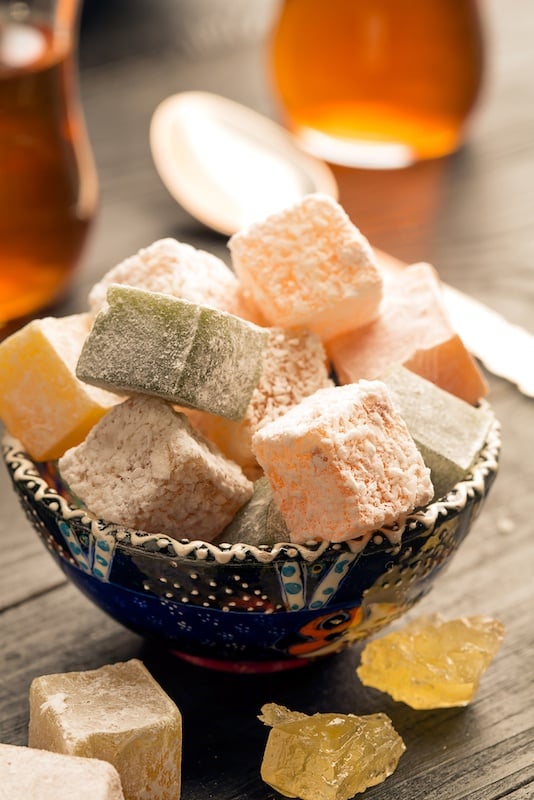
Greek coffee is typically served with a glass of cold water, and in some places you might also receive a small dish of sweets, cookies, or loukoumi (Turkish delight). Greek coffee is traditionally served black, but some people love adding a few drops of milk.
If Greek coffee is not for you, you can ask for a “nes,” which is instant hot coffee or a filter coffee, known as an Americano or a French in some places. In Greek, it’s ordered as “ena kafé filtrou” (a filter coffee) or “ena galiko kafé” (a French coffee).
You can try other coffee styles in Greece, especially in summer, when the weather is more suitable for a fresh drink.
In recent years, Greece has also embraced specialty and third-wave coffee culture. Many cafés now focus on high-quality beans, precise espresso extraction, and skilled barista techniques. Single-origin espresso, flat whites, and carefully brewed filter coffee are increasingly common in cities like Athens and Thessaloniki, alongside traditional and iced classics.
Greek Frappé, Freddo Espresso, Freddo Cappuccino & Other Cold Coffees
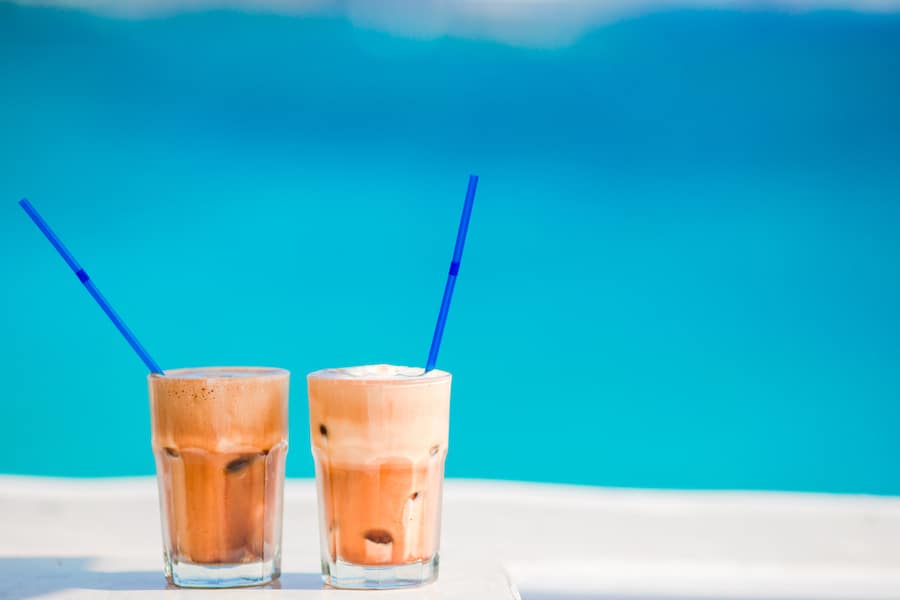
Frappe is a very popular cold coffee. The term frappé is French and comes from the verb frapper, meaning “to chill” or “to strike.”
Frappe became popular in the 60s and remained popular for decades. It’s easy to make at home as well, and it’s one of the cheapest cold coffee options you can get. If you want some milk added to it, you can always ask for “ena frappe me gala” (a frappe with milk).
However, trends change, and the coffee that younger generations now drink does not originate in Greece but in Italy.
Greeks nowadays love to meet for a cold cappuccino, known as a Freddo cappuccino (or a cold espresso, in Greek), the most popular drink you’ll spot on the beach, on the streets, and virtually everywhere.
Freddo espresso and freddo cappuccino have become more common on modern café menus, especially in cities and beach areas, while frappé remains widely available, particularly in summer.
These Italian-style coffees are made with ground beans rather than instant coffee, which is why they can be slightly more expensive.
Remember, these two modern varieties are not as popular when you visit the traditional villages, as they might be in bigger cities, so availability can be limited in old cafeterias or traditional kafenio in small villages, where Greek coffee is often the default.
These cold coffees are usually served in large glasses (plastic or glass), with a straw (“kalamaki”) and lots of ice, and they typically last for hours when enjoyed at a table with friends.
Now, you are an official coffee aficionado; you walk into traditional Greek cafes or a modern coffee shop and order any coffee you desire.
Move This Adventure To Your Inbox & Get An Instant Freebie

No spam. Unsubscribe at any time.
Everything You Need To Know About Coffee In Greece FAQs
What is Greek coffee?
Greek coffee is a strong, unfiltered coffee made by simmering very finely ground coffee with water (and optional sugar) in a small pot called a bríki. The grounds settle in the cup and are not drunk.
How do you order Greek coffee?
You order Greek coffee by sweetness: skéto (no sugar), métrio (medium-sweet), or glykó (sweet). You can also ask for diplo if you want a stronger double.
Is Greek coffee the same as Turkish coffee?
The preparation method is very similar, but the naming, brands, and cultural context differ. In Greece, it’s called ellinikós kafés.
What is a frappé in Greece?
A frappé is a popular Greek iced coffee made by frothing instant coffee with water, plus optional sugar and milk, and serving it over ice.
What is the difference between frappé and freddo espresso?
Frappé is made with instant coffee, while freddo espresso is made with real espresso poured over ice. Both are common, especially in warm weather.
What is a freddo cappuccino?
A freddo cappuccino is a chilled espresso topped with thick cold milk foam. It’s one of the most popular coffees in Greece today.
When do Greeks usually drink coffee?
Greeks drink coffee throughout the day. Sitting down for coffee often means lingering for conversation rather than rushing.
Is coffee served with water in Greece?
Yes. Coffee is usually served with a glass of cold water, especially Greek coffee.
Do I need to speak Greek to order coffee?
No. English is widely understood in cafés, but many people appreciate the effort if visitors use a few Greek words.
- 5 Lesser-Known Greek Islands
- How To Rent A Car In Greece + Driving Tips
- How To Tip In Greece
- Where To Stay In Crete
- Guide To Traveling The Balkan Countries
- What To Expect & Do In September In Greece
- Unique Ideas For Kids In Greece
- Where To Stay In Mykonos
- Top Hotels In Santorini
- Things To Do And Eat During Easter In Greece
- Where To Stay In Halkidiki
- How To Make Turkish Coffee