
When I crossed the border from Georgia into Turkey, I didn’t know exactly what to expect. After spending a month exploring the Caucasus and doing some of the most epic hiking in Georgia, I was ready for a new rhythm, with different food, culture, and landscapes.
My route through Turkey unfolded from east to west, starting from the Black Sea coast and slowly making my way across ancient lands, rugged mountains, and turquoise shores until reaching the chaotic beauty of Istanbul.
This itinerary wasn’t planned in detail. It was more of a journey guided by curiosity, from Trabzon, which I finally skipped, I’ll tell you later why, to the surreal valleys of Cappadocia, the Mediterranean vibes of Antalya, the otherworldly terraces of Pamukkale, the ancient ruins of Ephesus, the energy of Izmir, and finally the endless stories of Istanbul.
In this itinerary, I’ll share how that month unfolded: the places that surprised me most, how I moved around, and what it’s really like to travel independently through Turkey.
Skip Ahead To My Advice Here!
Skipping Trabzon And Racing The Storm To Cappadocia
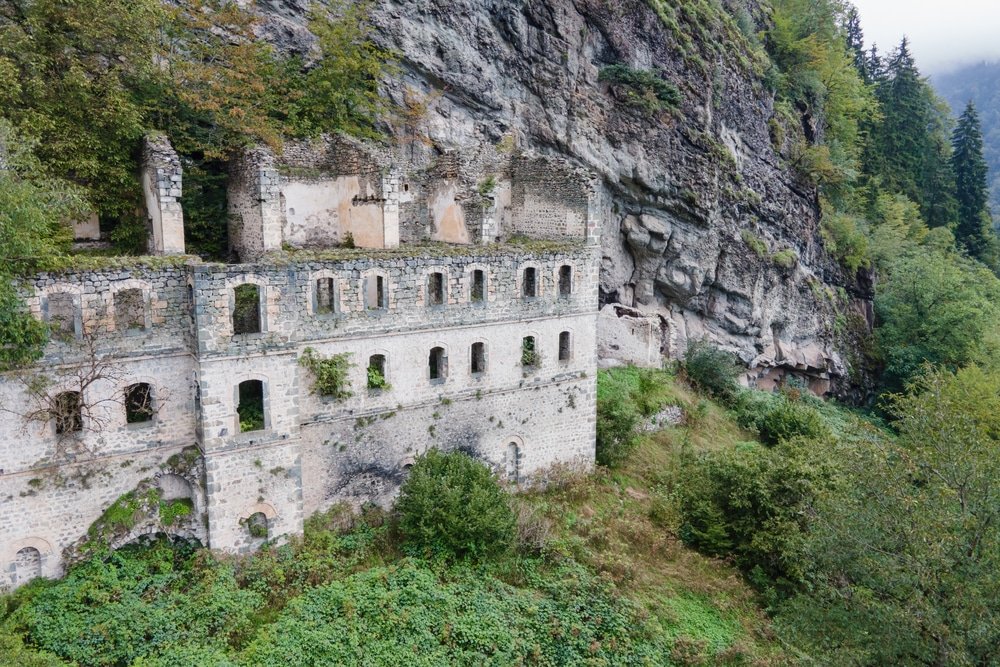
My original plan was to spend a couple of days around Trabzon, exploring the Black Sea coast and its green mountains. The area looked fascinating — full of tea fields, misty hills, and a totally different side of Turkey compared to the dry interior.
But when I checked the weather forecast, I saw that a snowstorm was about to hit Cappadocia, and I knew that if I wanted to experience the hot-air balloon ride and do some hiking, I had to get there before the bad weather arrived.
So from Batumi, I crossed the border into Turkey, made just a quick stop in Trabzon, and then caught a long bus ride straight to Cappadocia.
Even from what little I saw, the Black Sea region seemed beautiful and full of life, the kind of place I’d like to come back to someday. But at that moment, my goal was to reach Cappadocia before the snow took over.
5 Days In A Changing Cappadocia

I spent five days in Cappadocia, and honestly, it felt like I experienced several different worlds in that short time.
Day 1: Before the storm
On my first day, the storm hadn’t arrived yet, so I managed to explore Göreme, the Open-Air Museum, and the Çavuşin Kalesi.
It was cold, but still manageable — the kind of winter chill that makes you walk faster and appreciate a hot tea even more. The only disappointment was that the balloon flights were canceled because of strong winds.
Day 2-4: Snowstorm in Cappadocia

The real change came the next morning. When I woke up and looked out the window, everything had turned white. A thick layer of snow covered the valleys, the fairy chimneys, and even the rooftops. It felt like I had landed in a completely different place.
For the next three days, it snowed on and off, and I tried to make the most of every calm window in the weather to explore. With such conditions, visiting one of the underground cities was a perfect plan, warm, sheltered, and fascinating.
Day 5: The sun after the storm
Then, as if nature decided to reward the wait, the fifth day dawned clear and bright. The sky was blue, the air crisp, and Cappadocia looked unreal, like a fantasy world covered in snow.
The balloon flights were finally back in the air, and I got to experience one of the most magical moments of my trip: floating above a completely white Cappadocia.
Later that day, I also went trekking through the valleys, surrounded by silence and sparkling snow. It was, without doubt, one of the most breathtaking landscapes I’ve ever seen.
Brands We Use And Trust
From Snow To The Sea: 5 Days In Antalya
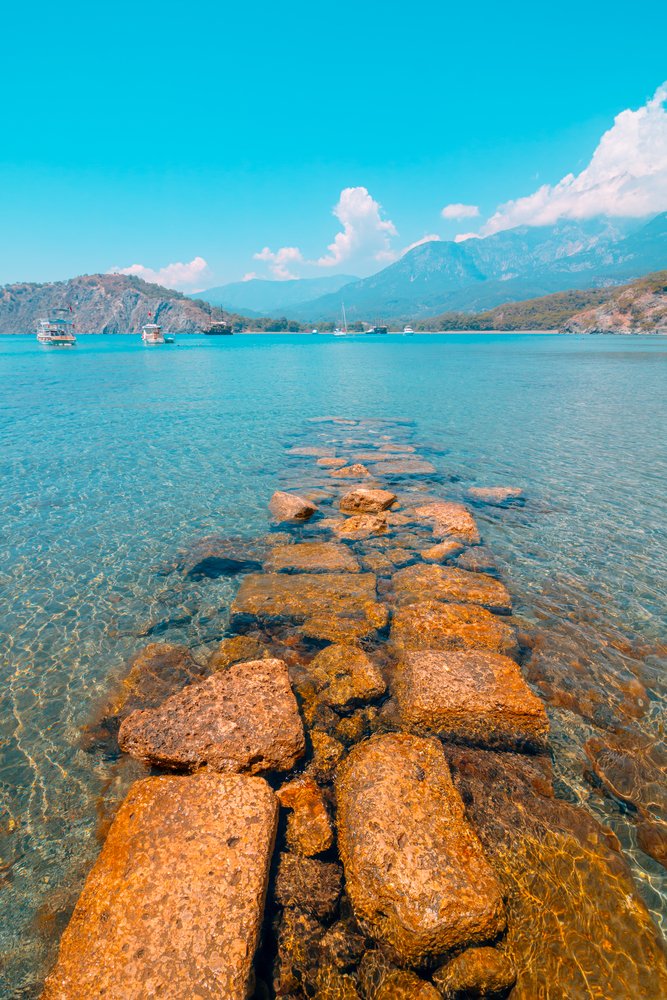
After leaving Cappadocia, I took a night bus from Göreme to Antalya, and when I arrived the next morning, it honestly felt like I had landed in another country.
The temperature had jumped at least 15 degrees, and suddenly winter coats were replaced by T-shirts and sea breezes. Antalya welcomed me with that unmistakable Mediterranean atmosphere — palm trees, blue water, and distant mountains framing the coast.
I spent five days there, partly to recover from the freezing days in Cappadocia and partly to slow down.
What to see in Antalya
I walked along the seaside promenade, visited the Archaeological Museum, explored the old town of Kaleiçi, and took a couple of day trips to see nearby ruins like Termessos, Perge, and Aspendos, which still preserves one of the best-preserved Roman theaters in the world.
The rhythm of the city felt different, warmer, and lighter. After the snow and cold of Cappadocia, Antalya felt like a deep breath of summer.
Pamukkale And The Ancient City Of Hierapolis – 3 days

It was honestly hard to leave Antalya’s mild weather behind, but my route kept moving west. I took a bus that dropped me off in Denizli.
Why there and not Pamukkale? Well, I couldn’t find any direct bus from Antalya to there, so first reach Denizli and then take another short ride to Pamukkale.
The first impression was of a quiet, not particularly charming town, but right in front of it rose something that instantly captured my attention: a white hillside shining under the sun.
Travertines Terraces
Those are the famous travertine terraces you see all over Instagram, natural pools formed by the flow of thermal waters rich in calcium carbonate, which solidify over time and create that surreal, snow-like landscape.
It must be said, it is a truly unique place in the world, and beyond how saturated it is by social networks, it is worth coming to see.
Ruins of Hierapolis

But what I didn’t expect was that beyond those iconic terraces lies one of Turkey’s most fascinating archaeological sites: Hierapolis.
This includes impressive structures such as the ancient theater, the necropolis, and the Cleopatra Pools, where you can literally swim among submerged Roman-era columns.
The entire complex is vast and best enjoyed slowly, taking in both its natural and historical sides.
Pamukkale turned out to be one of the true highlights of my trip, a mix of dreamlike scenery and ancient grandeur that completely exceeded my expectations.
Ephesus And The Base City Of Selçuk – 3 days

My next stop was the city of Selçuk, the perfect base for visiting what are probably Turkey’s most famous ruins: Ephesus.
How to go from Pamukkale to Ephesus
From Pamukkale, I had to take another bus to Denizli, and from there, another one to Selçuk. It’s not a long trip, and the landscapes in this part of the country are truly beautiful, with green hills, quiet villages, and a more Mediterranean feel.
What to do in Selçuk
Selçuk itself isn’t a city that dazzles with charm, but I liked it. It has several interesting attractions to complement a visit to Ephesus, such as what remains of the Temple of Artemis, one of the ancient Seven Wonders of the World (literally, only one column remains standing today, but at least you don’t have to pay an entrance fee to see it).
There’s also the Basilica of St. John of Ephesus, Ayasuluk Castle, and the Isa Bey Mosque, as well as some pleasant cafés and streets for strolling.
But, of course, all the attention is on Ephesus. Founded by the Greeks around the 10th century BC and later becoming one of the most important cities of the Roman Empire in Asia Minor, Ephesus was a key center of trade and culture in ancient times.
What to expect at Ephesus
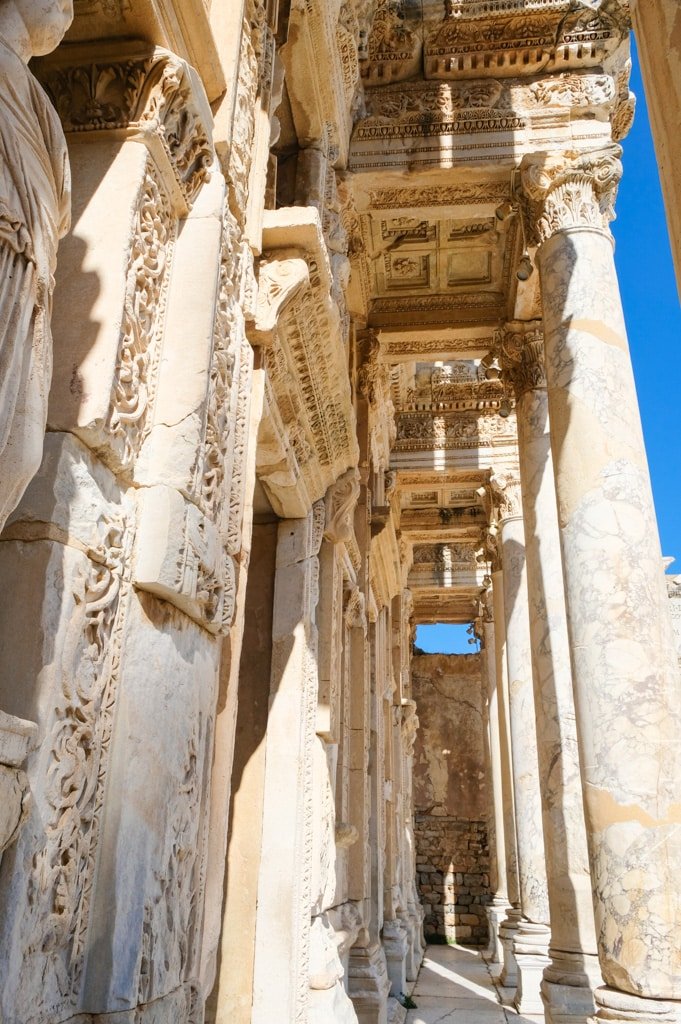
Walking through its marble avenues is like taking a trip back in time. The Library of Celsus is undoubtedly the jewel of the place: its reconstructed façade impresses with its size and detail.
Also noteworthy are the great theater, with a capacity of around 25,000, and the Way of the Cureti, which connected the port with the heart of the city.
It’s not a cheap visit—admission costs significantly more than other historical sites in the country—but it’s completely worth it.
Izmir – 3 days
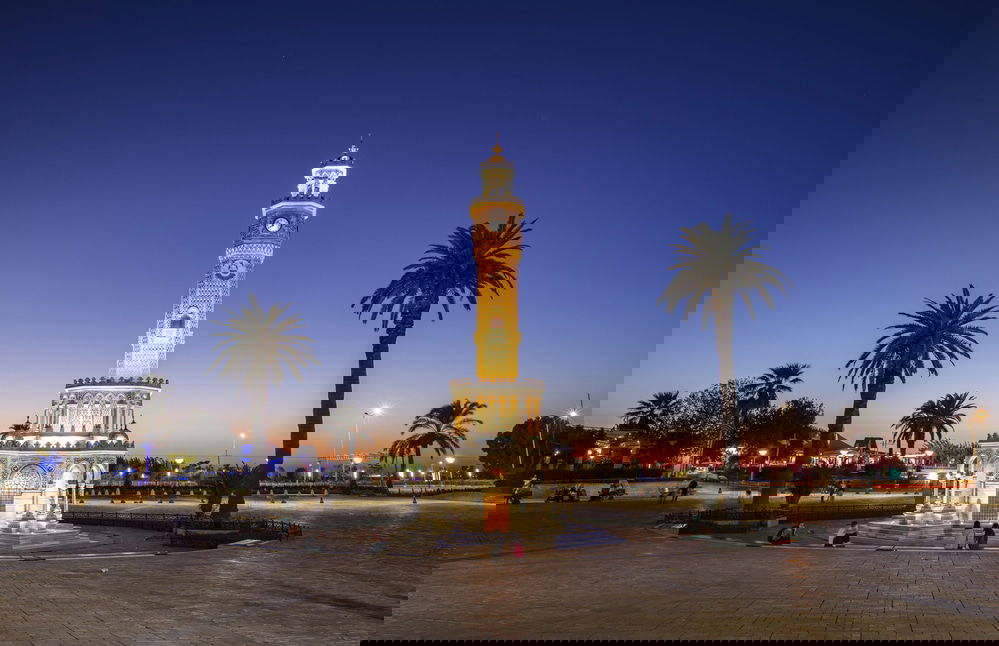
My next stop was the city of Izmir, which isn’t far from Selçuk. Getting there is easy and convenient; there’s a local train that connects the centers of both cities, making it a smooth, scenic ride.
After spending so many days moving around by long-distance buses, that short train journey felt like a break.
Izmir was the city that impressed me the least during this Turkish journey. Maybe it was the cold weather, or maybe my expectations were already too high after all the incredible places I had visited.
I enjoyed walking along the coastal promenade, exploring the local bazaar, and visiting some of the viewpoints like the Asansör Tower, but I couldn’t connect with the city in a deeper way. It felt more like a modern urban stop in between the historical and natural highlights that surrounded it.
Still, Izmir can be a convenient base for exploring other sites in the region. Many travelers choose to stay here and make day trips to Ephesus or to the charming coastal towns nearby, like Çeşme.
It’s well-connected and offers plenty of accommodation options, making it a practical stop even if the city itself doesn’t steal your heart.
Istanbul: The Perfect Ending to My Journey Through Turkey – 10 days
After leaving Izmir, I took a long-distance bus heading north to what would be the last destination of my one-month trip across Turkey: Istanbul.
It felt symbolic to end here — in a city that represents the meeting point between East and West, modern and ancient, Europe and Asia. The journey itself was comfortable, and Turkish buses were always surprisingly reliable.
This was not my first time in Istanbul. I had already spent five days there a few years earlier, visiting the must-see landmarks and experiencing the city’s rush for the first time.
That’s why, on this second visit, I wanted to slow down and go beyond the famous postcard images to discover the Istanbul that lies beneath its monumental beauty.
Revisiting the Icons
But of course, I couldn’t resist going back to some of the city’s highlights. Hagia Sophia, with its immense dome and layered history — first a Byzantine church, then an Ottoman mosque, later a museum, and now a mosque again — still manages to leave me speechless.
Right across from it stands the Blue Mosque, with its perfect symmetry and peaceful courtyard, a place where it’s easy to forget that millions of visitors pass through each year.
Just wandering around the Sultanahmet area is like walking through centuries of history. From there, it’s a short walk to the Topkapi Palace, the home of Ottoman sultans for over 400 years, and to the Basilica Cistern, one of the most atmospheric sites in the city, with its forest of columns rising from the water.
Beyond the Touristy Paths
This time, though, I spent much more time outside the old town. I stayed many nights near the Galata neighborhood, crowned by the iconic Galata Tower, one of my favorite spots to watch the sunset.
The area has a mix of vintage cafés, steep cobbled streets, and a bohemian vibe that’s hard not to love.
From there, I wandered into Beyoğlu and Istiklal Avenue, the city’s modern heart, where old trams still rattle through crowds of people.
I also made time to explore Balat and Fener, two old neighborhoods on the Golden Horn that feel frozen in time. Their colorful houses, quiet cafés, and steep lanes show a completely different face of Istanbul — more local, less polished, and somehow more authentic.
Experiencing the City from the Water
One of my favorite experiences was taking the ferry. It’s one of the cheapest things you can do in Istanbul and one of the most beautiful.
I’d grab a tea, sit on the deck, and watch the skyline pass by — the domes and minarets glowing in the afternoon light.
The ride to Üsküdar or Kadıköy on the Asian side offers incredible views, and once you’re there, you get to experience a more relaxed pace of life.
Kadıköy in particular became one of my favorite areas. It’s full of trendy cafés, street art, local markets, and great food — the kind of place where you could spend an entire day without realizing it.
Move This Adventure To Your Inbox & Get An Instant Freebie

No spam. Unsubscribe at any time.
Final Thoughts
After a month of traveling through Turkey, I can honestly say this country stole my heart. Every region felt like a different world — from the magic of Cappadocia and the chaos of Istanbul to the calm beaches of Antalya and the surreal landscapes of Pamukkale. I loved every moment.
Even after weeks on the road, I left knowing there was still so much more to see. Turkey is one of those places that you could return to again and again, and it would always find a way to surprise you. My journey would continue north, crossing into Bulgaria… but that’s another story.