
Ask how much Croatia costs and you will get a number. It is almost always wrong, because nobody travels to “Croatia”. They travel to Hvar, or Dubrovnik, or Split, or Zagreb, and those four places are not the same country as far as your wallet is concerned.
A dorm bed in Split can cost ten euros. The same bed in Dubrovnik, in August, can cost a hundred and twenty. A bus ticket in Zagreb costs fifty-three cents. On Hvar, the bus from town to Stari Grad costs eight times that.
So instead of one daily figure, here is the comparison I wanted when I was planning my own trips: four destinations, side by side, cost by cost. If you’re planning Croatia travel in 2026, this is the comparison I wanted to see: current Croatia travel costs across four very different destinations. And then the thing that turned out to matter more than any of it, which changes the maths further than choosing a cheaper town does.
Everything below is in euros. Croatia dropped the kuna on 1 January 2023, so if you find a guide still quoting HRK, close the tab. It has not been updated in three years.
Skip Ahead To My Advice Here!
Where You Sleep Is Where The Money Goes
Accommodation is the biggest lever on a Croatian holiday, and the gap between the four is enormous. The Hvar vs Dubrovnik price difference is particularly noticeable in peak summer.
| Per night | Hvar | Dubrovnik | Split | Zagreb |
| Hostel dorm bed | €40-70 peak, €25-45 shoulder | €60-120 peak | ~€10, up to €19 | €20-35, from €9 |
| Hotel double | not found | ~€80 (3-star) | €100-200 (boutique) | €80-120 (3-star) |
| Apartment / Airbnb | €100-250 peak, €70-160 shoulder | €150-300 | €80-150, €180-320 in the Old Town | not found |
Look at the dorm row again, because it is the clearest thing on this page. Ten euros in Split. Up to a hundred and twenty in Dubrovnik. Same country, same coastline, two hours apart by bus.

That is not because Dubrovnik hotels are better. Dubrovnik has a finite walled city, several thousand cruise passengers a day in summer, and a hard physical limit on how many beds can exist inside the walls. Scarcity does the rest.
Split is the outlier in the other direction, and it is the most useful fact here for anyone travelling on a budget. The Dubrovnik vs Split price difference is largely about the type of destination you are paying for: a walled historic city versus a working coastal city. It is a working city of 160,000 people, so it has the accommodation stock of a city rather than a resort. You are not paying the island premium or the walled-city premium. You are paying city prices, on the coast, with ferries to everywhere.
Two gaps in that table are mine, and I would rather leave them blank than guess. I could not find a reliable current figure for a three-star double on Hvar, or a nightly apartment rate for Zagreb. If you have booked either recently, the comments will be more accurate than anything I could invent.
Eating Out: The Island Tax Is Real, But Smaller Than You Think
| Hvar | Dubrovnik | Zagreb | |
| Budget meal / konoba | €10-20 | €17.50 | €9-15 |
| Mid-range, three courses for two | €50-110 (avg €70) | avg €70 | €47-100 (avg €52.50) |
| Beer, 0.5L | €3-6 | €5, up to €8 in the Old Town | €3-4 |
| Cappuccino | €2.30-3 | €3.70 | €1.70-3 |
I have left Split out of this table on purpose. I could not find city-level food prices I trusted, and padding the column with a national average would have been the easy, dishonest option. Split eats well and cheaply by every account I have read. I just cannot put a number on it that I would defend.
The honest reading of what is there: food is where the four places differ least. A konoba meal swings from about nine euros to about eighteen. That is a real difference, but it is not the four-to-one gap you see in accommodation. You will not rescue a Dubrovnik budget by eating carefully. You rescue it by choosing when you sleep there.
One number worth staring at is the cappuccino. €1.70 in Zagreb, €3.70 in Dubrovnik, for the identical drink made the same way. Coffee is not an incidental purchase in Croatia. Sitting over one for an hour is a national habit, and you will do it daily. Over a fortnight that gap alone is real money, and it tells you exactly which economy you are standing in.
A note on the Hvar figures: the cost-of-living data I could find for the island was last updated in March 2025, with almost no recent contributors. I have included it because it matches what I have seen, but treat that column as softer than the others.
Brands We Use And Trust
Getting Around: The One Genuinely Absurd Gap
| Price | Source | |
| Zagreb bus or tram, 30 min | €0.53 pre-purchased, €0.80 on board | ZET official fares |
| Zagreb day ticket | €3.98 | ZET |
| Zagreb funicular | €0.66 | reopened May 2026 |
| Hvar Town to Stari Grad or Jelsa, bus | €4-5 | |
| Split to Hvar catamaran, foot passenger | €8.50 (Krilo) to €25 (Jadrolinija line 641) | krilo.hr, jadrolinija.hr |
| Dubrovnik taxi | €4.00 base plus €1.07/km |
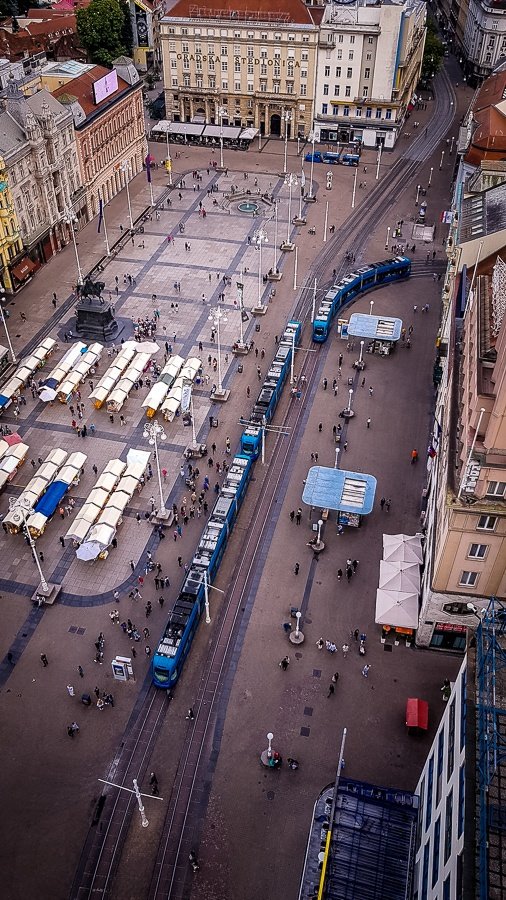
Zagreb’s public transport is close to free by Western European standards. Fifty-three cents buys you half an hour on a tram network covering the entire city. A day of unlimited travel costs less than four euros, roughly one Dubrovnik coffee and a bit.
The catamaran spread deserves a word, because the difference between €8.50 and €25 for the same stretch of sea is not a mistake. Krilo’s fast boat is the cheap crossing. Jadrolinija’s direct line 641 costs considerably more and includes baggage. Both take about an hour to Hvar Town. If you are island-hopping on a budget, that choice is worth making deliberately rather than booking the first boat you find.
Car ferries run to Stari Grad instead, about twenty minutes from Hvar Town. Cheaper again if you have a vehicle, but add the transfer time.
I could not find current city bus fares for Dubrovnik or Split. They exist, they are cheap, and I am not going to invent them.
The Thing That Actually Decides Your Budget
Here is what I did not expect when I started pulling these numbers together.
Krka National Park, adult entry, straight from the park’s own 2026 price list:
| Season | Adult | Child (7-18) |
| January to March, November to December | €7.00 | €4.00 |
| April, May, October | €20.00 | €12.00 |
| June to September | €40.00 | €15.00 |
Seven euros against forty. The same waterfalls, the same paths, 5.7 times the price, depending only on which month you walk through the gate.
.jpg)
Dubrovnik’s city walls tell the same story. €40 for an adult from March to October, €15 from November to February. A 62% drop for the identical walk around the identical walls, managed by the same Society of Friends of Dubrovnik Antiquities that has looked after them for decades.
Now put that next to the city comparison above. Choosing Split over Dubrovnik saves you real money on a bed. But shifting your trip from August to October, or better to April, moves every single line at once: the bed, the ferry, the park entry, the walls, the queue, the temperature you walk in.
Krka in March costs seven euros and you will have the boardwalks to yourself. Krka in July costs forty and you will be shuffling. The waterfalls do not know what month it is.
This is the part most budget guides get backwards. They tell you to pick a cheaper town. The bigger lever, by a distance, is picking a cheaper week.
Plitvice Does The Same Thing, & Hides Better Value Than People Realise
Plitvice Lakes runs the identical seasonal structure, from the park’s own 2026 price list:
| Season | Adult | Child (7-18) |
| January to March, November to December | €10 | €4 |
| April, May, October | €23 | €6 |
| June to September | €40 | €15 |
Same four-to-one swing as Krka. But there is a detail in Plitvice’s pricing worth knowing before you flinch at the forty euros, because almost nobody mentions it.
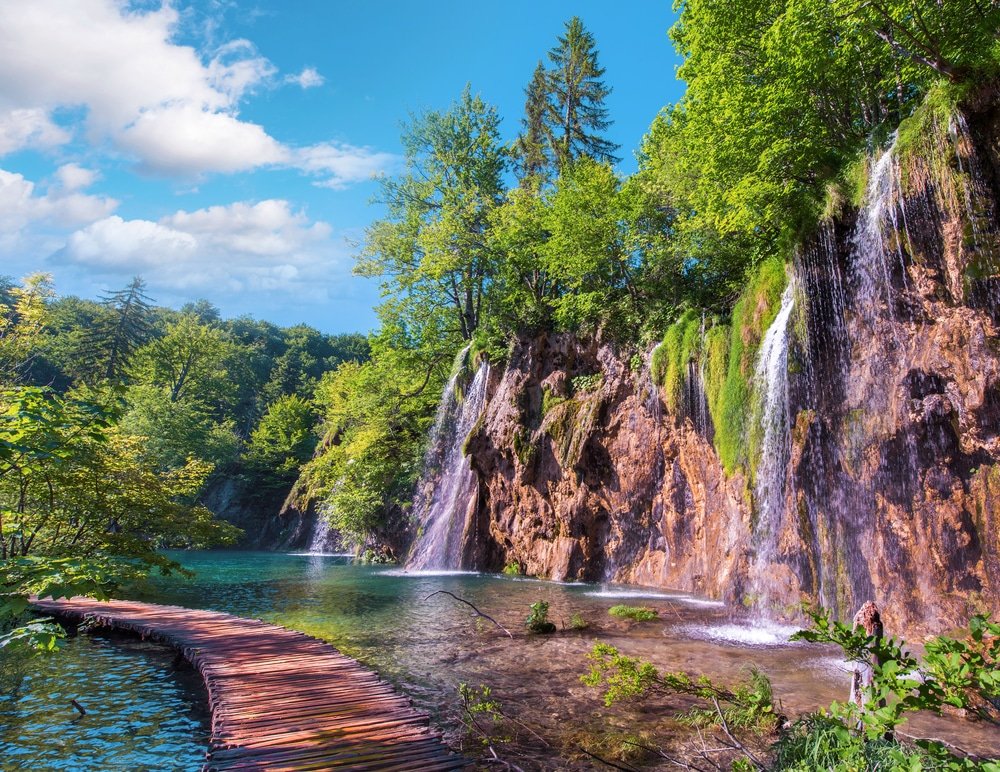
The ticket is not just entry. It covers the electric boat across Lake Kozjak, the panoramic shuttle train between the upper and lower lakes, visitor insurance and VAT, plus access to 22 km of lake trails and 36 km of hiking paths. At most European attractions the boat and the train would be separate tickets sold at the gate. Here they are inside the price. Forty euros in July is still a lot. It is just buying more than a turnstile.
There is also a late-entry rate that cuts it meaningfully: €25 after 4 p.m. from June to August, and after 3 p.m. in September. Croatian summer light lasts until well past eight. A four o’clock start gives you four usable hours, at closer to the temperature you actually want to walk in, for fifteen euros less than the midday queue.
Children under seven go free at both parks, which matters if you are travelling as a family. At Krka in high season, two adults and two teenagers is €110 before you have parked.
One caveat I will flag rather than bury. The park says advance online booking is encouraged but not mandatory, and that tickets remain available at the entrances “unless sold out”. In practice, in July and August, “unless sold out” does a lot of work in that sentence. Book ahead.
The Costs Nobody Puts In The Budget
Four things that reliably blow up a Croatian trip, none of which appear in a daily-spend calculation.
The ferry you did not know was two different companies. Split to Hvar Town runs €8.50 on Krilo’s fast boat and up to €25 on Jadrolinija’s direct line 641, which includes baggage. Same hour of sea. Booking whichever appeared first in a search can cost you triple across a week of island-hopping.

Old Town premiums are a postcode, not a service level. A Split apartment runs €80-150 across the city and €180-320 inside the Old Town or Varoš. Dubrovnik’s walled city works the same way. You are paying for the walk home, and in both cities a ten-minute bus ride out sits in a completely different price bracket.
Cruise-ship hours. Dubrovnik’s walls at eleven in the morning in July are a queue in direct sun. The same forty-euro ticket at eight in the morning or late afternoon buys a different experience entirely. The price does not move. What you get for it does.
Coffee as a habit, not a purchase. Sitting over one coffee for an hour is normal here, and you will do it more than once a day. At €1.70 in Zagreb that is background noise. At €3.70 in Dubrovnik, across two weeks and two people, it is a meaningful line, and one that never shows up in anyone’s planning spreadsheet.
Move This Adventure To Your Inbox & Get An Instant Freebie

No spam. Unsubscribe at any time.
So What Does A Week Actually Cost?

Working from the figures above, per person, excluding flights. If you’re putting together a Croatia travel budget, these are the numbers I’d use as a starting point.
Zagreb, shoulder season, carefully: a dorm at €25, food at €20, transport at €4. Call it €350 for a week, and you have not been miserable about it.
Split, shoulder season, mid-range: an apartment share at €60, eating properly at €40, ferries and buses at €15. Around €800.
Hvar or Dubrovnik in August, mid-range: accommodation alone runs €150-300 a night. Before you have eaten anything, you are past €1,400 for the week. Our own detailed breakdown for a week on Hvar lands at €700-1,200 for a budget trip and €1,500-2,500 mid-range, which matches what the per-item numbers here predict.
The same Hvar or Dubrovnik trip in October: shoulder-season accommodation, €15 walls instead of €40, €20 Krka instead of €40, and a coastline that still swims. Comfortably under half the August figure.
What I Would Actually Do
If the budget is tight and the dates are flexible, base yourself in Split and travel in May or late September. You get city accommodation prices, ferries to the islands when you want them, Krka at twenty euros instead of forty, and weather that is still firmly swimming season.
If the dates are fixed to July or August, spend the money on Dubrovnik deliberately and briefly. Two nights inside the walls, done properly, then move somewhere that has not priced itself for cruise passengers. Paying Dubrovnik rates for a week is a choice, not an obligation.
And if you want Croatia at its cheapest and you genuinely do not mind a jacket: November to March in Zagreb. Fifty-three-cent trams, two-euro coffee, twenty-euro beds, seven-euro national parks. It is a different holiday, with no swimming and shorter days, but it is barely the same expense.
All Croatia prices were checked in September 2026, and are shown in euros. Park and attraction prices come from Krka National Park’s and Plitvice Lakes National Park’s official 2026 price lists and the Society of Friends of Dubrovnik Antiquities. Ferry fares from Jadrolinija and Krilo, Zagreb transport fares from ZET. Accommodation and restaurant ranges are indicative and move with season and booking date, so check before you commit.