

Written by Sam and Kels Adventures.
This guide helps you decide if visiting Pamukkale, Turkey, is still worth it, given ongoing concerns about water management and misleading older photos online.
Famously known as the “Cotton Castle,” Pamukkale is located in the province of Denizli in the south of the country and is one of the most visited tourist destinations in Turkey.
In 2025, Pamukkale welcomed around 2.3 million visitors over the whole year, according to Turkish tourism statistics.
Despite its popularity, visiting Pamukkale requires some planning. This blog post breaks down all the basics and, more importantly, shares our thoughts on whether it is still worth visiting.
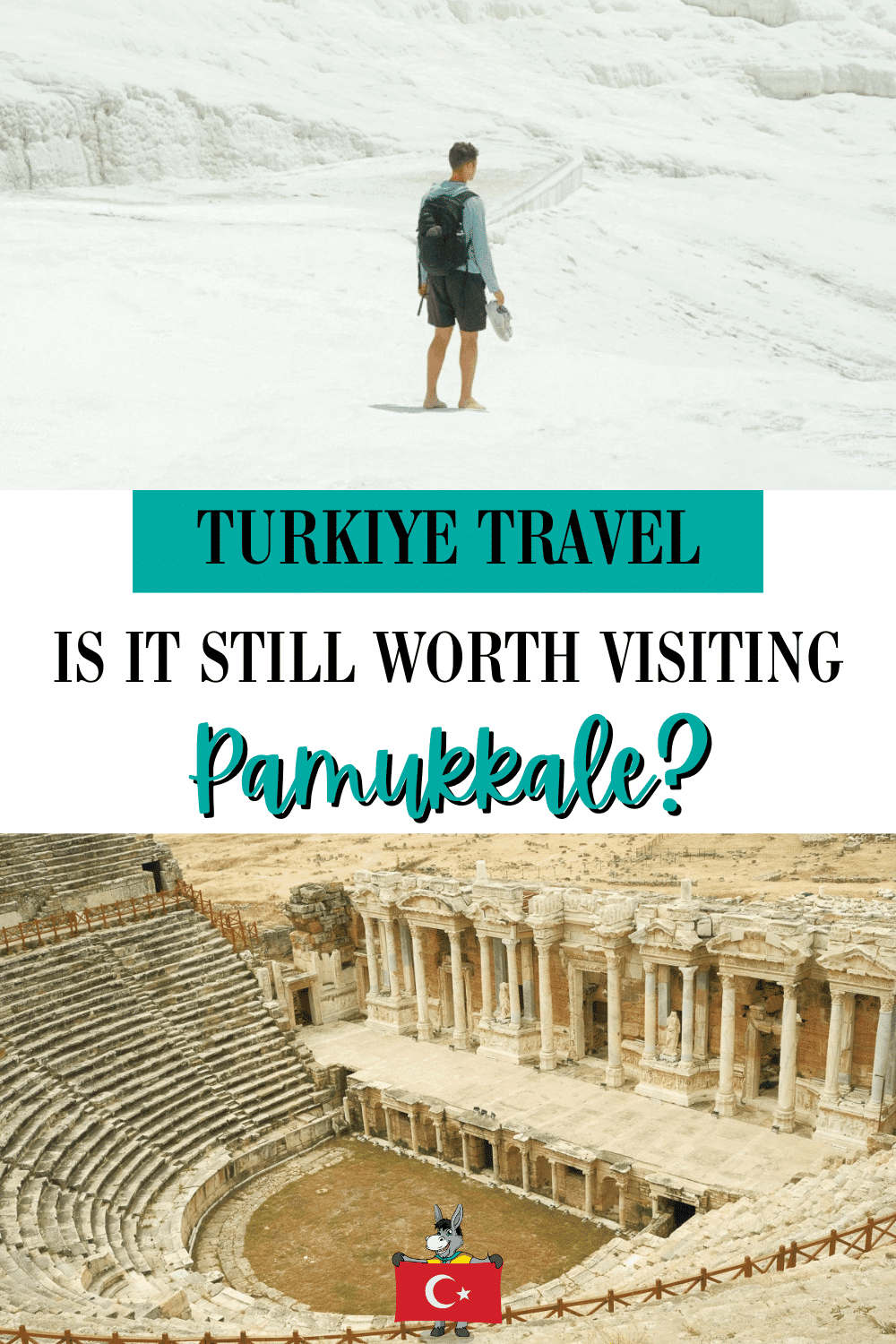
The Pamukkale (Hierapolis) entrance fee is €30. If you have MuseumPass Türkiye or MuseumPass The Mediterranean, it’s valid here.
Opening Hours:
Opening Hours: Seasonal (typically 06:30–21:00 in summer and 08:00–18:00 in winter), daily; hours may change slightly by month.
What to bring: Walking shoes, slippers, sunglasses/hat, sunscreen, water, and snacks!
Plan to spend 3-4 hours walking around Hierapolis and marveling at the travertines. Remember, you cannot reenter the park once you leave, so keep this in mind when planning your day!
Antique Pool status can change (it may be closed for restoration), and prices are set in Turkish Lira at the ticket office.
Skip Ahead To My Advice Here!
Quick History of Pamukkale
Pamukkale and Hierapolis have a long and important history that dates back to the 2nd century BC. According to the UNESCO World Heritage site, “this extraordinary landscape was a focus of interest for visitors to the nearby Hellenistic spa town of Hierapolis, established by the Attalid kings of Pergamon at the end of the 2nd century BC, at the site of an ancient cult.
In fact, the ancient city of Hierapolis was built around the discovery of the thermal pools, said to have “healing powers.”
With numerous baths located throughout the city, bathing culture was central to life in Hierapolis.
The city held significance throughout numerous eras, and is mentioned in Paul’s Letter to the Colossians (Colossians 4:13).
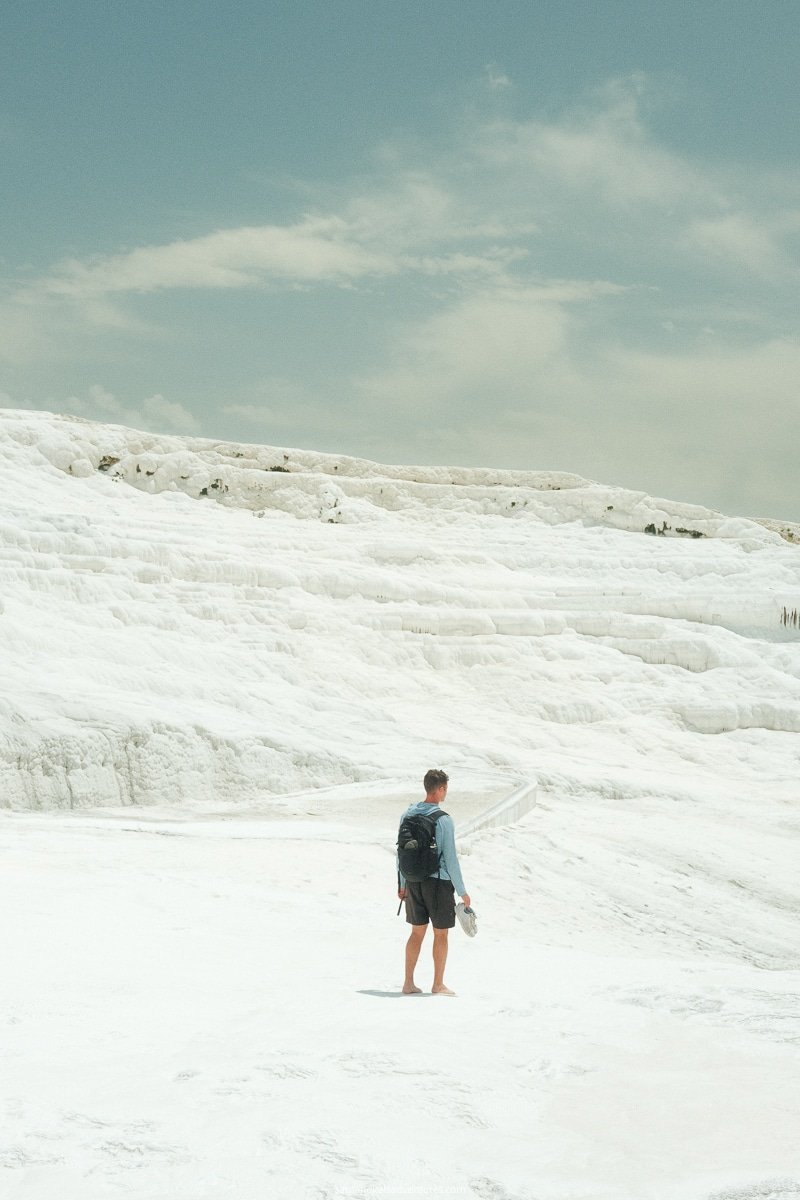
The famous white terraces found in Pamukkale are actually technically called travertine. Travertine is a form of limestone deposited around mineral springs, most especially around hot springs. The rapid precipitation of calcium carbonate causes the sediment to form the shapes and terraces we see today.
Essential Things To Know About Visiting Pamukkale
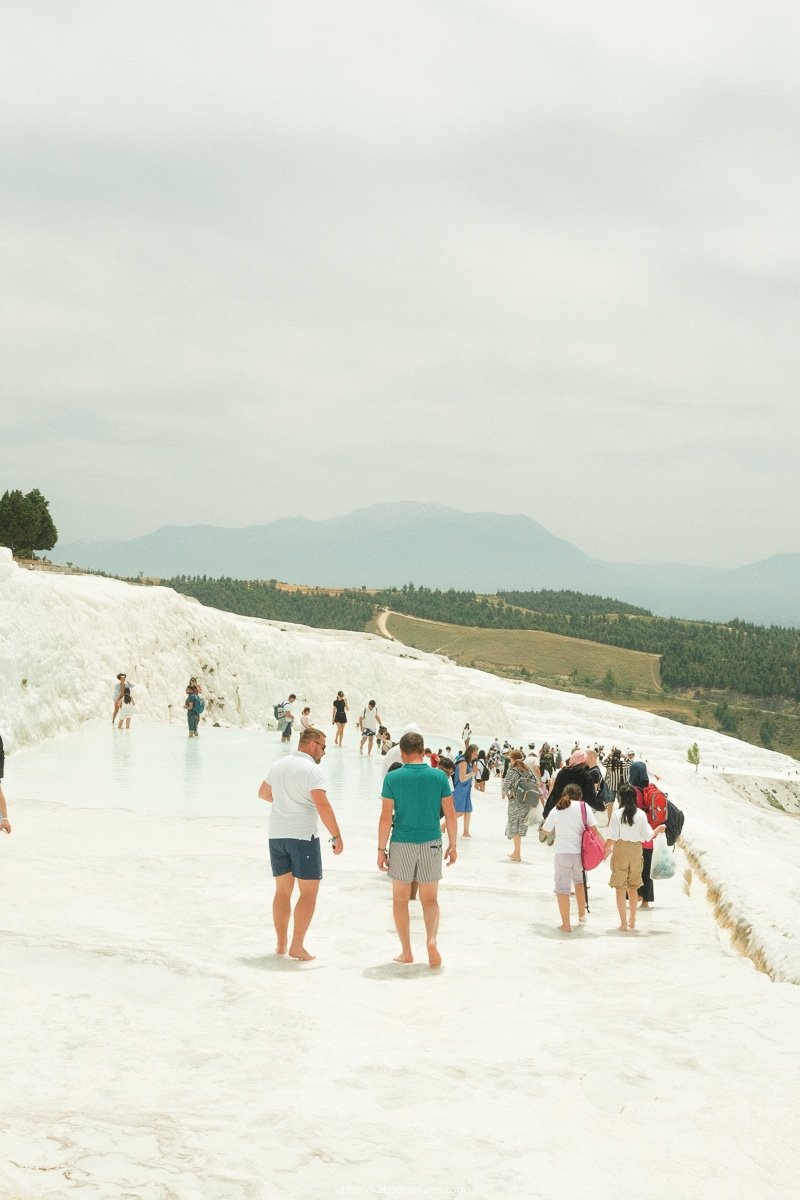
- It’s usually crowded, especially between late morning and mid-afternoon, and during the summer.
- You need to figure out which entrance you will take. There are THREE entrances to Pamukkale: The North Entrance, The South Entrance, and the Town Entrance (West)
- Your ticket allows single entry only. Once you leave, re-entry requires purchasing a new ticket.
- Cleopatra’s Antique Pool (if open) costs extra—typically a few hundred TL per person, paid separately.
- You cannot wear shoes when walking down the travertines! You must be barefoot or wear socks! Take care when walking down the travertines as they are wet, rough, and very slippery.
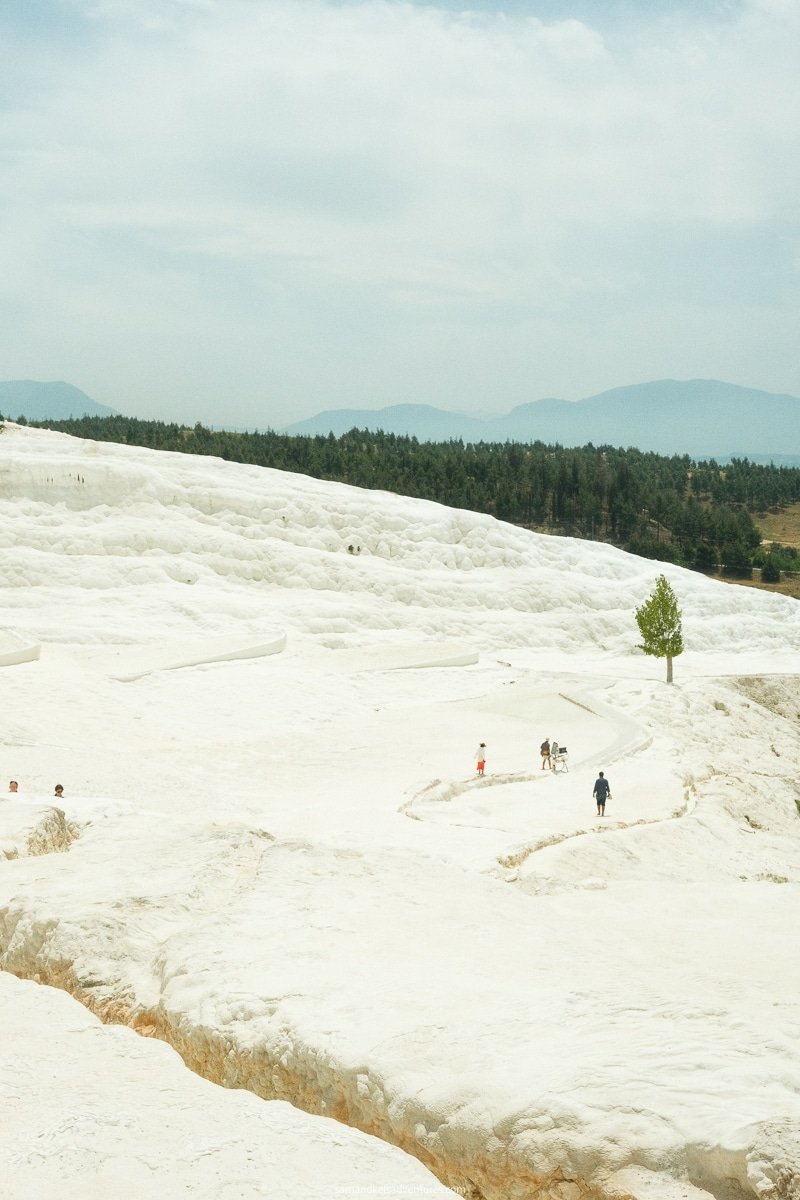
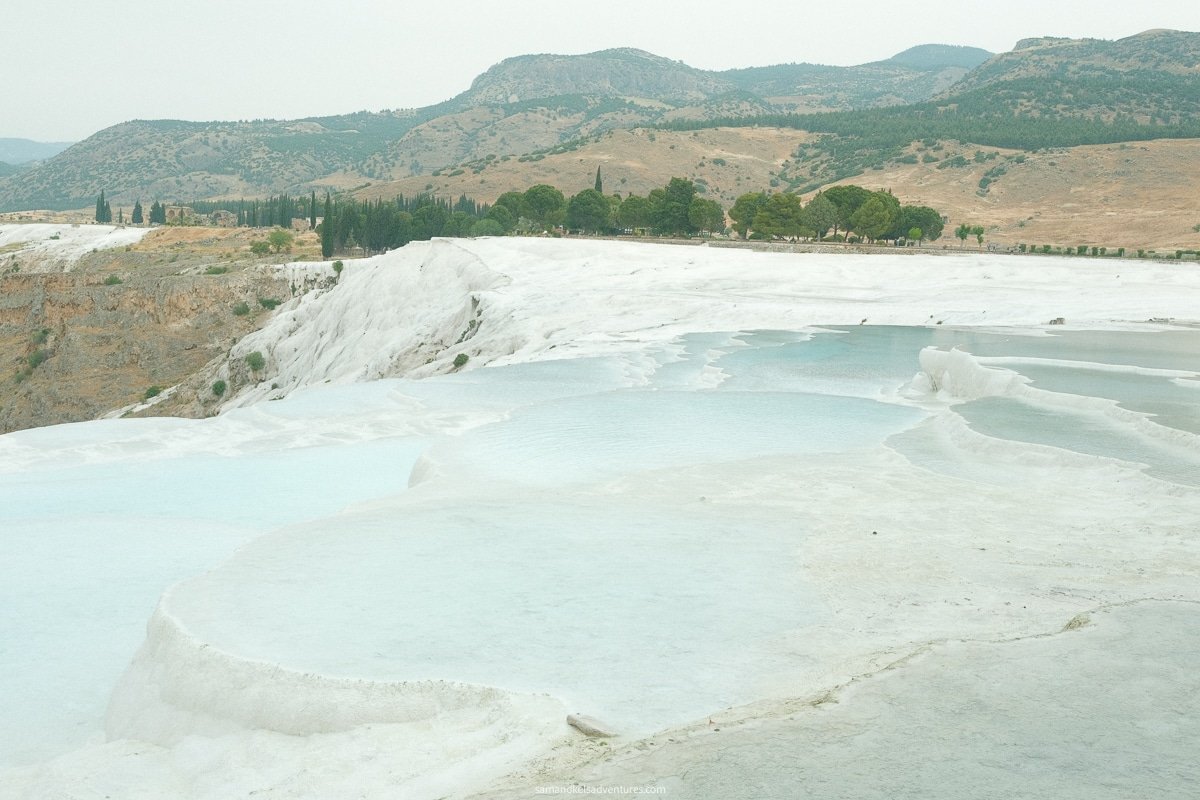
- Some sections are often dry,y and water coverage is managed, so visiting it now may not match older “full of water” photos online.
Brands We Use And Trust
Pros And Cons Of Visiting Pamukkale
There is a lot to consider when deciding to visit Pamukkale’s Cotton Castle and the ancient city of Hierapolis. To help you decide, in this section, we break down the pros and cons of staying and the things you should consider before making your final decision. Following the pros and cons, you will find my detailed experience visiting Pamukkale.
Pros Of Visiting Pamukkale
- Wow factor. The travertines and the magnificence of the ancient city are strikingly beautiful. Enough said. Pamukkale is a stunning natural wonder, and being able to immerse yourself in history and the otherworldly sight of the white terraces makes it a pro to visit. There are a few places in the world where you can see a sight like this.
- Easy to reach. Since Pamukkale is a highly visited tourist destination, it is easy to reach by any mode of transportation. Although Pamukkale is a bit tucked away from other major tourist cities and destinations in Turkey, it is pretty easy to get to, especially if you are coming from the Southern Coast. You can see our post on how to rent a car in Turkey as a foreign tourist here.
- Family friendly. Visiting Pamukkale is family-friendly. The park is vast, with well-paved paths, benches, picnic tables, and signs that share its history. We would definitely say visiting Pamukkale is family-friendly and a great place to bring kids who are fascinated by history or looking to splash around in the travertine pools.
Cons Of Visiting Pamukkale
- Changed Travertines: The travertine terraces no longer look like they did ten years ago. They have dried up and lost much of the magic you see in photos online. While they are still spectacular, it’s essential to manage your expectations and know what you are getting into
- It is expensive. €30 is a lot of money for an entrance fee. Turkish citizens typically enter with a MüzeKart (priced in Turkish Lira), while foreign visitors pay the €30 tariff. Given that it’s a single-entry ticket for a place where people spend an average of 4 hours, it is definitely a con, in our opinion.
- Not much else to see around. The town of Pamukkale is small, with little else to do besides paid activities. There are opportunities to paraglide and go on hot-air balloon rides, but there isn’t much else to see in Pamukkale.
- Crowded. If you are not a fan of crowds, visiting Pamukkale may not be for you. With over two million visitors in many years (especially during the summer high season), you’ll likely be among crowds. If you are a traveler who likes getting off the beaten path and exploring less-visited destinations, Pamukkale might not be the best fit.
Our Experience Visiting Pamukkale
We arrived in the town of Pamukkale on a Monday evening and planned to visit the park the following day, bright and early, to beat the crowds.
Our hotel was kind enough to offer us a free ride to the South Entrance Gate of Pamukkale, which saved us time as we started at the top of the city rather than climbing up and climbing down through the travertine terraces.
Entering Pamukkale & Hierapolis
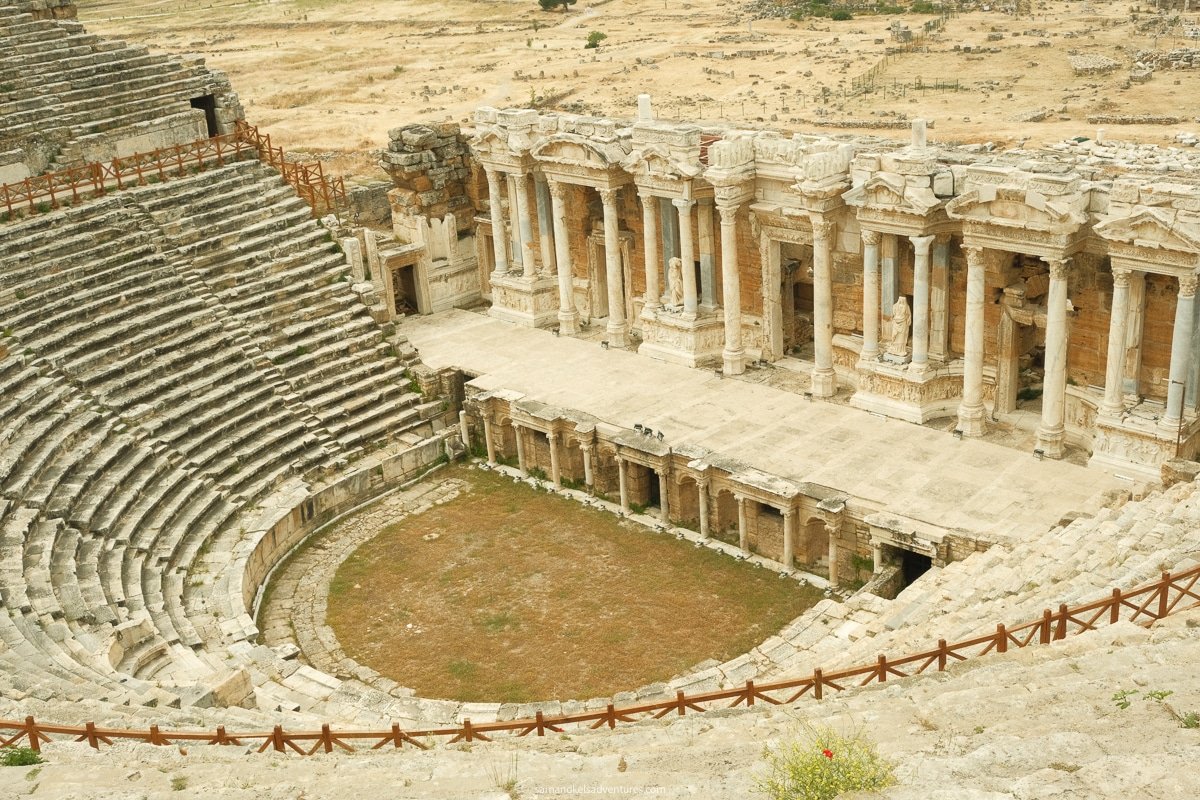
We entered the park around 09:30 AM. The South Gate leads you through the back entrance of Hierapolis. We actually saw that it wasn’t as crowded as we thought it would be. The ancient city of Hierapolis is HUGE, and there is plenty of space to wander around by yourself with few people around you.
This makes for a pleasant day walking at your own pace to the different ancient buildings around the city.
We noticed the actual crowded parts of the park are (1) the section of the travertines that visitors are allowed to walk on (also, this is the path that leads to the entrance at the bottom of the town), and (2) the Cleopatra antique pool.
Checking Out Cleopatra Antique Pool
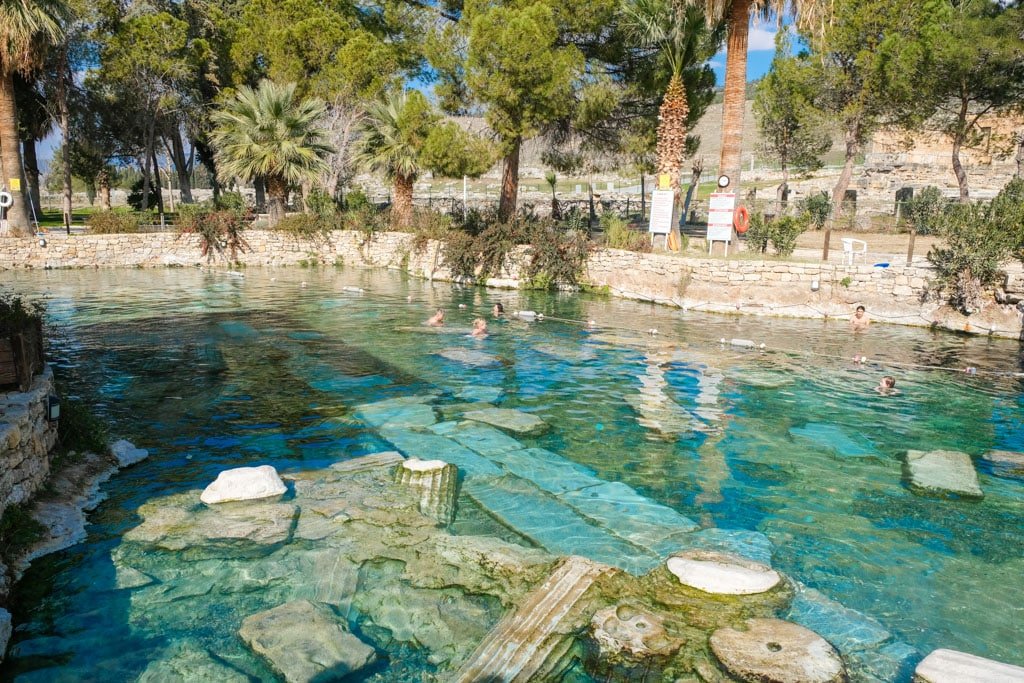
We walked to the Cleopatra Antique Pool to check it out.
There are restaurants and shops around the Antique Pool area, so if you want a bite to eat, this is one of the few places inside the park where you can usually get a proper meal.
Note that entering the pool costs extra (200TL). The facilities around the pool have changing rooms and bathrooms. If the Antique Pool is closed during your visit, you won’t be able to swim regardless of the ticket price.
After wandering around the park for 3 hours and passing by both of these locations on multiple occasions, the crowds really never let up—it’s just a reality of visiting this park!
Tip: If you walk along the edge of the path near where the people are walking on the travertines, continue past this spot, and walk away from the open section along the route, you will find a second section of the terraces filled with water. This is an excellent spot for pictures, as no one is allowed to walk on the terraces here.
Wandering Around The Ancient City Of Hierapolis
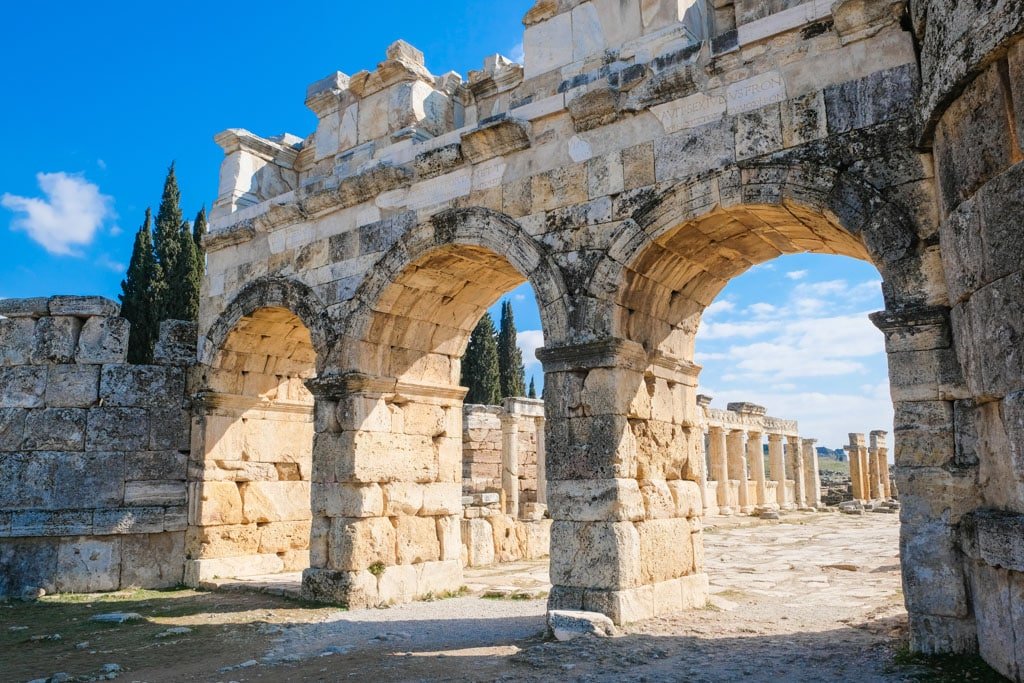
From there, we wandered around the ancient city of Hierapolis, the highlights of which were the amphitheater and the temple of Apollo. You could easily spend an entire day walking around the ancient city if you wanted!
You will notice various large tour groups walking around the grounds throughout your visit. If you time it right, you can hit the sweet spots when the groups are in transit between locations. During our visit, we also bumped into many schoolchildren visiting the park for a field trip, which was pretty cute.
You can also choose to visit the Hierapolis Archaeological Museum, which offers free admission. You can see this to learn more about the city’s history and to marvel at the various artifacts collected over the years, as this site was excavated!
Walking Down The White Path – Pamukkale Travertines
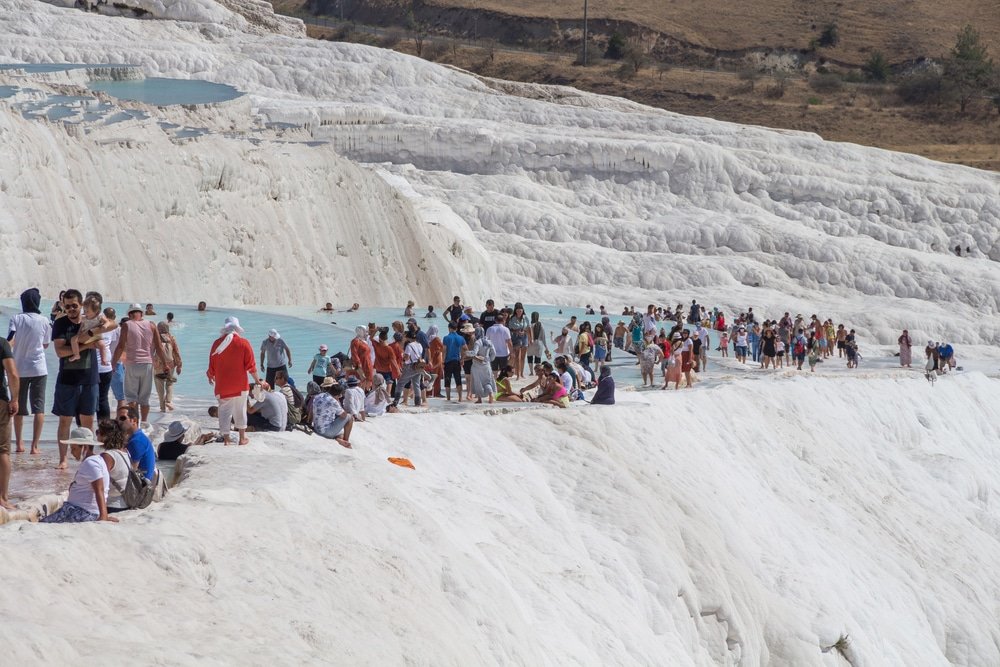
After walking around Hierapolis, we ended our day walking down the famous travertines. Before this point, the clouds blocked the sun, and the weather was pleasant. As we stepped foot on the travertines (barefoot, as required), the sun decided to peek through the clouds in full force.
Fortunately for us, this was a welcome moment for photos as the sun reflected off the white limestone and blue water, making them shine brilliantly. Unfortunately, we did not bring any protective eyewear, like a hat or sunglasses.
Because sunlight reflects off the white, it becomes incredibly bright by the time we reach the bottom of the path, and it hurts our eyes. We highly recommend you bring a hat or sunglasses on your trip!
Walking down the travertines barefoot was a process. It is slippery in many sections due to water, and the rough path can hurt your soles.
Don’t be surprised when you have to take it slow because of the pain, but definitely don’t shy away from making the walk, as it is one of the highlights of the entire visit.
In fact, as you walk further down the path, there are fewer and fewer people, so it could be easier to take photos without the crowds.
I would say it took us about 40 minutes total to walk down the path, with many stops for photos and wading in the waters. Be aware that there is water everywhere and only a few dry spots. Expect your bags and belongings to get a bit damp if you set them down on the ground while taking pictures!
Once we reached the bottom of the path, we sat down on a bench at the end, slipped our shoes back on, and walked back to Pamukkale town. It was a quick 10 minutes’ walk back to our hotel.
Move This Adventure To Your Inbox & Get An Instant Freebie

No spam. Unsubscribe at any time.
Our Verdict: Is Pamukkale Worth It Anymore?
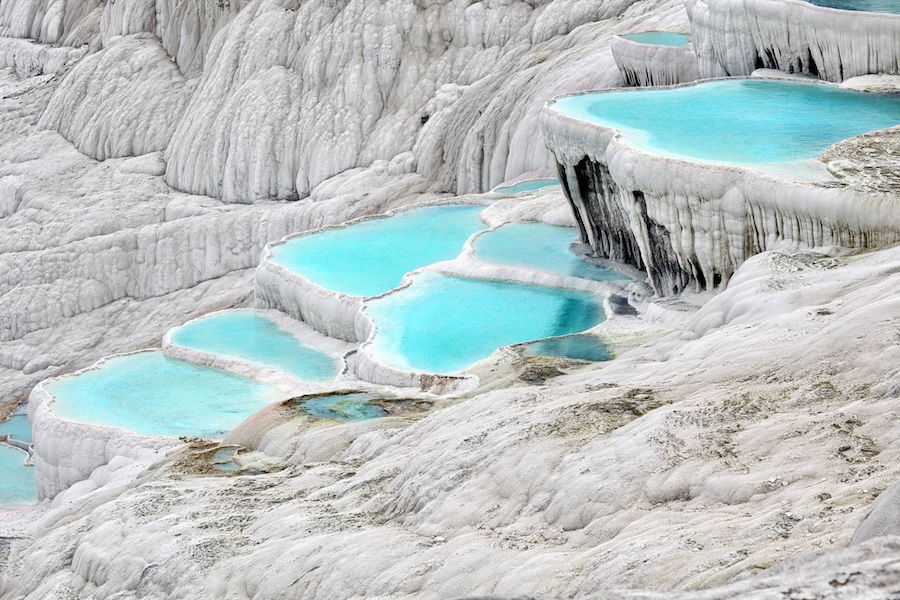
It really depends! Given that the entrance fee rose significantly from 10 euros in 2023 to 30 euros in 2024, we think that potential visitors need to give a bit more thought before making the trek to Pamukkale. Although relatively straightforward to get to (depending on where you are coming from), the steep entrance fee and the reality of the pools mainly being dry make us come to this conclusion:
We recommend that you visit Pamukkale, but with MAJOR caveats:
- Know what you are getting into with the travertines! Again, the Travertine Terraces are not what they looked like ten years ago. They dried up and lost a lot of the magic you can see in photos online. But don’t worry too much. They are still spectacular!
- Pamukkale Town is Very Small! The town of Pamukkale is tiny, and many of the restaurants are tourist-priced because they can be. There isn’t much to do in Pamukkale besides visiting the park and the ancient city.
- Be prepared to visit with many people around! You can come to the park at any time of day, but it is pretty much guaranteed that there will always be some crowd.s
- Be comfortable paying the 30-euro entrance fee. We understand this is a lot of money for a single visit, so we want you to be aware of this to make the right decision.
Don’t get us wrong, we are happy we visited the travertines and the ancient city of Hierapolis. The ancient city was one of the best preserved in Turkey. The white travertine terraces were beautiful, though mainly dry.
We are grateful for the opportunity to see what the hype is all about, but at 30 euros to enter, we would say this is definitely overpriced for what you get.
You decide whether to include Pamukkale in your next trip to Turkey. I hope this blog sheds some light on the subject and helps you make the best decision for you.
- Best Hotels In Cappadocia, Turkey
- Best Places To Visit In Turkey For Every Type Of Traveler
- Incredible Black Sea Resorts
- What To Pack For Turkey
- Istanbul, Pamukkale & Cappadocia Itinerary
- Guide To Pamukkale Hot Springs
- Travel To Pamukkale Or Cappadocia?
- How To Get From Pamukkale To Cappadocia
- Should You Visit Pamukkale Or Cappadocia?
My route through Turkey can take me through Pumakkale and then stay in Insparta or I can go to Antalya. Which in your opinion is a better place to visit and stay?
I’m headed to Derinkuyu afterwards. Is one route is more scenic than another?
If you prefer a quieter, more authentic experience with natural beauty, Isparta is a great choice, offering serene lakes and the charm of the “City of Roses.” However, if you’re looking for stunning coastal scenery, vibrant nightlife, and historical sites, Antalya is ideal. The route through Antalya is more scenic, with coastal views and dramatic landscapes, making it a more visually appealing journey towards Derinkuyu.