

Greece uses the euro (€), and for most travelers arriving today, card payments and ATMs make accessing money straightforward across the mainland and islands. I’ve traveled extensively throughout Greece — from Athens and Thessaloniki to smaller islands and rural regions — and while cash still plays a role in daily life, especially for small purchases, cards are now widely accepted due to legal requirements and modern payment infrastructure.
I am Greek and travel throughout Greece regularly, including smaller islands and rural regions where payment options can differ from those in major cities. My guide explains which currency Greece uses, how to pay efficiently, where cash is still useful, and what to avoid so you don’t lose money to fees or poor exchange rates.

Quick Answer: Currency In Greece
- Official currency: Euro (€)
- Cards accepted: Yes, widely (Visa & Mastercard)
- Cash still needed: Yes, for small purchases and rural areas
- US dollars accepted: Rarely, not recommended
- ATMs available: Yes, nationwide
Skip Ahead To My Advice Here!
Official Currency Used In Greece
Greece is a member of the European Union, and since Greece joined the eurozone in 2001, the euro has been the official currency.
The euro symbol is (€), and you will see it either before or after the price. Before that, the Greek Drachma (GRD) was used. Although the euro is the national currency in Greece, some businesses in very tourist-heavy areas may display prices in multiple currencies, but payment is legally processed in euros.
What Currency Is Used In Greece?

The euro is the local currency in Greece and 20 other European Union countries. It was introduced in January 2002, replacing the Greek drachma. Greece is a member of the eurozone (EZ), meaning it uses the euro as its sole currency.
Tourists visiting Greece should be aware that prices are typically quoted in euros. Some tourist-oriented businesses may accept foreign currencies, but transactions are processed at unfavorable exchange rates and converted to euros. Having some euros on hand is always best to avoid any problems.
ATMs are widely available throughout Greece and are the best way to get euros quickly. Credit cards can also be used for purchases, but visitors should know that some smaller businesses may not accept them.
Traveler’s checks (aka Travellers’ cheques) can be cashed at banks, but they are not as widely accepted in Greece as they once were, so we suggest you leave them at home. Personal checks are not accepted.
Euro Coins And Banknote Denominations In Greece
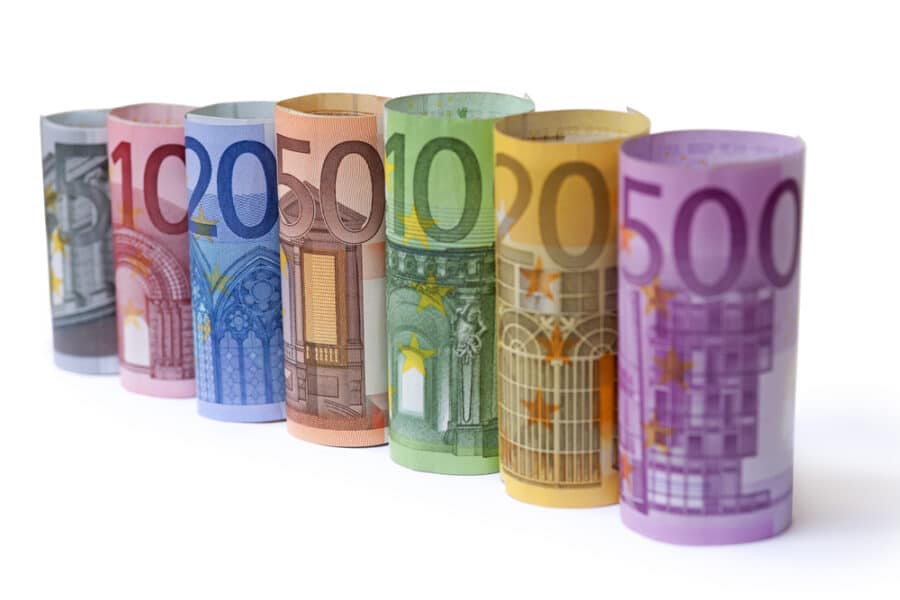
There are seven denominations of euro coins: 1, 2, 5, 10, 20, and 50 cents, as well as 1 and 2 euros. Greece uses euro banknotes in denominations of 5, 10, 20, 50, 100, and 200 euros; €500 notes are legal tender but are rarely accepted in daily transactions.
Brands We Use And Trust
Greek Banks
Many different banks in Greece will accept your foreign card. The four largest banks in Greece are:
- National Bank of Greece
- Alpha Bank
- Eurobank
- Piraeus Bank
These banks have ATMs that accept foreign cards and offer international money transfers. They also provide a variety of other services, such as online banking and mobile banking. Many smaller regional banks in Greece may be more convenient for you, depending on your location. Major cities and islands in Greece have no shortage of ATMs, so you don’t need to worry about that.
Using ATMs In Greece: Fees, Safety, And What To Know
If you are traveling to Greece, you may wonder if using ATMs is safe. The answer is yes; it is safe to use ATMs in Greece to withdraw money; I do it all of the time.
However, there are a few things to remember when using them:
- First, make sure the ATM is in a well-lit, safe area.
- Second, use only ATMs affiliated with a bank or credit card company to avoid hidden fees. In tourist areas, you will find ATMs like Euronet & Moneybox; avoid them where possible due to high dynamic currency conversion fees.
- Third, be aware of your surroundings and protect your PIN when entering it into the machine.
- Fourth, check your bank account statements regularly to ensure no unauthorized withdrawals. If you notice any suspicious activity on your account, immediately report it to your bank.
Most Greek bank ATMs charge a local withdrawal fee, typically €1.50–€3.00, shown on-screen before confirmation.
Overall, using an ATM in Greece is safe if you take precautions and use common sense as you would when traveling to any country (or even your home country!).
Can You Use US Dollars In Greece?
Quick Answer: No, Greece does not officially accept US dollars.

US dollars are not legal tender in Greece, meaning businesses are not required to accept them and may legally refuse payment in any currency other than euros.
In limited tourist-focused situations, some sellers may accept USD, but prices are converted at poor exchange rates, and euros are always preferred.

Even in tourist areas, paying in US dollars almost always results in a worse rate than withdrawing euros from an ATM or paying by card.
Cash Vs Cards In Greece: What Works Best For Travelers
There are a few things to consider when deciding whether to use cash or credit cards abroad. The first consideration is whether the visiting country, such as Greece, has Visa or MasterCard ATM access and a reliable banking infrastructure. Greece has both, so using a credit card isn’t an issue.
The second thing to consider is what kind of traveler you are. If you like to keep track of your spending and budget carefully, using a credit card can be an excellent way to do that. Your credit card statement makes it easy to see how much you’ve spent in a day, week, or month.
If you’re the type of traveler who likes to splurge occasionally or doesn’t want to worry about carrying around a lot of cash, using a credit card can be a good option. Just be sure to pay off your balance in full each month so you don’t get hit with high-interest rates.
In general, both cash and credit cards have their pros and cons when traveling abroad. It depends on your preferences as to which is best for you.
Paying In Greece: What Works Best
| Payment Method | Works Well? | Best Used For |
|---|---|---|
| Credit / Debit Cards | Yes | Hotels, restaurants, shopping |
| Cash (Euro) | Yes | Small purchases, taxis, villages |
| US Dollars | Rarely | Tourist-only situations |
Money In Greece – Cash, Cash Mooooooney

Greece uses both cash and cards widely, with card payments now common nationwide. While you can use your cards in all major cities and tourist sites, be aware that international credit and debit cards often charge overseas transaction fees for each transaction. These charges can quickly add up.
In more rural areas, it might not even be easy to find service without cash, or if you grab a coffee, you should pay in cash rather than charge it.
Cash may occasionally be preferred for small purchases or informal vendors! You’ll get better prices when you shop for souvenirs.
Greek law requires most businesses to accept card payments, and refusing them without a technical reason is not permitted. Small vendors and remote locations may still prefer cash.
Tips For Taking Your Credit Card Abroad
- When using your credit card abroad, be sure to inform your bank or credit card company of your travel plans. This will help them identify any unusual activity on your account and avoid potential issues. Thus, it’s beneficial to inform them of your upcoming trip to Greece to keep your Visa or MasterCard active.
- Be aware of the exchange rate when using your credit card abroad. This will help you to budget for your expenses and avoid any unexpected charges on your statement.
- Use a credit card that has no foreign transaction fees. This will save you money on every purchase that you make while abroad.d
- Pay off your credit card balance in full each month to avoid paying interest on your purchas.es
- Keep track of all of your expenses while abroad so that you can stay within your budget.
Money In Greece FAQs
What is the official currency in Greece?
The official currency of Greece is the euro (€). Greece adopted the euro in 2001, with banknotes and coins entering circulation in 2002.
Does Greece use the euro?
Yes. Greece is part of the eurozone and uses the euro as its sole official currency.
Can I use credit and debit cards in Greece?
Yes. Credit and debit cards are widely accepted across Greece, including on most islands, due to legal requirements that businesses accept electronic payments.
Is Greece cashless?
No. While card payments are common, cash is still widely used for small purchases, street vendors, taxis, and in rural or remote areas.
Should I carry cash in Greece?
Yes. Carrying some cash is recommended for small purchases, informal vendors, and locations where card terminals may be unavailable.
Does Greece accept US dollars?
No. Greece does not officially accept US dollars. Euros are required for almost all transactions, and acceptance of USD is rare and unfavorable.
Can I exchange US dollars for euros in Greece?
Yes. You can exchange USD for euros at banks and licensed exchange offices, though availability may be limited on smaller islands.
Are ATMs easy to find in Greece?
ATMs are widely available in cities, towns, and most islands. Availability can be limited in very small villages or remote locations.
Do Greek ATMs charge fees?
Most Greek bank ATMs charge a local withdrawal fee, typically between €1.50 and €3.00, which is displayed on-screen before you confirm the transaction.
Should I choose euros or my home currency at ATMs and card terminals?
Always choose euros to avoid dynamic currency conversion and receive better exchange rates.
Are €500 notes accepted in Greece?
€500 notes are legal tender but are often refused by shops, hotels, and taxis due to anti-fraud policies.
Do Greek islands accept cards?
Most Greek islands accept cards widely, especially in tourist areas, though cash may still be preferred in small villages.
Are traveler’s checks accepted in Greece?
Traveler’s checks are rarely accepted and generally not recommended for travel in Greece.
Is tipping done in cash in Greece?
Tipping is usually done in cash, even when the bill is paid by card.
Move This Adventure To Your Inbox & Get An Instant Freebie

No spam. Unsubscribe at any time.
Money Used In Greece: Conclusion
Remember, the euro is the official currency of Greece. Bank debit cards, prepaid travel cards, and major credit cards are widely accepted in stores, restaurants, and hotels nationwide.
So, that is it; now you know what the currency of Greece is – after all, it is important to know what currency in Greece to use while traveling in Greece to make sure you are prepared.