

Turkish spices are deeply tied to regional cooking traditions, daily home meals, and the country’s long history as a crossroads of trade. From the smoky heat of Urfa biber to the citrusy tang of sumac and the herbal punch of dried thyme, these spices are widely used across Turkey rather than reserved for special dishes.
After years of shopping in bazaars from Istanbul and Izmir to Gaziantep and southeastern Anatolia, this guide focuses on the Turkish spices travelers are most likely to encounter, use at home, and recognize in everyday Turkish food—explaining what each spice is, how it’s actually used in Turkey, and which ones are worth bringing back.
Whether you’re a seasoned chef or a novice cook, these spices will impress and elevate your cooking game. So grab your apron, and let’s dive into the world of Turkish cuisine!
Skip Ahead To My Advice Here!
Introduction To Traditional Turkish Spices
| Spice | Turkish Name | Flavor Profile | Common Uses |
|---|---|---|---|
| Sumac | Sumak | Tangy, citrusy | Salads, kebabs, onions |
| Urfa Pepper | İsot | Smoky, mild heat | Meats, vegetables, mezes |
| Pul Biber | Pul Biber | Mild to hot | Table seasoning, eggs, soups |
| Dried Thyme | Kekik | Earthy, herbal | Meats, vegetables, olive oil |
| Allspice | Yenibahar | Warm, sweet-spicy | Köfte, stuffed vegetables |
There are a few spices commonly used in Turkish cuisine; these are the ones you should have in your kitchen if you want to make authentic Turkish dishes.
The most important spice is sumac, which adds a sour flavor to dishes. It is usually added at the end of cooking so that the acidity does not cook out. Other important spices include cumin, paprika, and chili. These spices are often used together to create flavorful Turkish dishes.
Most Popular Turkish Spices To Buy As A Traveler
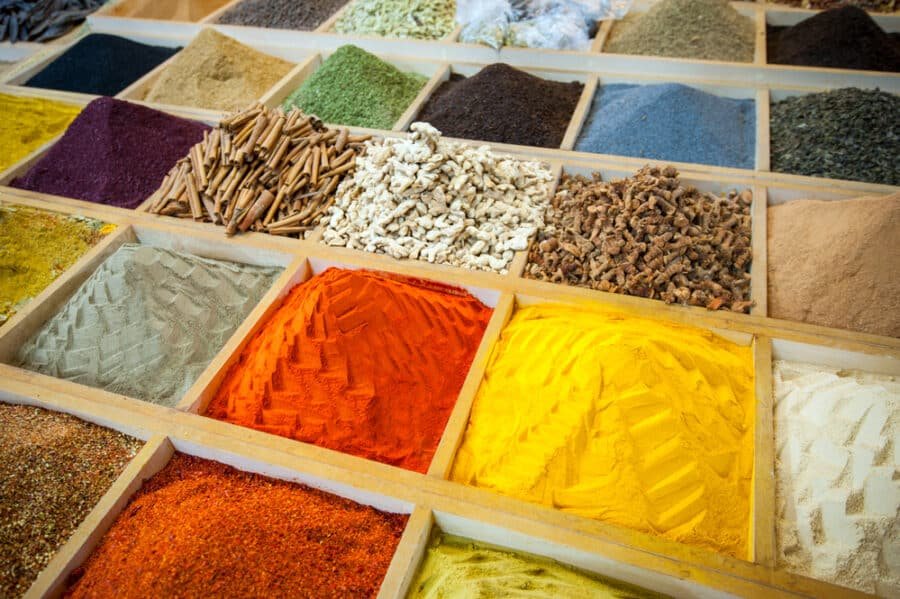
Here is a list of commonly used spices in Turkish cuisine. While I have made a list of the most commonly used spices in Turkish cuisine, their use varies from region to region.
- Allspice (Yenibahar)
- Aleppo Pepper
- Baharat Spice Mix
- Black Pepper (Karabiber)
- Cardamom (Karadamom)
- Cinnamon
- Cloves (Karanfil)
- Coriander (Kişniş)
- Cumin Seeds
- Dried Dill (Dereotu)
- Dried Mint Leaves
- Dried Oregano Leaves
- Dried Thyme (Kekik)
- Fenugreek Seeds (Çemen Tohumu)
- Ginger (Zencefil)
- Isot Pepper Flakes
- Mahlab
- Marash Pepper
- Nigella Seeds (Kalonji)
- Nutmeg (Muskat)
- Paprika
- Saffron (Safran)
- Sumac
- Turmeric (Zerdeçal)
- Urfa Biber
Classic Turkish Dishes That Use These Spices
- Köfte: these flavorful meatballs are typically made with ground lamb or beef and seasoned with cumin, paprika, chili flakes, and other spices
- Imam bayildi: a classic vegetarian dish consisting of roasted eggplant stuffed with tomatoes, onions, garlic, and herbs
- Lahmacun, also known as Turkish pizza, is a flatbread topped with a spicy mixture of ground meat, vegetables, and herbs. It’s the perfect snack or appetizer.
- Baklava: a sweet dessert made with layers of phyllo dough filled with nuts and soaked in syrup or honey
- Rice pilaf: a flavorful rice dish made with saffron, chicken broth, butter, and various spices such as cumin and oregano
Top 25 Must-Have Turkish Spices For Your Kitchen
With these spices in your pantry, you’ll be able to make a variety of delicious Turkish dishes at home. Here are some of our favorites:
1. Sumac
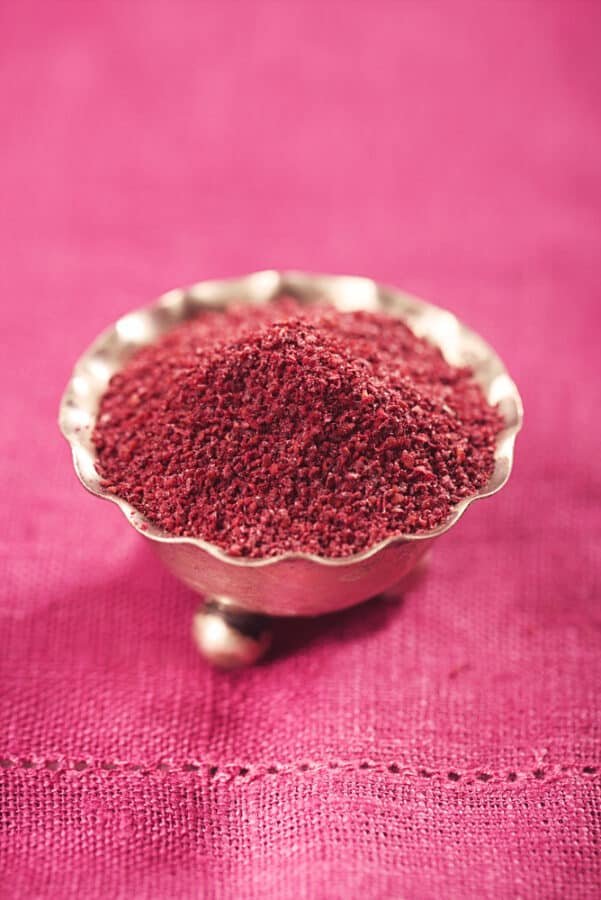
Sumac is a reddish-purple spice derived from the dried and ground berries of the sumac shrub. It is commonly used in Turkish cuisine to add a tangy and citrusy flavor to various dishes.
In Turkey, sumac is a key ingredient in dishes such as “pide” (Turkish flatbread) and “lahmacun” (Turkish pizza). It is often sprinkled on top of these breads to enhance their taste. Sumac is also used in salads, especially the traditional Turkish salad called “Shepherd’s Salad” or “Coban Salatasi,” where it adds a zesty and acidic note.
Sumac also adds spice to meat and doner kebabs. It is often used as a seasoning for grilled or roasted meats, especially those famous “Adana kebabs,” to provide a tangy contrast to the rich flavors of the meat.
Sumac is an essential ingredient in the seasoning blend called “za’atar,” which originates in the Levant and is used in some parts of Turkey, particularly in the southeast, where it typically includes dried herbs, sesame seeds, sumac, and sometimes salt.
This versatile spice in Turkish cuisine brings a distinct tanginess and brightness to a range of dishes, including bread, salads, meats, and spice blends.
2. Ginger (Zencefil)
What is Ginger?
Ginger, known as ‘Zencefil’ in Turkish, is a flowering plant whose rhizome, ginger root, is widely used as a spice. It has a warm, slightly sweet, and peppery flavor.
Uses in Turkish Cooking
In Turkish cuisine, ginger is sometimes used in spice mixes, particularly in those meat dishes and some sweet confections. It adds a warm, spicy kick to dishes.
Famous Turkish Dish Featuring Ginger
Ginger is commonly used in the seasoning of ‘Tavuk Şiş,’ Turkish chicken skewers. It adds a subtle warmth and spice to the marinade, enhancing the grilled chicken’s flavor.
3. Dried Dill (Dereotu)
What is Dried Dill?
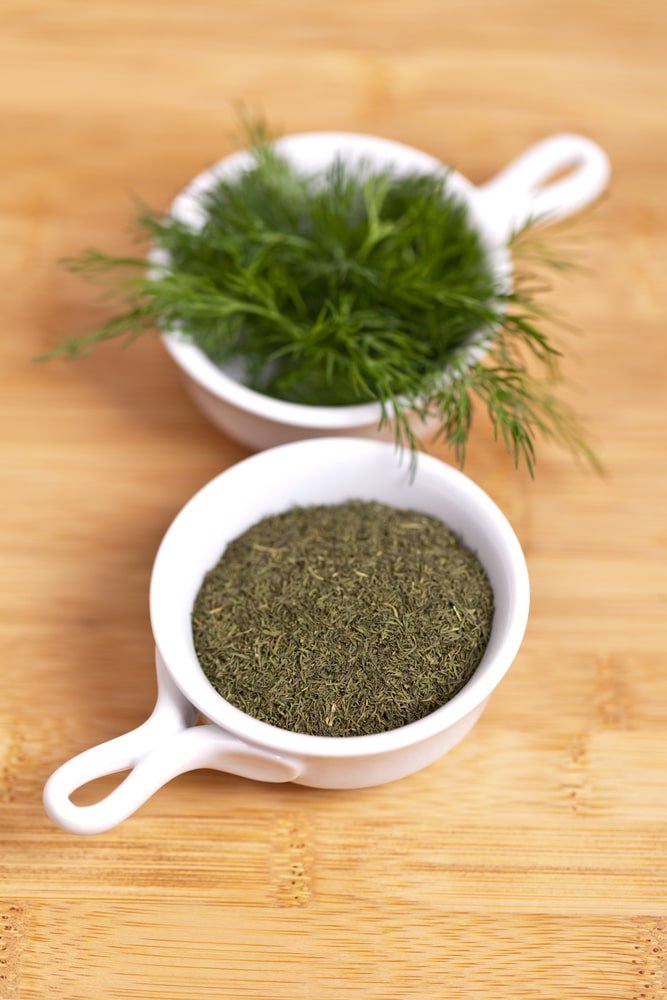
Dried Dill, ‘Dereotu’ in Turkish, is an herb with a delicate, slightly sweet, and grassy flavor. It’s the dried version of the fresh dill weed.
Uses in Turkish Cooking
Dill is widely used in Turkish cuisine, especially in seafood dishes, yogurt sauces, and in combination with other herbs and spices in various vegetable dishes.
Famous Turkish Dish Featuring Dried Dill
‘Dill and Lemon Fish,’ a simple yet flavorful Turkish fish dish, often includes dried dill. The herb complements the lemony flavor and other seasonings, enhancing the fish’s fresh taste.
4. Mahlab
What is Mahlab?
Mahlab is a spice made from the seeds of the St Lucie cherry. It has a sweet, nutty, and slightly cherry-like flavor.
Uses in Turkish Cooking
Mahlab is primarily used in Turkish baking, particularly in sweet breads and pastries. It imparts a subtle almond-like flavor that’s unique and highly prized.
Famous Turkish Dish Featuring Mahlab
‘Tahinli Çörek,’ a Turkish sweet bread roll filled with tahini and sugar, often includes mahlab. This spice adds a delicate, aromatic flavor to the dough, making these pastries a favorite in Turkish bakeries.
5. Aleppo Pepper
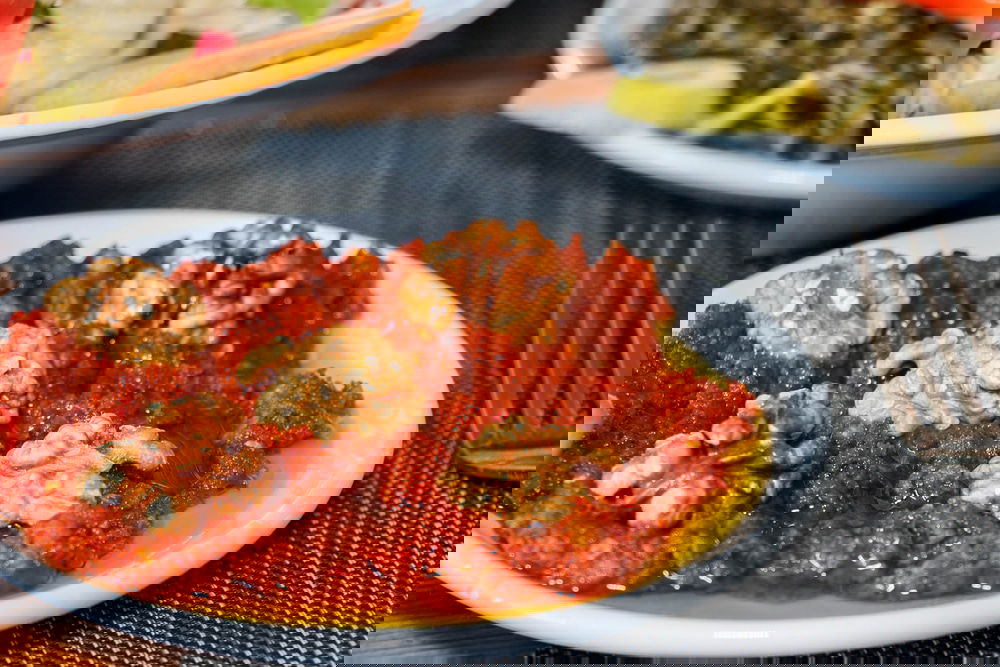
Aleppo pepper is a mild, fruity chili pepper originally from the Aleppo region of Syria. It has a deep red color, gentle heat, and a slightly smoky, almost raisin-like flavor, making it easy to use as a finishing spice rather than an overpowering chili.
In Turkey, Aleppo pepper is less common than local chili varieties such as pul biber, Urfa biber (isot), and Maraş pepper. However, it is still found in some spice shops, particularly in larger cities and southeastern regions influenced by Levantine cuisine.
When used in Turkish cooking, Aleppo pepper adds warmth and depth without the sharp heat of other peppers. It may be sprinkled over grilled meats, kebabs, vegetables, or eggs, or stirred into yogurt-based dips like cacık or haydari. It is also used in dishes such as muhammara and in some spice blends, where its mild heat and fruity notes complement garlic, olive oil, and walnuts.
Because its flavor is subtle, Aleppo pepper works best as a finishing spice, adding color and gentle warmth rather than strong spiciness.
6. Coriander (Kişniş)
What is Coriander?
Coriander, known as ‘Kişniş’ in Turkish, is an aromatic herb widely used in cuisines around the world. In its fresh form, it’s known as cilantro, but in Turkish cuisine, when we say coriander, we usually refer to the dried coriander seeds of the plant. These seeds are small, round, and have a warm, earthy, and slightly citrusy flavor profile.
Uses in Turkish Cooking
In Turkish cuisine, coriander is often used ground, allowing its warm, nutty, slightly spicy flavor to infuse dishes. It’s not as prominently used as in some other Middle Eastern or Asian cuisines, but when it is, it adds a distinctive flavor. Coriander pairs well with cumin, another popular spice in Turkish cooking, and is often used in spice blends and rubs for meats.
Famous Turkish Dish Featuring Coriander
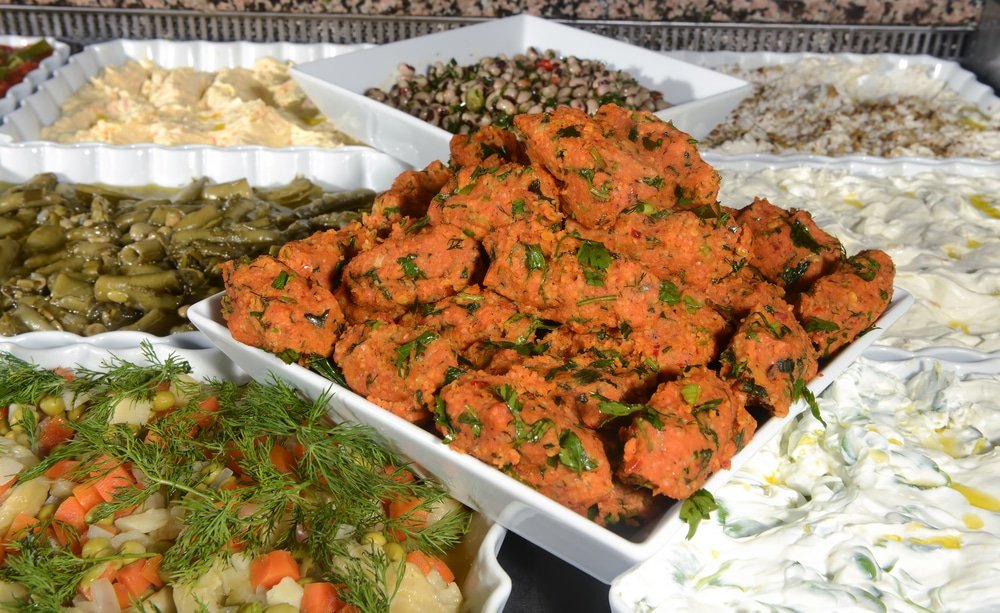
One classic Turkish dish where coriander shines is in ‘Mercimek Köftesi,’ or lentil meatballs. Although this dish is meatless, it’s called ‘köfte’ because of its shape and texture. Mercimek Köftesi is a beloved vegetarian dish made from red lentils and bulgur.
Coriander, along with other spices such as cumin and paprika, is used to season the lentil mixture, giving these meatballs a rich, earthy flavor. The dish is often served with fresh lemon wedges, which enhance the citrus notes of coriander and provide a refreshing contrast to the warm spices.
7. Urfa Biber
Urfa Biber, also known as Urfa pepper or Isot pepper, is a unique chili pepper variety native to the Urfa region in Turkey. It is named after the city of Urfa and is a crucial ingredient in Turkish cuisine, particularly in the southeastern region.
Urfa Biber has a dark red to purplish-black color and a smoky, earthy flavor with a moderate level of heat. The peppers are sun-dried during the day and then sweated overnight, resulting in a distinct flavor profile. The drying process imparts a rich, raisin-like sweetness and a smoky aroma to the peppers.
Turks use Urfa Biber in various ways to enhance the taste of their dishes:
- Seasoning: Urfa Biber is commonly used as a seasoning for meat and vegetable dishes. It can be added to marinades and rubs, or sprinkled directly on grilled meats, kebabs, and roasted vegetables to impart a smoky, mildly spicy flavor.
- Spice Blends: It is often included in Turkish spice blends, such as “baharat,” to add complexity and depth of flavor. These spice blends are used in meat preparations, stews, and rice dishes.
- Condiments: Urfa Biber is also utilized in condiments and sauces. It can be mixed with olive oil, garlic, and other ingredients to create a flavorful dipping sauce, or drizzled over dishes such as hummus, yogurt, or roasted eggplant.
- Bread and Pastries: In southeastern Turkish cuisine, Urfa Biber is occasionally incorporated into bread dough or sprinkled on top of pastries like “pide” and “lahmacun” to add a smoky and slightly spicy taste
- Salads and Mezes: Some Turkish salads and mezes (appetizers) include Urfa Biber for a subtle heat and smokiness. It can be added to salads, such as “shepherd’s salad,” or mixed with ingredients like tomatoes, cucumbers, and herbs.
Urfa Biber is known for its distinct flavor and is considered a prized ingredient in Turkish cuisine. Its complex taste profile and moderate spiciness make it a versatile addition to a wide range of dishes, adding depth, smokiness, and a hint of heat.
8. Turmeric (Zerdeçal)
What is Turmeric?
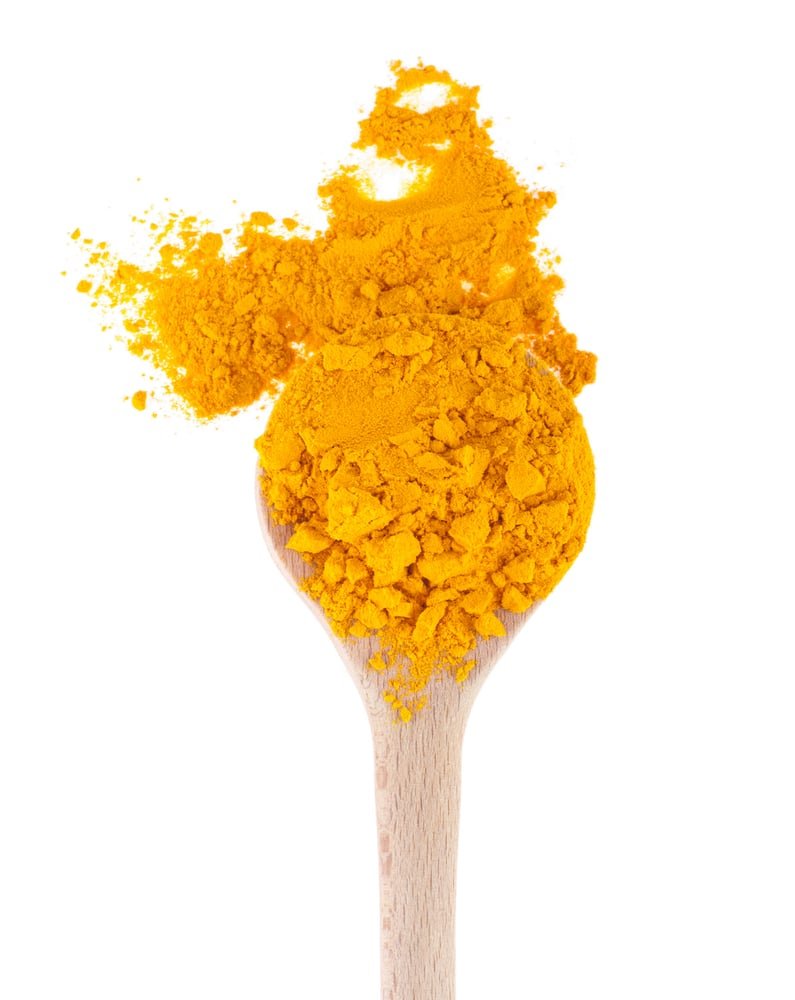
Turmeric, known as ‘Zerdeçal’ in Turkish, is a bright yellow spice derived from the turmeric plant. It has a warm, bitter taste and is frequently used to color and flavor foods.
Uses in Turkish Cooking
While not traditionally used in ancient Turkish cuisine, turmeric has found its way into modern Turkish cooking, often used in rice dishes and soups to add color and a mild flavor.
Famous Turkish Dish Featuring Turmeric
‘Pilav,’ a simple yet staple Turkish rice dish, sometimes includes turmeric. It imparts a golden hue and a subtle earthiness to the rice, making it visually appealing and flavorful.
9. Saffron (Safran)
What is Saffron?
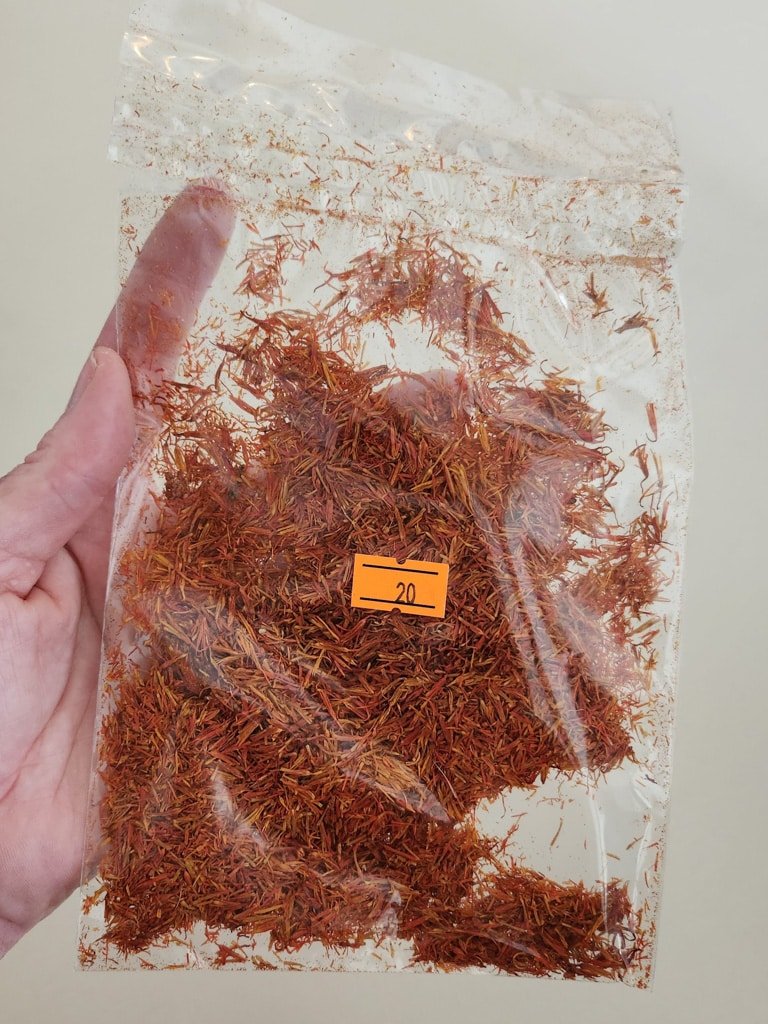
Saffron, known as ‘Safran’ in Turkish, is a highly valued spice derived from the Crocus sativus flower. Known for its distinctive aroma and golden color, it’s one of the most expensive spices by weight.
Uses in Turkish Cooking
Saffron is used sparingly in Turkish cuisine due to its high cost. It’s typically used in rice dishes, desserts, and some seafood preparations to add color and a unique flavor.
Famous Turkish Dish Featuring Saffron
‘Safranlı Pilav,’ a saffron-flavored rice pilaf, is a luxurious Turkish dish where saffron plays a central role. It adds both a beautiful color and a delicate, floral flavor to the rice.
10. Marash Pepper
Marash pepper, also known as Maras pepper or Kahramanmaras pepper, is a type of chili pepper native to the Marash region of Turkey. It is named after the city of Marash and is highly regarded for its distinctive flavor and moderate spiciness.
Marash pepper has a deep red color and a rich, fruity taste with a moderate level of heat. It is similar in appearance to Aleppo pepper but has a slightly different flavor profile. The peppers are sun-dried and then ground into flakes or powder, making them convenient to use as a spice.
In Turkish cuisine, Marash pepper is widely used to add flavor and gentle spiciness to various dishes. Marash pepper can be used in both savory and sweet dishes, so don’t be afraid to experiment with it.
Try using Marash pepper in this traditional Turkish recipe for Shepherd’s Salad:
Ingredients:
- 1 cucumber, peeled and diced
- 1 tomato, diced
- 1 green bell pepper, diced
- 1/4 cup chopped parsley
- 1/4 cup chopped mint
- 1/2 onion, diced
- 3 tablespoons olive oil
- 2 tablespoons lemon juice
- 1 teaspoon Marash pepper
- Salt and black pepper to taste
Directions:
- In a large bowl, combine the cucumber, tomato, bell pepper, parsley, mint, and onion
- Whisk together the olive oil, lemon juice, Marash pepper, salt, and black pepper in a small bowl. Pour over the vegetables and toss to coat
- Serve at room temperature or chilled
11. Baharat Spice Mix
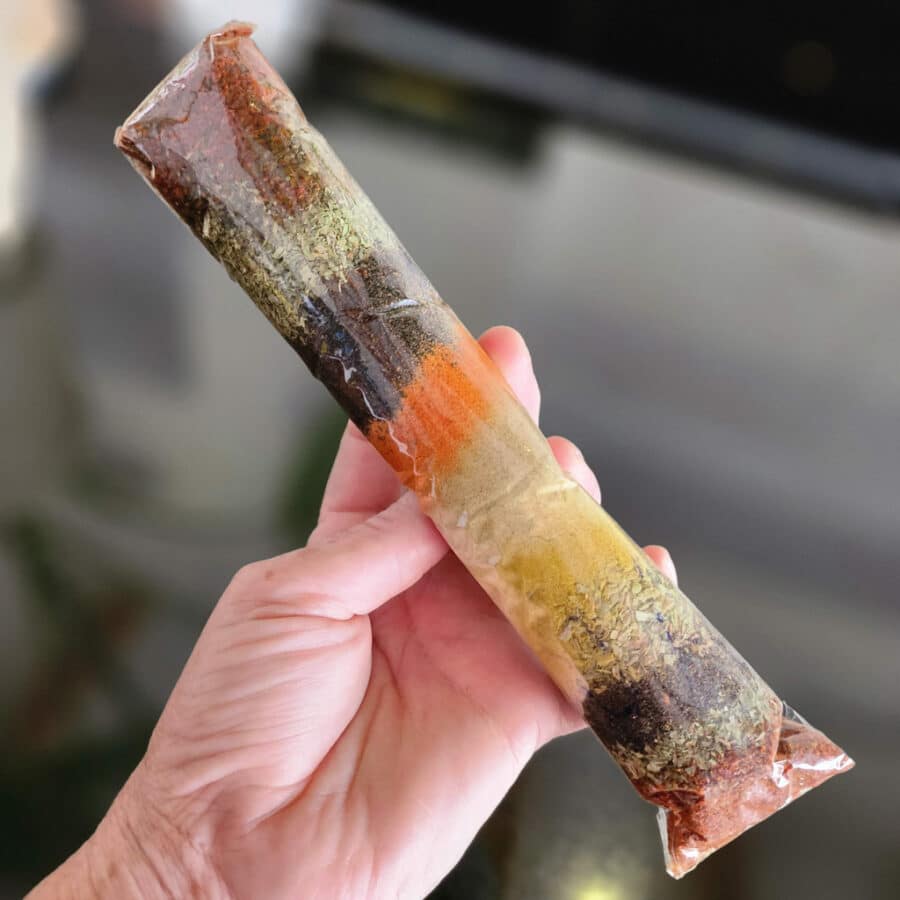
Baharat is a popular spice blend used in Turkish and Middle Eastern cuisines. It is a flavorful blend of aromatic spices, including cinnamon, cloves, cumin, coriander, nutmeg, and black pepper.
The exact composition of Baharat may vary slightly by region or personal preference. This versatile spice blend adds warmth, depth, and a balanced complexity to a wide range of dishes, including meat, poultry, stews, rice, and vegetable preparations.
It is often used as a dry rub or incorporated into marinades, sauces, and soups, lending a distinctive and aromatic flavor profile to the cuisine.
I brought it home as shown in the bags. The one pictured I purchased in Izmir, but the ones I got in Istanbul looked much better. My kids loved this on chicken – so tasty.
12. Cloves (Karanfil)
What are Cloves?
Cloves, in Turkish ‘Karanfil’, are the aromatic flower buds of a tree in the family Myrtaceae. They are small, hard, and nail-shaped, known for their intense fragrance and spicy, slightly sweet flavor.
Uses in Turkish Cooking
Cloves are used sparingly in Turkish cuisine due to their intense flavor. They are commonly added to meat dishes, soups, and stews, often in combination with other spices like cinnamon and Turkish bay leaves. Cloves are also used in the preparation of traditional Turkish beverages, such as salep and certain types of Turkish coffee, where they add a warm, aromatic depth.
Famous Turkish Dish Featuring Cloves
A notable Turkish dish using cloves is ‘Kıymalı Biber Dolması,’ stuffed bell peppers with a spicy meat filling. The cloves add a subtle yet distinct flavor to the beef or lamb mixture, complemented by rice, herbs, and other exotic spices.
13. Dried Oregano Leaves
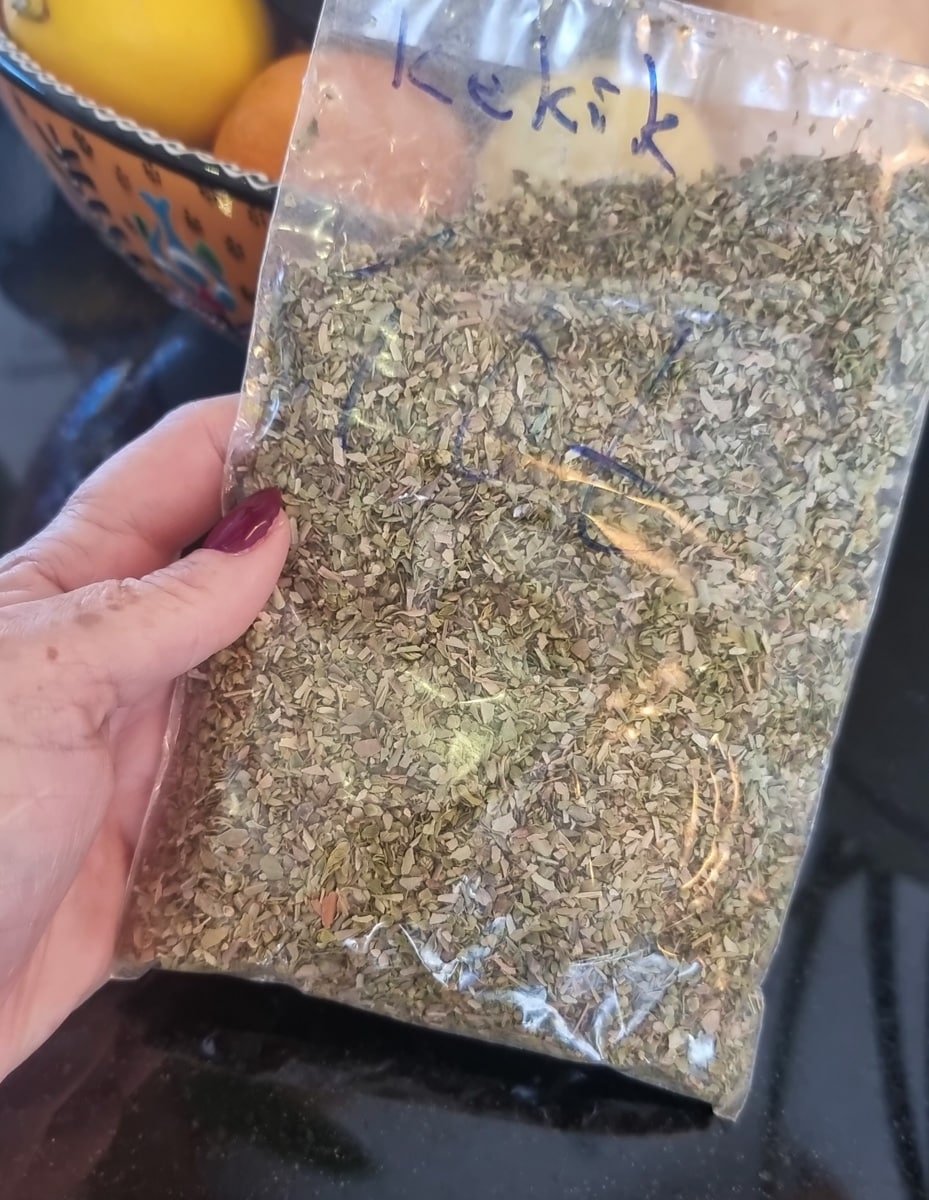
Dried oregano leaves are a must-have for any kitchen. When I go to Greece and Turkey, I buy a kilo every time!
This spice is commonly used in Mediterranean and Middle Eastern cuisine. Turkish oregano has a strong, pungent flavor that goes well with lamb shanks, chicken, and fish dishes. It can also be used to make a flavorful herb tea.
14. Black Pepper (Karabiber)
What is Black Pepper?
Black pepper, also referred to as ‘Karabiber’ in Turkish, is one of the most commonly used spices worldwide. It comes from the dried berries of the pepper plant and is known for its sharp, mildly spicy flavor.
Uses in Turkish Cooking
In Turkish cuisine, black pepper is used ubiquitously as a seasoning in almost every savory dish. It adds a subtle heat and enhances the overall flavor profile of meats, vegetables, soups, and stews.
Famous Turkish Dish Featuring Black Pepper
‘İskender Kebap,’ a famous Turkish dish, often prominently features black pepper. This dish includes thinly sliced grilled lamb, served over pita bread with tomato sauce, melted sheep’s butter, and yogurt. Black pepper is used to season the meat, playing a crucial role in defining its flavor.
15. Dried Mint Leaves
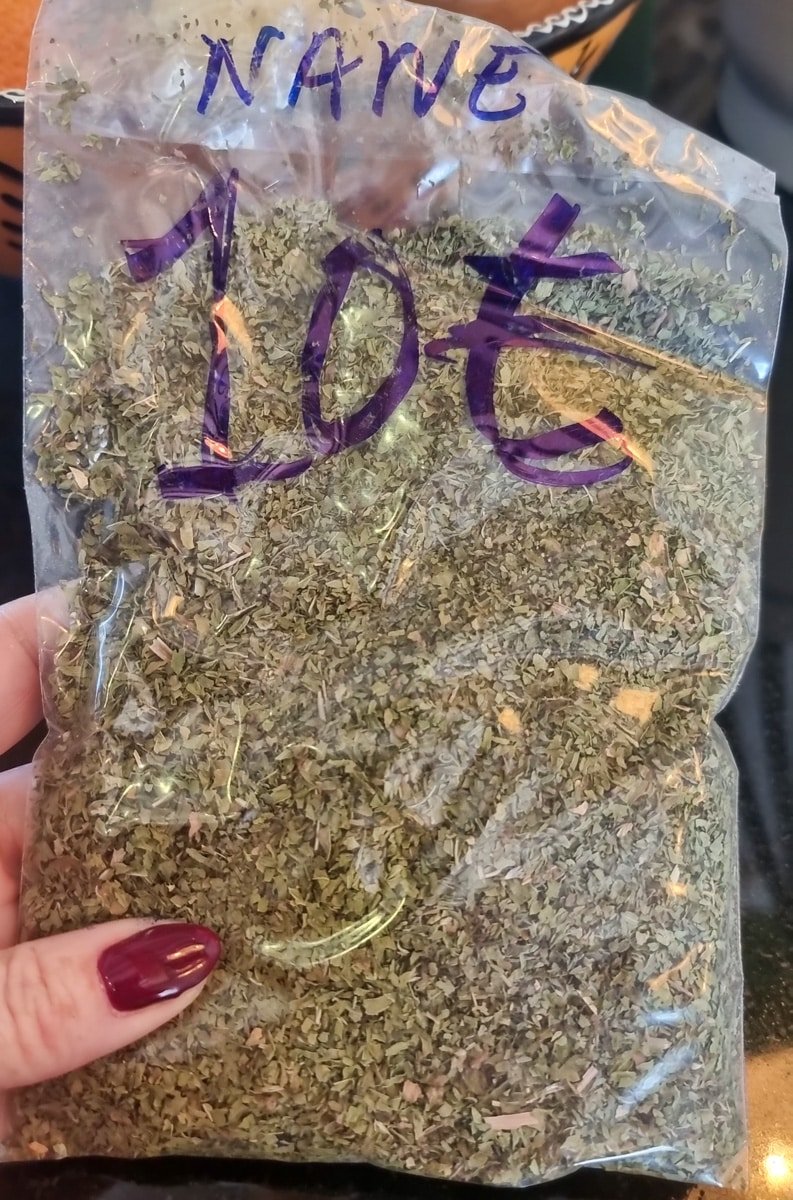
Dried mint leaves are a key ingredient in many traditional Turkish dishes. They have a strong, fresh flavor that pairs well with other spices, such as cumin and paprika. Mint is also a common flavor in Turkish desserts and pastries. I got this bag in February at the spice market in Izmir, and it smells divine!
16. Isot Pepper Flakes
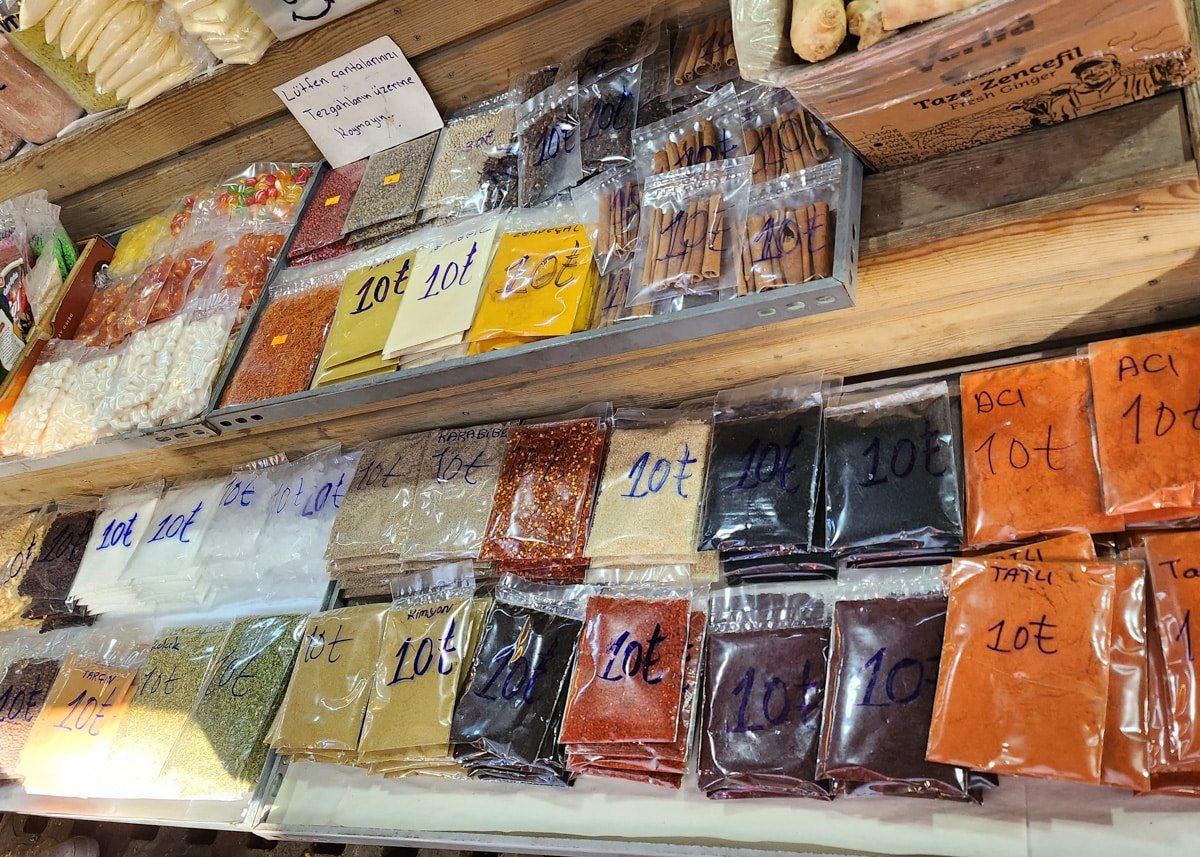
Isot pepper flakes, also known as Urfa Biber flakes, are a type of crushed chili pepper derived from the dark purple-red Isot pepper, native to the Urfa region of Turkey. Isot pepper is harvested and sun-dried, then crushed into coarse flakes, resulting in Isot red pepper flakes.
Isot pepper flakes have a unique flavor profile characterized by a smoky, fruity, and slightly sweet taste with a mild to moderate level of heat. They are known for their deep, dark color and rich aroma. The drying process contributes to their distinct flavor, as the peppers are partially fermented during sweating and drying.
Isot pepper flakes are commonly used as a seasoning and condiment in Turkish cuisine. They are sprinkled over various dishes, including kebabs, grilled meats, roasted vegetables, and salads, to add a smoky and mildly spicy flavor. Isot pepper flakes can also be used to enhance the taste of soups, stews, sauces, and dips, providing a unique depth of flavor. Their versatility and rich flavor make Isot pepper flakes a popular ingredient in Turkish cuisine.
17. Cumin Seeds
Cumin seeds are one of the most essential spices in Turkish cuisine. They have a strong, earthy flavor and are used in many different dishes, from stews and soups to meat and vegetable dishes. Cumin seeds can be bought whole or ground and should be stored in a cool, dry place.
18. Nutmeg (Muskat)
What is Nutmeg?
Nutmeg, known as ‘Muskat’ in Turkish, is the seed of the nutmeg tree and is encased in a mace. It has a warm, nutty, and slightly sweet taste.
Uses in Turkish Cooking
Nutmeg is often used in small quantities in Turkish desserts, in béchamel sauce for dishes like ‘Moussaka,’ and in some meat preparations to add a sweet and spicy note.
Famous Turkish Dish Featuring Nutmeg
A classic Turkish dish using nutmeg is ‘Sütlaç,’ a traditional Turkish rice pudding. The nutmeg adds a delicate, warm flavor to this creamy, comforting dessert.
19. Paprika
Paprika is a bright red powder made from dried and ground sweet peppers. It has a mild, slightly sweet taste, and it’s commonly used to add an earthy flavor and vibrant color to dishes. Paprika is often used in Turkish cuisine, especially in dishes like kebabs, pilafs, and stews. It can also be used as a garnish for rice or potatoes.
20. Nigella Seeds (Kalonji)

Nigella seeds, also known as kalonji, are small black seeds derived from the Nigella sativa plant. They have a unique flavor, often described as earthy, nutty, and slightly peppery. Nigella seeds are commonly used as a spice in various cuisines, including Turkish cuisine.
In Turkish cuisine, nigella seeds are known as “çörek otu” and are a popular ingredient in a traditional Turkish pastry called “simit.” Simit is a circular-shaped bread covered in sesame seeds and dotted with nigella seeds, giving it a distinct appearance and flavor. Nigella seeds add a nutty, aromatic touch to simit, enhancing its overall flavor.
Apart from simit, nigella seeds are also used as a garnish in other Turkish bread, such as “pide” (Turkish flatbread) and “çörek” (Turkish pastry). Additionally, they can be sprinkled on salads and savory pastries, or mixed into spice blends, to provide a subtle yet distinctive flavor.
While simit is the most well-known Turkish dish that prominently features nigella seeds, they can be found in a variety of other recipes, adding a delightful twist to Turkish cuisine.
21. Dried Thyme (Kekik)
What is Dried Thyme?
Dried Thyme, or ‘Kekik’ in Turkish, is a Mediterranean herb known for its strong, earthy, and slightly minty flavor.
Uses in Turkish Cooking
Thyme is a key ingredient in many Turkish meat dishes, soups, and vegetable preparations. It is also a component of the classic ‘Za’atar’ spice mix, often used to season flatbreads and meats.
Famous Turkish Dish Featuring Dried Thyme
‘Menemen,’ a traditional Turkish egg scramble with tomatoes, green peppers, and onions, may include dried thyme in some regional or personal variations. The herb adds a distinct aroma and depth to this popular breakfast dish.
22. Fenugreek Seeds (Çemen Tohumu)
Fenugreek seeds, known in Turkish as “çemen tohumu,” are small, golden-brown seeds derived from the fenugreek plant. They have a strong, aromatic flavor with a hint of bitterness and a slightly nutty taste. Fenugreek seeds are widely used in Turkish cuisine as a spice and a herbal remedy.
In Turkish cuisine, fenugreek seeds are utilized in various ways:
- Spice and Seasoning: Fenugreek seeds are often dry-roasted to enhance their flavor before being ground into a powder or used whole. They are used as a spice in meat dishes, stews, curries, and vegetable preparations. Fenugreek seeds contribute a unique depth of flavor and distinctiveness to the overall taste of the dishes.
- Herbal Remedy: Fenugreek seeds are also valued for their potential health benefits and are used in traditional herbal remedies. They are believed to aid digestion, reduce inflammation, and regulate blood sugar levels. Fenugreek seeds can be steeped in hot water to make a herbal tea or ground into a paste for external use.
- Spice Blends: Fenugreek seeds are a key ingredient in Turkish spice blends, such as “baharat” and “çemen,” which are used to season a variety of dishes, including grilled meats, kebabs, and vegetables.
- Bread and Pastries: Fenugreek seeds are sometimes used as a topping or incorporated into the dough. They can be sprinkled on bread or added to the dough for a slightly bitter, aromatic touch.
Fenugreek seeds are known for their strong flavor and are used to add a distinctive taste to Turkish dishes. While they are primarily used as a spice, their potential health benefits and versatile applications make them an integral part of Turkish culinary traditions.
23. Allspice (Yenibahar)
What is Allspice?
Allspice, known as ‘Yenibahar’ in Turkish, is a spice made from the dried berries of the Pimenta dioica plant. It combines flavors of cloves, nutmeg, and cinnamon.
Uses in Turkish Cooking
Allspice is used in a variety of Turkish dishes, including meat dishes, stews, and even some desserts. It is also a common ingredient in spice mixes and marinades, lending a warm, complex flavor.
Famous Turkish Dish Featuring Allspice
In Turkish ‘Köfte’ (meatballs), allspice is a key ingredient. It adds a warm, nuanced flavor to the ground meat mixture, which is typically grilled or fried.
24. Cardamom (Karadamom)
What is Cardamom?
Cardamom, or ‘Karadamom’ in Turkish, is a spice made from the seeds of several plants in the ginger family. It has a strong, unique taste with an intensely aromatic, resinous fragrance.
Uses in Turkish Cooking
Cardamom is used in Turkish coffee and in some dessert recipes. It’s not as commonly used in savory dishes but is occasionally added to certain rice dishes and stews for an aromatic touch.
Famous Turkish Dish Featuring Cardamom
Turkish coffee is traditionally prepared without cardamom, though it may be added in some regional or personal variations. The spice is either blended with coffee grounds or added whole to the coffee pot, imparting its distinctive flavor to this iconic Turkish beverage.
25. Cinnamon
Cinnamon is a highly aromatic spice obtained from the inner bark of trees belonging to the Cinnamomum family. It is commonly used in cooking and baking for its distinct, sweet, warm flavor and pleasing aroma.
Cinnamon is available in two main varieties: Ceylon cinnamon (also known as “true” cinnamon) and Cassia cinnamon. Ceylon cinnamon is lighter in color and has a subtle, delicate flavor, while Cassia cinnamon has a stronger, more intense flavor. Both varieties are widely used in different culinary traditions.
Brands We Use And Trust
How To Buy Turkish Spices At Local Bazaars
When it comes to buying spices, the Turkish bazaars are a great place to shop. However, there are a few things to keep in mind when shopping for spices at the bazaars to ensure that you’re getting the best quality possible.
- Take a look at the overall condition of the spice. It should be dry and free from any mold or mildew. If it looks wet or has visible moisture, it’s likely not fresh and won’t have as much flavor.
- Smell the spice. It should be fragrant and have a strong aroma. If it doesn’t smell very potent, it’s likely not fresh and won’t pack as much of a flavor punch.
- See who is buying it. If the locals are buying it, you know it’s good!
Move This Adventure To Your Inbox & Get An Instant Freebie

No spam. Unsubscribe at any time.
How To Properly Store Your Turkish Spices
When storing your spices, there are a few things to keep in mind. First, ensure they are stored in a cool, dry place. This will help to keep them fresh and prevent them from going bad.
Secondly, ensure they are stored in an airtight container. This will help to keep their flavor and aroma locked in.
Lastly, make sure they are stored away from direct sunlight. This will help to prevent them from fading or becoming discolored.
| Storage Tip | Details |
|---|---|
| Cool, Dry Places | Store in a pantry or cupboard away from heat and moisture. |
| Airtight Containers | Use spice jars with tight lids or zip-lock bags to retain freshness. |
| Avoid Sunlight | Store away from direct sunlight to prevent fading and loss of flavor. |
| Labeling | Label your spices with names and dates for easy identification and freshness tracking. |
| Buy in Moderation | Purchase smaller quantities to ensure freshness. |
| Regular Checks | Periodically check for aroma and clumping; replace if necessary. |
Best Spice Markets In Turkey For Travelers
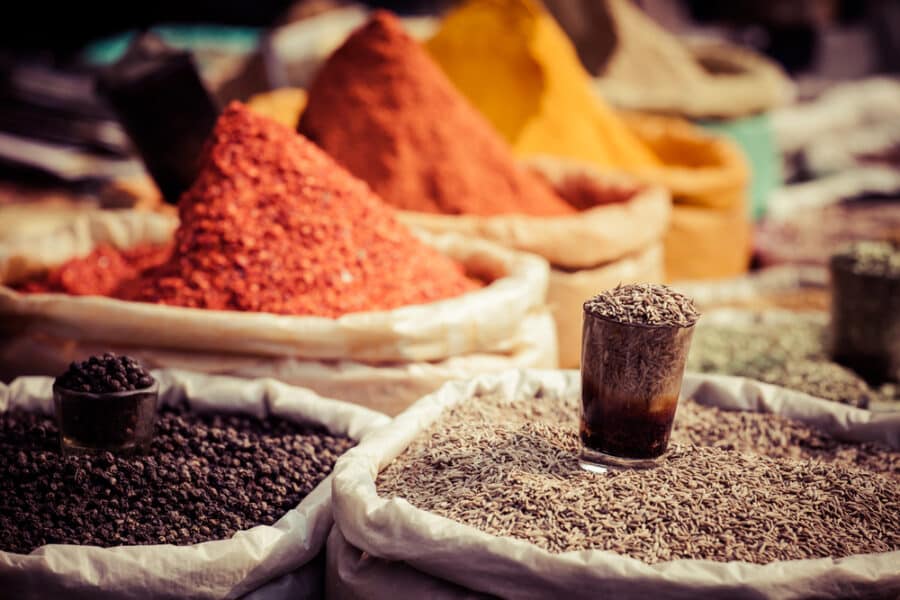
Turkey is famous for its vibrant spice markets, known as “bazaars” or “çarşı” in Turkish. These markets offer a wide variety of spices, herbs, and other culinary ingredients. Here are some of the most popular spice markets in Turkey:
Spice Bazaar (Mısır Çarşısı) – Istanbul
Located in Istanbul’s Eminönü district, the Spice Bazaar is one of the city’s largest and oldest covered spice markets. It offers a vast selection of spices, dried fruits, nuts, teas, and Turkish delights.
Grand Bazaar (Kapalıçarşı) – Istanbul
While not solely dedicated to spices, the Grand Bazaar in Istanbul is a massive covered market with numerous shops selling spices alongside other goods. It is a bustling and historic market that attracts visitors from around the world.
Egyptian Bazaar (Mısır Çarşısı) – Manisa
Situated in the city of Manisa, the Egyptian Bazaar is renowned for its diverse array of spices and herbs. It is a vibrant market where visitors can find local spices and unique regional flavors.
Arasta Bazaar – Antalya
Located in Antalya’s historic Kaleiçi district, the Arasta Bazaar is a charming market offering a range of spices, including local specialties. It is a great place to explore and discover the flavors of the Mediterranean region.
Spice Market – Gaziantep
Gaziantep, a city in southeastern Turkey, is known for its rich culinary traditions. The Spice Market in Gaziantep is a popular destination for spice enthusiasts, offering an extensive selection of aromatic spices and specialty ingredients used in regional dishes.
Alaca Han Market – Ankara
Alaca Han is a historic caravanserai in Ankara that today houses small shops, some of which sell spices and traditional goods, including regional specialties. It is a vibrant place to explore and experience the local culinary culture.
Uzun Çarşı – Bursa
Uzun Çarşı, meaning “Long Market,” is a historic market in Bursa. It features numerous shops selling spices, nuts, Turkish delights, and traditional food products, making it a delightful place to explore Turkish flavors.
These are just a few examples of Turkey’s popular spice markets. Each market offers a unique atmosphere and a wide range of aromatic spices, allowing visitors to immerse themselves in the country’s vibrant culinary culture.
FAQs
What are the most common Turkish spices?
The most common Turkish spices include cumin, paprika, pul biber (red pepper flakes), sumac, dried mint, oregano, black pepper, and thyme. These spices are used daily in home cooking, kebabs, vegetable dishes, soups, and mezes.
What is the red spice used in Turkish food?
The red spice most often seen on Turkish tables is pul biber, a crushed red pepper flake that ranges from mild to hot depending on the region. Urfa biber and Marash pepper are darker, smokier regional varieties.
What Turkish spices are best to bring home?
Good Turkish spices to bring home include sumac, isot (Urfa) pepper, Marash pepper, dried thyme (kekik), dried mint, cumin seeds, and allspice (yenibahar), as these are widely used in Turkish cooking and store well.
Is saffron commonly used in Turkish cooking?
Saffron is used sparingly in Turkish cuisine, mainly in rice dishes and desserts, due to its high cost. It is far less common than spices like paprika, cumin, or sumac.
Is baharat a Turkish spice blend?
Baharat is used in Turkey, especially for meats, but it is a broader Middle Eastern spice blend with regional variations rather than a single standardized Turkish seasoning.
Are Turkish spices spicy?
Most Turkish spices emphasize aroma and depth over heat. While chili-based spices like pul biber and isot add warmth, Turkish food is generally moderately spiced rather than very hot.
So, tell me, which of these most popular spices from Turkey will you try first?
What is the green powdered spice used. It’s not leaves.
A green powdered spice commonly used in Turkish cuisine is likely to be dried mint. Mint, when dried and ground, becomes a fine green powder and is frequently used in a variety of Turkish dishes for its fresh, aromatic flavor. Another possibility could be dried and ground parsley, which is also used in Turkish cooking, although it’s less commonly found in powdered form compared to mint.