

When I think about food in Split, I don’t first think about pašticada, grilled fish, or black risotto. I think about the food you eat when you are not actually planning to eat. The burek you pick up on the way home at 3 am. Warm krafne in a paper bag after 9 pm. A toasted sandwich eaten standing on the street. Piletina u tijestu after a day at the beach. Ćevapi when you are hungry after a football match.
These are the foods I grew up with, and they are still part of everyday life in Split. Tourists often eat in a konoba (tavern) in Varoš, on terraces inside the Palace walls, or along the Riva promenade. They come to try traditional Dalmatian cuisine, and rightly so. But not far from the city center, there is another food culture that belongs to the people who live here.
It is found in local bakeries and tiny fast food places, many of them tucked into residential neighbourhoods. Food usually costs just a few euros. Some are open until midnight, some all night, and some have been serving the same food for more than 20 years.
What worries me is that there are fewer of them every year.
People have not stopped eating this food. They are simply eating it differently. And I think that matters, because once these places disappear, we will lose more than somewhere to buy a cheap meal. We will lose a small but important part of what everyday life in Split has always looked like.
Skip Ahead To My Advice Here!
Between Fast Food & Street Food
This kind of food does not have a proper English term. It is not classic fast food like McDonald’s or Burger King. It is similar to street food, but there is no food cart or food truck.
There are two main types. The first is a pekara, or bakery, which in Croatia usually consists of a counter with trays behind glass and a queue in front of it. Those trays have something for everybody, with both sweet and savoury options.
In Split, “fast food” is not the food; it is the shop. You go to a fast food place in the same way you go to a bakery. A fast food place can be no larger than 3m x 2m, with a window where you place your order, usually a grill and a toaster, and sometimes a pizza oven.
Most of these places are in residential areas, not just in the city center.
When you have been out of the house for a while and going home to cook is not an option, this is the perfect meal replacement. This food keeps you full until your next proper meal. It is the food of choice for students between lectures, workers who do not have time for a proper lunch, people on the beach or coming home from the beach, football fans after a match, young adults before a night out, and many others. It is fast, tasty, and cheap.
Brands We Use And Trust
Burek At Three In The Morning
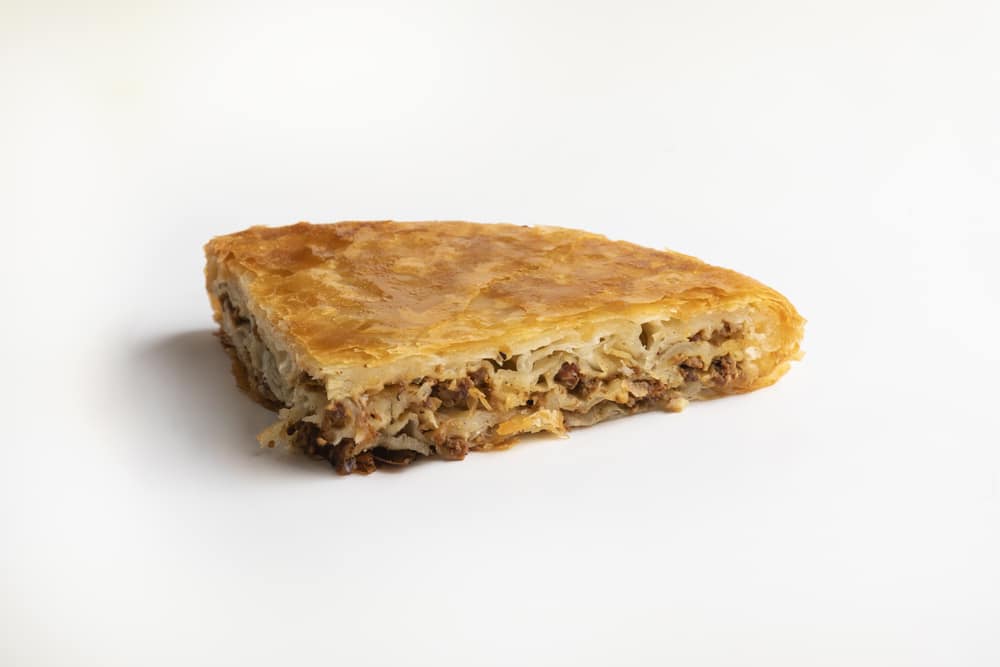 Here is one example. Most locals can tell you their own version of it.
It is about 3 am on Sunday, and I am going home with my friends after a night out. There is one place we need to stop before we continue: Bobis Bakery near Pazar (Green Market), which is open all night. When we get there, we see a queue in front of it. It is not a large queue, mostly other people coming home from a night out, some taxi drivers, and a policeman. Nobody is talking much. Everyone is just waiting in line. The smell of the bakery grows stronger as the queue gets shorter. It is my turn to order, and I order burek (burek sa sirom).
Burek is made from thin, layered dough filled with cheese or minced meat. You get it wrapped in paper that is already starting to soak up the grease. When we were young, we believed that the grease would soak up some of the alcohol, making burek the perfect choice after a night out. It was a routine, and I never thought much about it.
Same Doughnuts, Two Different Stories

Krafne are what Croats call doughnuts, but in the Croatian version there is no hole in the middle. The filling goes inside, usually chocolate, apricot jam, or custard. Kids in Split sometimes eat them for breakfast, cold, out of a paper bag at school. You can get krafne at any bakery or grocery store. The other option is to leave the house around 9 or 10 in the evening and get them fresh and warm. Some bakeries sell them at those hours through their back doors. There is also Krafne kod Mate, which sells krafne around the clock. Nothing about it is fancy. You simply say how many you want and which filling. You get them warm in a paper bag and eat them straight away.
When I moved to Zagreb, I could not find the same thing. The bakeries there sell krafne, but there are fewer of them, and they are only available during the day. The trays looked the same in every bakery, and there was less choice than I was used to. There is one shop in Zagreb that sells mostly krafne, Krafneraj by Pan-Pek on Ilica. It closes at one in the afternoon.
Going out for warm krafne in the evening is not a thing in Zagreb, while in Split it is almost a tradition. However, the real tradition in Croatia is to make and eat krafne in February, during carnival (maškare), and that is when most people eat them. But in Split, we eat them on an ordinary Tuesday in November, after 9 pm, standing outside a bakery that is technically closed.
You Pick What Goes In
At a fast food place, you place your order and then wait a couple of minutes. The food has a base, and you pick what goes in.
Toasted Sandwiches
If you order a toasted sandwich (topli sendvič), you have ordered a bun, ham, and cheese. You choose the size: small or large. Large is about the size of a foot, and small is half that. It is pressed in a toaster, and once it is hot, you get to choose what goes in. There are various options: mayonnaise, ketchup, lettuce, corn, pickles, tomato, boiled egg slices, onion, and more. You say what you want, they add it, and the people behind you wait patiently for their turn.
Piletina U Tijestu

Another staple of fast food is chicken in pizza dough (piletina u tijestu). The base is grilled chicken pieces wrapped in pizza dough and baked in a pizza oven. Once it is done, you pick what goes in, just as you do with a sandwich. It is more substantial than a sandwich and just as popular. The most famous location for piletina u tijestu is Bili Pivac in Podstrana, just outside Split.
You can also order less popular options, such as pizza, French fries, salads, hamburgers, and more.
Food That Is Moving Indoors

Ćevapi did not originate in Croatia. They are a Balkan food. Every part of the Balkans has its own recipe, and each claims that it is the correct one. The idea is the same everywhere: minced meat shaped into small cylinders and grilled.
You order five or ten pieces. You get them in flatbread (somun or lepinja), and then you decide what else goes in: chopped onions, ajvar, kajmak, or all three. Wherever the grill is lit in Split, there will be ćevapi: around the stadium on match day or at any outdoor event in the city. A few places in Split sell only ćevapi, and one of the most famous is Kantun Paulina, which has been open since 1967. You place an order, get ćevapi in flatbread, and eat them on the street, standing up.
Over the last few years, several places have opened in Split and around it where ćevapi are served at a table. The food is the same, but the price is not. Food that was once eaten on the street is slowly becoming restaurant food.
Places That Stay

Most of these places are not in the city center. They are in residential neighbourhoods, right next to apartment buildings, with signs that have not been changed in years.
Those places stay. Medeni opened in 2001, and today it has four locations, three in Split and one in Kaštela. Popaj opened in 1989, is family-run, and has two locations in Split. Kantun Paulina has been selling ćevapi since 1967. If a place does well, the owner opens a second one across town.
Popaj is referenced in two songs: Dječaci – Jel’ and Domenica – Manje je više. It has been there for so long that locals hear the name and know exactly what it means.
Move This Adventure To Your Inbox & Get An Instant Freebie

No spam. Unsubscribe at any time.
Things Are Changing
Eating standing up was normal throughout my youth, and I still can’t resist krafne or piletina u tijestu. What I have noticed lately is that the queues are shorter.
People did not stop eating this food. They changed where they get it. Several franchise chains have opened in Split: McDonald’s, KFC, and Burger King. Most of them opened in malls. People drive past the closer fast food place to get to a more distant one. What they are looking for is something predictable, with air conditioning and a table. There is also free parking, and they can do their shopping while they are there.
Since Covid, almost every fast food place also delivers through Wolt or Glovo, or through its own delivery service, so you no longer have to go anywhere. That is convenient, but it is also the problem. If the point of fast food places is to sell food to people who are out of the house, then you need people out of the house. Fewer people going out will mean shorter opening hours, then fewer locations, and eventually the food will be available only through an app. You will be able to order a burek at 3 am, but you will not be able to get one while you are out and hungry.
And then there are ćevapi, which are doing better than ever. They have changed from street food into restaurant food.
What Happens If They Close?
Local fast food in Split is still here. The places are open until midnight, they deliver, and you can still get a sandwich within about a 15-minute walk of wherever you are. Nothing has been lost yet.
More people are eating at the franchises instead. The food is generic, and it costs more. Every order that people make there is an order not placed at a local fast food place. Smaller places could close if the trend continues.
And that is the loss. Fast food will not disappear, but how you get it will change. Fast food that you have to drive to, or wait at home for, is not what fast food means here.